Robotic muscles go motor-free and silent
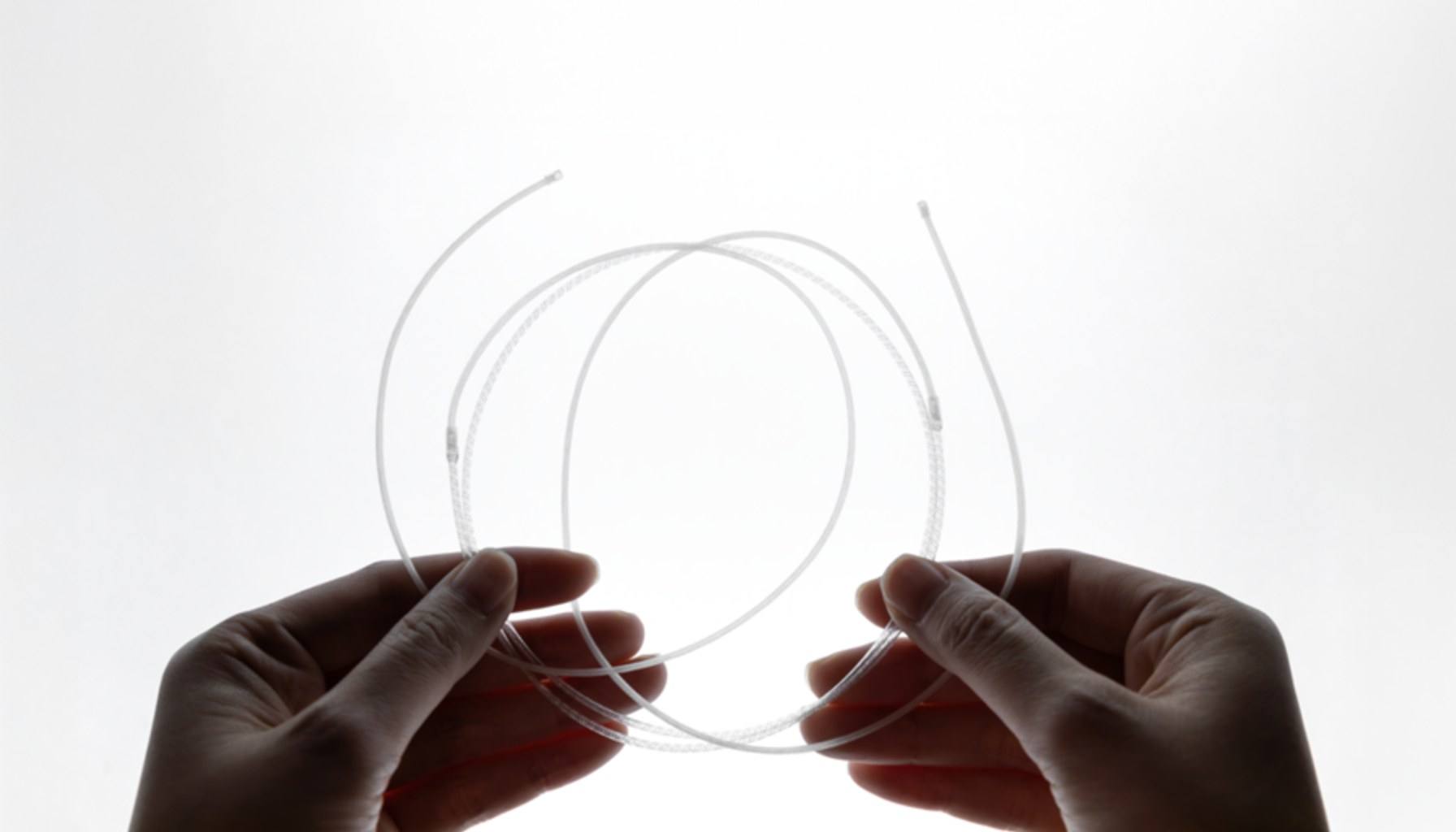
Robots just grew real muscles—quiet, motor-free, and scalable.
Engineering documentation shows a new breed of electrically driven artificial muscle fibers built as lightweight, fiber-format actuators. Researchers from the MIT Media Lab and Politecnico di Bari describe electrofluidic fiber muscles that pair a fluid-driven thin McKibben actuator with a miniaturized, solid-state electrohydrodynamic pump. The result is a compliant, body-friendly actuator that can operate without bulky motors, pumps, or external fluid supplies, and it’s designed to be arranged in configurations tailored to a task rather than a single, rigid actuator path. Demonstration footage confirms the fibers can be embedded in flexible formats and connected in networks, which could eventually translate to soft-grasping hands, wearable exosuits, or prosthetic interfaces that feel more natural.
From a humanoid perspective, the most obvious implication is potential for many-doF, distributed actuation without the noise and backlash of traditional servo systems. Yet the technical specifications reveal a caveat: the published work does not inventory degrees of freedom per humanoid configuration, nor does it publish payload ratings for a full limb or body segment. In short, this is a materials and actuation breakthrough, not a ready-to-assemble humanoid servo system. The paper makes clear that the fibers are designed to be modular and combinable, but it stops short of detailing how you’d wire a complete humanoid skeleton with dozens of independent muscle fibers, each tuned for speed, force, and fatigue life. That gap matters, because DOF counts and payloads are the currency of robot design; without them, planning a humanoid integration remains theoretical.
The technology sits in the lab-aligned realm of TRL planning: a lab demonstration in a controlled environment, with the actuation achieved via integrated, compact hardware rather than external rigs. This is not a field-tested system; the device’s performance and reliability under real-world loads, temperature variations, and long-term cycling are not yet proven at scale. Demonstrators, as is customary in our field, show what’s possible under ideal constraints, but the path from bench to humanoid chassis is nontrivial.
Two practitioner-level constraints immediately emerge. First, control bandwidth and predictability. Fluidic actuators, even when fiberized, require careful closed-loop control to avoid overshoot, hysteresis, or lag in response. The EHD pump’s sealed-fluid design helps with compactness and quiet operation, but precise pressure management across many fibers will demand sophisticated drivers and real-time sensing—areas where developers often bleed energy and introduce latency. Second, reliability and safety in wearables or prosthetics. A sealed-fluid system must resist leakage, microfluidic fatigue, and electrohydrodynamic breakdown over millions of cycles. High-voltage operation in a portable device raises safety questions, and translating lab-grade materials into durable, everyday-use components is a known hurdle.
Compared with previous generations of soft-actuated systems, this work represents an incremental but meaningful leap: you get motor-free actuation with silent operation and compact packaging, plus the promise of easy configuration into task-specific muscle networks. The technical difference versus traditional pneumatic or hydraulic soft actuators is the elimination of external pumps and bulky power trunks, replaced by a micro-pump embedded in the fiber. In practice, this could reduce enclosure size and weight for soft grippers or wearable exosuits, while improving user comfort through compliant, skin-friendly interfaces.
Power, runtime, and charging details remain under wraps in the initial release. The architecture is electrically driven, but the exact energy density, battery compatibility, and cycle life are not disclosed. Until those numbers appear in a peer-reviewed performance appendix, engineers should treat this as a compelling proof-of-concept rather than a turnkey humanoid actuation pack.
The MIT/Politecnico di Bari team’s advance is a reminder that the long arc toward truly practical humanoids hinges on a suite of converging innovations: fiber-scale actuation, robust embedded power and control, and credible DOF/payload budgets for complete systems. If the researchers can scale the fiber-muscle network to multi-joint assemblies, maintain reliability under real-world tasks, and publish clear humanoid-ready specifications, we could be looking at a new baseline for compliant, quiet actuation in the next generation of robots.
- A new type of electrically driven artificial muscle fibernews.mit.edu / Primary source / Published APR 09, 2026 / Accessed APR 09, 2026