ABB rolls out OmniVance surface finishing cell
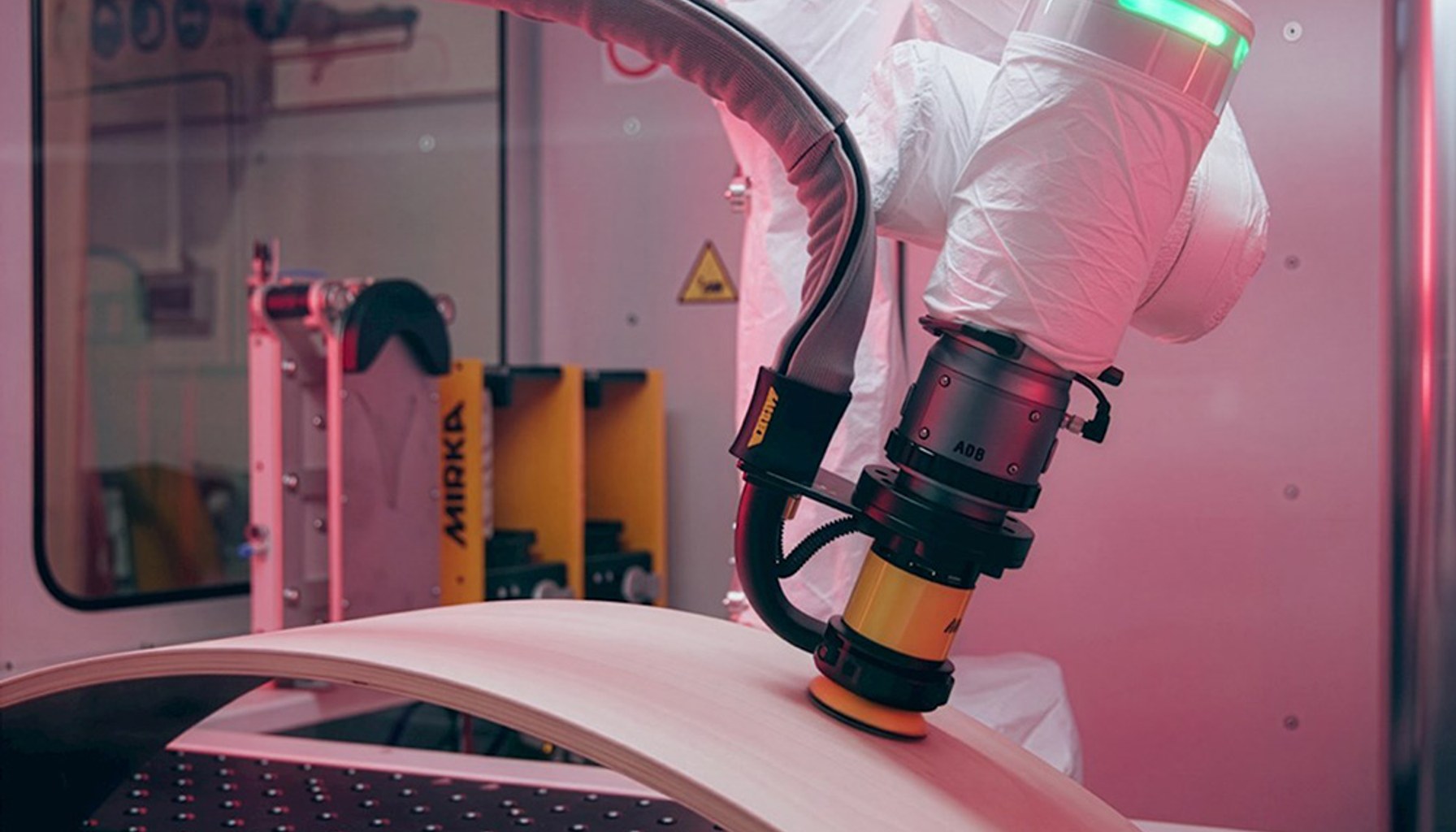
ABB unveiled its first fully automated sanding and polishing cell last week, a bid to convert cobots into a practical line workhorse for shops short on robotics expertise.
Surface finishing sits at the heart of product quality across industries, yet the labor squeeze is tightening. Deloitte and The Manufacturing Institute project that 1.9 million manufacturing jobs will go unfilled by 2033, a gap ABB frames as a market for smarter automation rather than an empty chair crisis. The company says the OmniVance Collaborative Surface Finishing Cell is meant to bridge the gap between bespoke, highly customized automation and piecemeal off the shelf toolkits that don’t scale.
ABB positions OmniVance as a self-contained, easy to deploy solution designed to deliver industrial-grade robotics without the typical integration drag. The cell targets sanding and polishing tasks, a common bottleneck in finishing lines where defects from manual work creep into subsequent steps and rework can erase any gains from earlier automation. Craig McDonnell, managing director of business-line industries at ABB Robotics, argues that many firms want consistent finishes but can’t stomach months of bespoke integration or the cost of extensive internal robotics expertise. “With our new OmniVance Collaborative Surface Finishing Cell, we’re introducing industrial-grade robotics in a simple, affordable, and scalable solution,” he said.
Even with a straightforward pitch, the economics remain contingent on deployment specifics. ABB did not publish ROI data for the OmniVance cell, signaling that payback will hinge on a plant’s labor costs, part complexity, and how quickly the line can be configured for repeatable finishes. What the company does offer is a clear positioning: the solution is meant to fit environments that need dependable quality without the risk profile that comes with bespoke automation.
From an operations standpoint, OmniVance raises several practical considerations. First, integration, while simplified, still requires floor space and power, as well as a plan for safety and dust management in a finishing cell. Second, while the cell is designed to be self-contained and easy to deploy, finishing lines often require process tuning to handle different substrates, coatings, and geometry. Third, human workers aren’t sunsetted; they shift into supervisor and setup roles, but their skills are still needed for part changeovers and quality checks. Fourth, ongoing costs, including abrasive consumables, wear parts, belt life, and routine maintenance, will influence throughput and final payback.
Industry observers will want to see how OmniVance performs on varied finishes and part geometries, and whether it can scale from a single cell to multi-station lines without eroding the benefits of centralized management and documentation. The promise is classic ABB: bring precision and repeatability to tasks that reward consistency but have been labor-intensive to automate, without forcing a factory into a long, bespoke integration cycle.
What happens next will hinge on two things: real-world throughput and the credible alignment of the cell with a plant’s MES or ERP data streams. If OmniVance can deliver stable cycle times and predictable finishes across a handful of common parts, the CFOs and floor managers who pore over ROI docs may finally see what vendors have promised for years, a turnkey automation step that actually sticks.
- ABB Robotics launches OmniVance autonomous surface finishing celltherobotreport.com / Source role not classified / Published MAY 04, 2026 / Accessed MAY 04, 2026