AI Palletizing Goes Live in Complex Warehouses
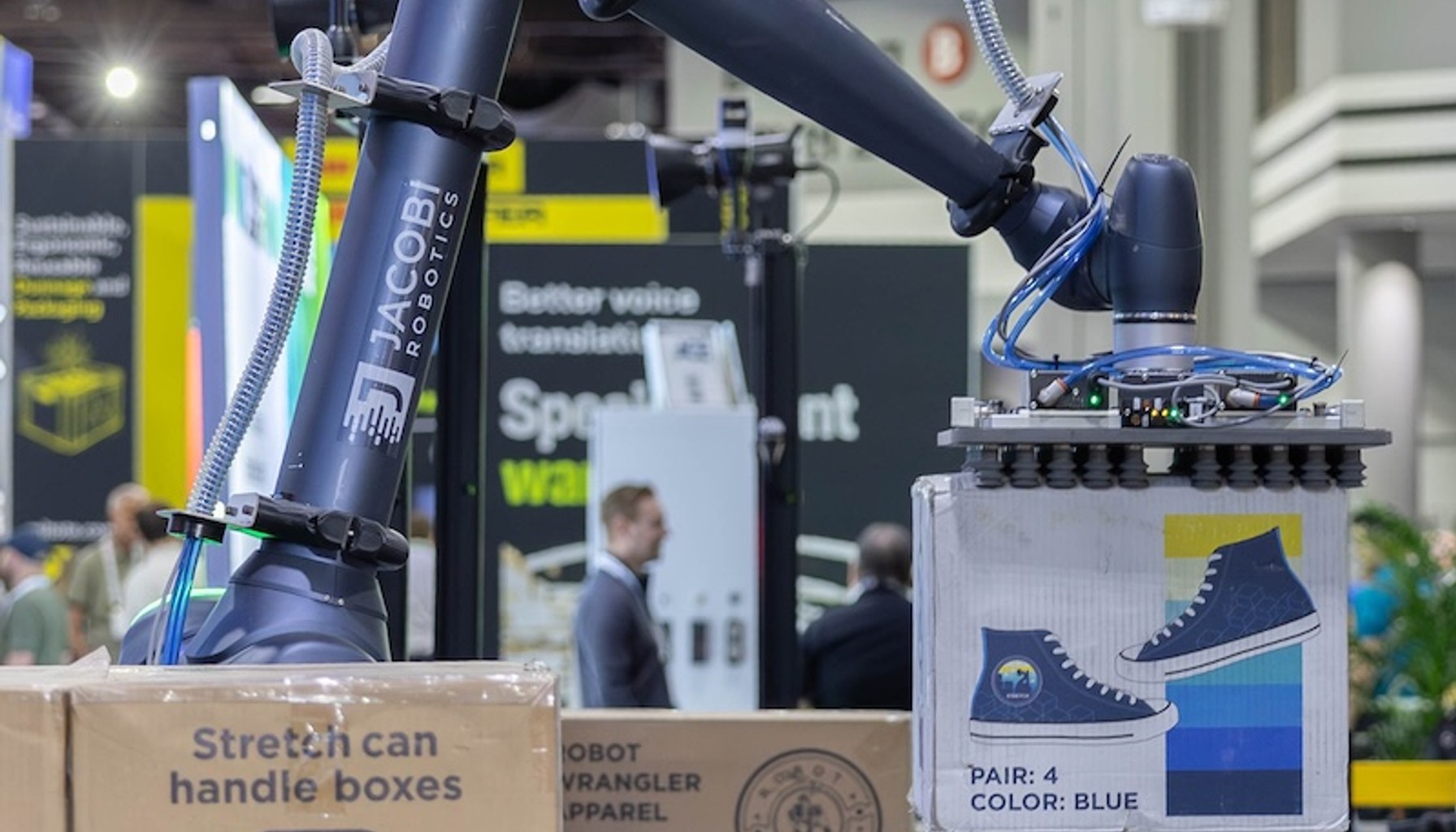
An AI-powered palletizer just moved from demo to deployment.
Peak Technologies has partnered with Jacobi Robotics to bring the OmniPalletizer—described by the vendors as a physical AI platform—into complex warehouses and distribution centers. The collaboration is framed as a practical bridge between automated perception and real-world material handling, aimed at delivering mixed-case palletizing without the traditional bottlenecks that plague busy DCs. In a gear-to-gear sense, the system is meant to curb the upstream buffering, sorting, and sequencing that can derail a palletizing cell when SKU mixes swing unpredictably.
Industry insiders say the pairing targets a familiar pain point for modern fulfillment: mixed-case pallets that demand rapid reconfiguration and precise gridding of items as orders tighten. Peak and Jacobi emphasize that the OmniPalletizer coordinates with conveyors and upstream buffers to shave idle time and align downstream flow with real-time picking and packing activity. Production data shows promise in early deployments, but the narrative remains qualitative at this stage: the system appears capable of juggling diverse SKUs without a long tune-up cycle, a common hurdle for older palletizing cells.
What deployment actually requires on the floor is becoming clearer. Integration teams report that a successful install hinges on concrete floor space for a dedicated robot cell, reliable power and data connectivity, and a training plan that gets operators and technicians up to speed on AI-driven decision logic, fault handling, and changeover procedures. Floor supervisors confirm that the system’s strength lies in its ability to adapt to mixed-case streams rather than a single SKU, but they also caution that the up-front footprint and the surrounding conveyor logic must be re-optimized in tandem. In other words, you don’t drop an AI brain into a misaligned cell and expect miracles; a coherent end-to-end flow matters as much as the AI.
There are still human-led tasks in the loop. Operators and line leads will continue to handle exception cases—irregular items, damaged packaging, or orders that require special stacking rules—where human judgment remains more cost-effective than a fully autonomous fallback. The strategy, industry observers say, is to let AI handle the routine, repeatable decisions while preserving human oversight for edge cases, quality checks, and line changeovers.
Hidden costs vendors don’t always highlight upfront can surface quickly in the real world. Beyond the initial purchase, integration often requires data migration and software coordination across ERP, WMS, and the robot controller, plus ongoing software licenses and cybersecurity hardening. Maintenance cycles, calibration routines, and periodic retraining of the AI model to reflect new SKUs or packaging changes are additional line items that can stretch the total cost of ownership beyond the purchase price.
If there’s a throughline, it’s this: the move to AI-driven palletizing is less about a single magic button and more about re-engineering the entire upstream flow to exploit automation’s strengths. The OmniPalletizer represents a concrete step toward higher throughput in mixed-case environments, but its success will depend on disciplined implementation, precise space and power planning, and a willingness to reconfigure adjacent buffering and sequencing logic. For plant managers weighing this in a capital plan, the question isn’t only what the robot can do, but how well the surrounding system is prepared to let it do it.
- Peak Technologies partners with Jacobi Robotics to deliver next-generation mixed-case palletizing automationroboticsandautomationnews.com / Source role not classified / Published APR 16, 2026 / Accessed APR 17, 2026