AI-Palletizing Hits Real Warehouses
By Maxine Shaw
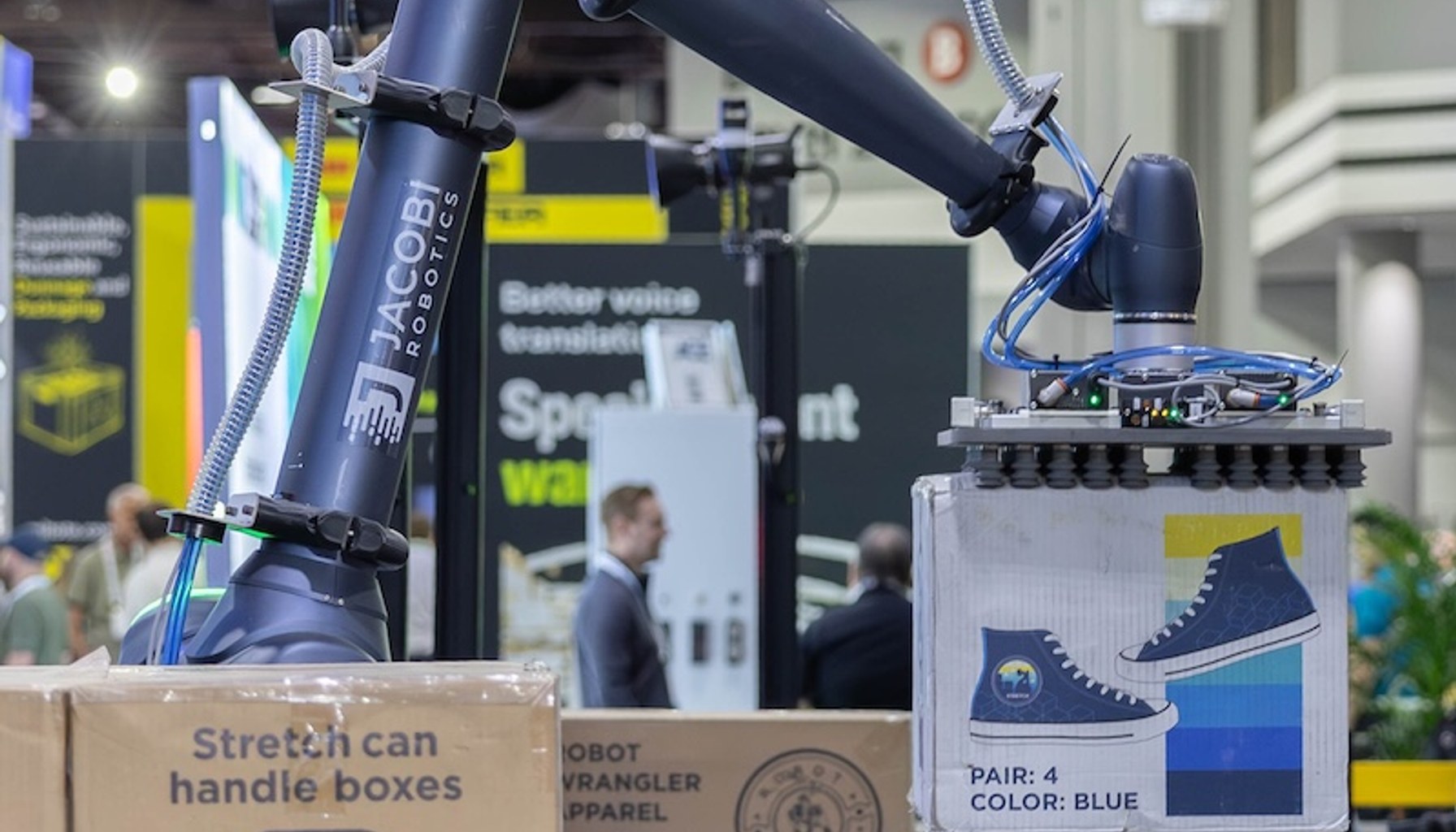
Image / roboticsandautomationnews.com
AI-powered palletizing just hit the warehouse floor.
Peak Technologies’ new partnership with Jacobi Robotics promises to move mixed-case palletizing from glossy demos to real-world deployment, with the Jacobi OmniPalletizer described as a “physical AI platform” built to tame the chaos of high-variety SKUs in complex warehouses and distribution centers. The collaboration aims to streamline the process where upstream buffering, sorting, and sequencing often bottleneck inbound and outbound flows, letting robots handle decisions that used to require a human or several manual handoffs.
What makes this notable is the shift from scripted automation to adaptive, AI-driven cell logic. The OmniPalletizer is positioned to orchestrate product flow across diverse case sizes and weights within a single palletizing cell, reducing the bespoke choreography that typically accompanies mixed-case work. In practical terms, production data shows that the system’s real-time decisioning can smooth transitions between SKUs, potentially cutting variability in the downstream packing and loading steps. Yet the initial release and partner materials stop short of lofty promises; the exact cycle-time gains and throughput figures for live sites aren’t disclosed in the announcement.
From a practitioner’s lens, the success of this approach hinges on integration discipline. Integration teams report that a “physical AI” palletizer still requires a well-defined footprint on the floor, stable power supply, and robust network connectivity to keep the model-fed decisions in sync with conveyors and downstream sorters. Without that, the touted gains in sequencing and buffering can evaporate into capacity constraints or frequent rework. The industry has learned this lesson the hard way: a demo can hide weeks of integration work behind a single press release.
Two realities for plant floor leaders stand out in this development. First, the human element remains essential. Operators will still perform changeovers, supervise exception handling, and maintain the learning models that govern the AI’s choices. The robot may shoulder much of the routine decision-making, but humans will remain responsible for monitoring quality, validating SKU mappings, and stepping in during edge cases—especially when new SKUs or packaging changes arrive mid-shift. Second, hidden costs tend to emerge after the purchase. In similar deployments, software licensing, periodic model retraining, data infrastructure, and ongoing maintenance add up even when the hardware is sound. ROI discussions that focus only on the upfront capital cost often miss these long-tail obligations.
Industry observers note a broader strategic signal: partnerships that combine a physical AI palletizing platform with a systems integrator mindset are becoming a common path to reduce total-cost-of-ownership. The Jacobi-Peak collaboration appears designed to minimize iterative tinkering and reprogramming that can derail a high-mix line if not properly scoped. Still, the absence of published payback data means finance teams will rightly scrutinize the project with the same rigor they apply to any capital investment: where are the savings coming from, and how will they scale with SKUs, seasonality, and expansion?
In short, the Peak-Jacobi alliance marks a meaningful, real-world push toward AI-enabled palletizing for mixed-case environments. The effectiveness of the approach will hinge on disciplined integration, transparent ROI reporting, and careful management of the ongoing operational costs that typically accompany AI-enabled manufacturing.
Sources
Newsletter
The Robotics Briefing
A daily front-page digest delivered around noon Central Time, with the strongest headlines linked straight into the full stories.
No spam. Unsubscribe anytime. Read our privacy policy for details.