Artemis II Heat Shield Holds Splashdown Near Target
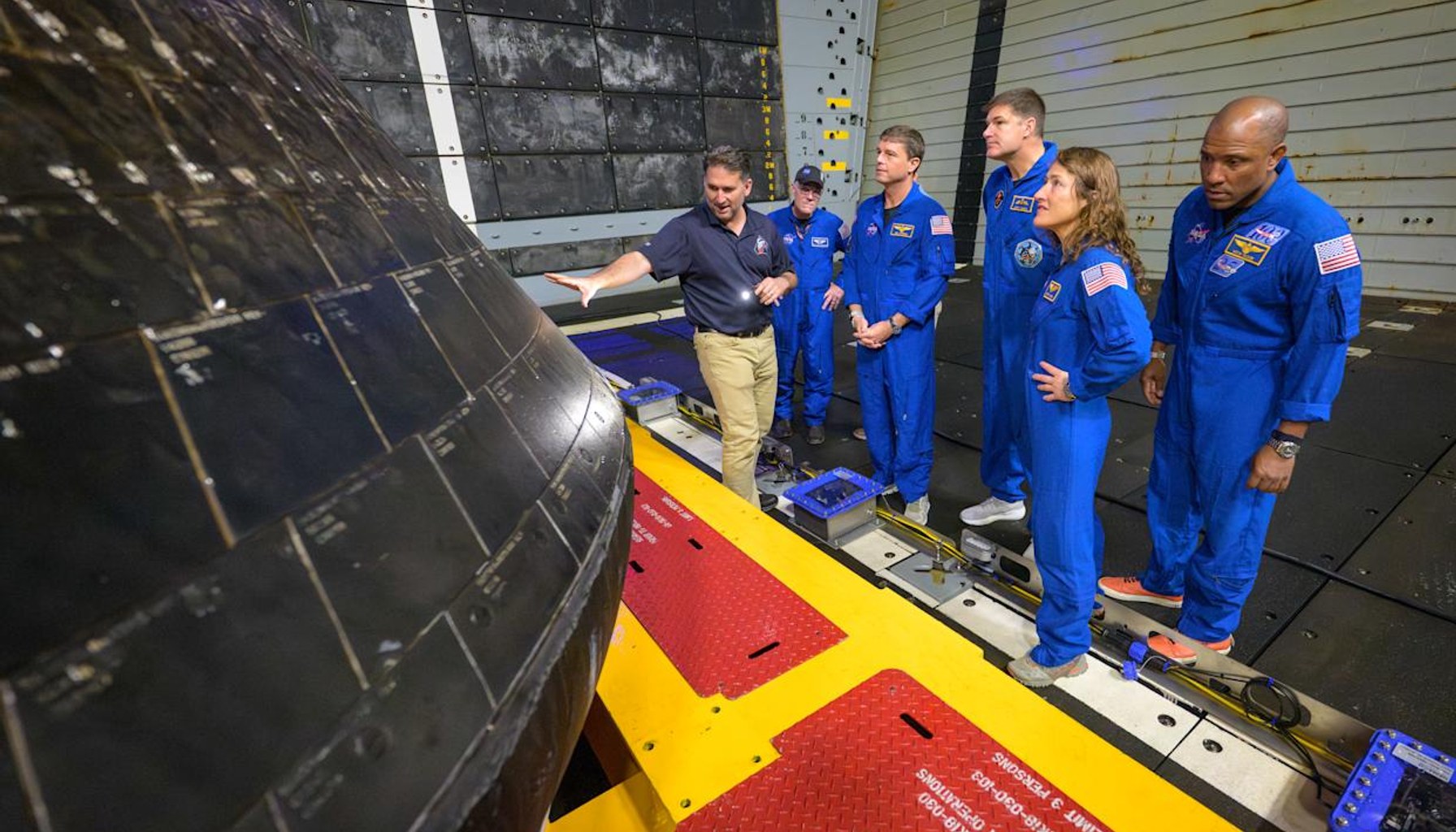
Artemis II came home with a near perfect heat shield and a bullseye splashdown.
NASA’s early post-flight analysis shows the Orion crew capsule performed as hoped on its first crewed lunar test flight, a crucial signal as the agency presses toward crewed missions in 2027 and 2028. In a briefing summarized by Engadget, officials said the heat shield “performed as expected, with no unusual conditions identified,” and it did not exhibit the same level of char loss seen in the uncrewed Artemis I flyby. That difference matters: a tougher return from deep space is a stern test for thermal protection, and the drop in char suggests the shield will hold up under the heat of reentry for a crewed mission.
The test flight also logged a precise splashdown, landing just 2.9 miles from its targeted site. NASA noted that Orion’s entry interface velocity was within one mile per hour of predictions, a reliability statistic that translates into less last-minute drama for recovery crews and mission control on the ground. Meanwhile, the Space Launch System rocket itself performed well, with the post-flight readouts confirming that, at main engine cutoff, the core stage’s RS-25 engines propelled the spacecraft to over 18,000 miles per hour on its orbital insertion, achieving a burn profile that matched the long-range plan.
There was, however, a documented issue in the initial post-flight notes that NASA plans to review further. The report’s wording in the briefing material trailing off suggests some trouble related to a non-propulsion subsystem, described only as “the toile” in one line, before the sentence cuts short. It is not unusual for flight reviews of this scale to surface minor cabin or life-support hiccups as teams scrub data across dozens of subsystems. For crewed missions, even small comfort-and-availability issues can ripple into scheduling, crew readiness, and the broader risk assessment, so NASA will likely knit this into its ongoing lessons learned before the next test flight.
These early takeaways have real implications for Artemis III, and for the broader push to return humans to the lunar surface. The heat shield’s performance reduces one of the most consequential risk factors in crewed reentry, while the accurate landing profile reinforces confidence in navigation, guidance, and atmospheric modeling that must hold under a wider range of flight conditions for a longer mission profile. The SLS’s demonstrated reliability remains central to NASA’s cadence, given that the agency has pinned its near-term lunar ambitions on a proven heavy-lift capable of delivering both crew and cargo with the needed safety margins.
Two key practitioner insights emerge from the data so far. First, thermal protection remains a high-leverage area. Artemis I exposed a gap between uncrewed and crewed heat-resilience margins, and Artemis II’s results suggest those margins are narrowing in the right direction, but engineers will still push for an even more forgiving envelope as durations lengthen and lunar captures move from distant orbit to surface operations. Second, mission timing and risk management revolve around robust ground and flight data integration. The 2.9-mile splashdown and the velocity accuracy both point to mature modeling and real-time decision support, but the minor cabin-system note underscores a broader truth: life-support and crew comfort are as critical as propulsion when planning to stay longer in deep space.
For consumers watching the space race, the message is a straightforward one: progress is measurable, and the clock is ticking toward deeper lunar exploration, with NASA iterating on what works and fixing what doesn’t. Artemis II strengthens the case that the sequence of tests, not just the big public milestones, is what ultimately builds a safer, more capable lunar program.
- NASA's initial takeaways from the Artemis II mission, and more science storiesengadget.com / Source role not classified / Published APR 25, 2026 / Accessed APR 27, 2026