Automated Changeovers Cut Time, Boost Customization
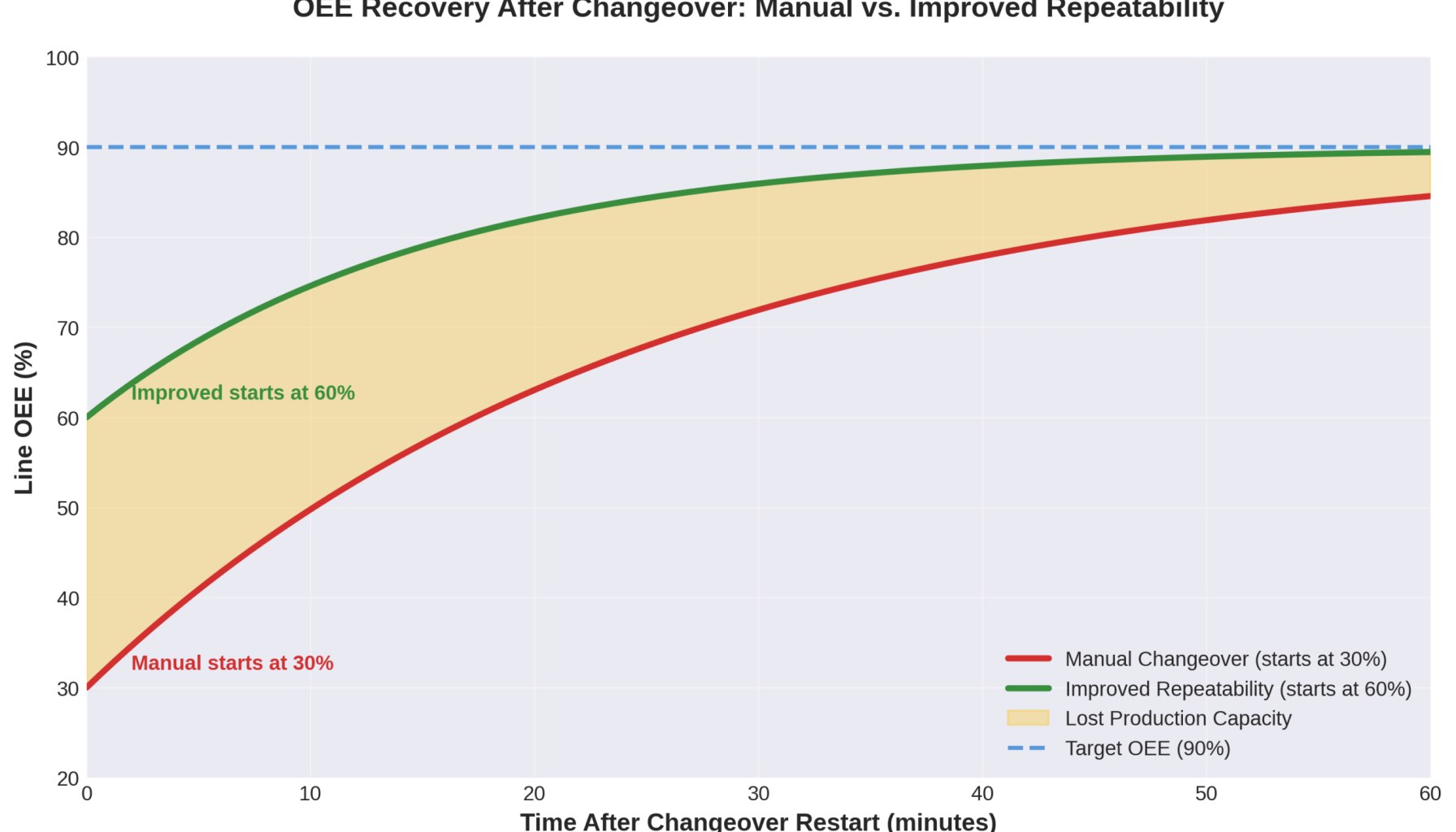
Changeovers used to take hours; now they take minutes. That dramatic shift is reshaping how manufacturers chase mass customization, turning what was once a fragile handoff between batches into a repeatable, recipe-driven process. Across the plant floor, teams report that automation tools—recipe-based control systems, servo-driven peripherals, and MES integration—are converging to shrink setup times without sacrificing accuracy or quality.
Production data shows that replacing manual changeover steps with automated sequences delivers more than just time savings. By codifying how a line switches from one product to the next, manufacturers reduce variability, improve repeatability, and unlock the flexibility to run smaller lots with confidence. The result is a measurable lift in operational metrics: faster response to changing demand, fewer scrapped parts due to misalignment, and better adherence to revised schedules when orders arrive mid-cycle. Integration teams report that the real value comes when these changes are baked into the digital backbone of the plant—recipes stored in control systems, parts and tooling tracked by MES, and real-time feedback loop closed by sensors and analytics.
ROI documentation reveals a broader picture. The payoff isn’t only shorter downtime; it includes improved overall equipment effectiveness, less waste from miscalibrations, and greater scheduling flexibility that reduces idle capacity. When a line can snap from one SKU to another without a two-hour gap for setup, planners gain the ability to say yes to smaller runs and more product variety without paying a heavy penalty in throughput. Floor supervisors confirm that the changeover gain compounds over the shift and across lines, enabling manufacturers to stitch together leaner run sequences with higher cadence than previous generations could support.
But the path to faster changeovers isn’t trivial. Integration requirements loom large: floor space must accommodate new automation cells, there must be sufficient power provisioning and network reach, and training hours for operators to understand recipe logic and troubleshooting routines become a non-negligible line item. The practical gatekeepers aren’t just machinery; they’re people and processes. Operational constraints—how to organize tooling, how to tag parts, and how to validate a recipe across multiple batches—still require human oversight in the transitional phase, even as automation handles the routine steps.
Two to four practitioner insights emerge from the field. First, standardization within families of products is often the biggest multiplier: the more repeatable the parts, the easier it is to lock in a reliable changeover strategy. Second, the ROI sweet spot tends to appear where changeovers are frequent enough to offset the costs of implementing recipe-driven controls and MES ties, but not so frequent that the line becomes unstable during re-qualification. Third, the accuracy of the data feeding the recipe—part numbers, tolerances, and tooling setups—matters as much as the hardware. If the inputs aren’t clean, automation amplifies the error. Fourth, even with automation, the human role shifts rather than disappears: technicians focus on maintaining recipes, validating new SKUs, and handling exceptions that automation can’t preempt.
Hidden costs, vendors sometimes gloss over, surface once a project moves from pilot to rollout. Integration with existing MES, data migration between systems, and the validation overhead—plus the learning curve for operators—can extend timelines and budgets if not explicitly planned. In practice, the most successful deployments treat these as visible inputs rather than afterthoughts, pairing technical implementation with change management and training early in the project.
In the end, the numbers tell the story: automation is not a marketing promise but a capability that converts lengthy changeovers into predictable, defendable gains. As plants chase smaller batches and broader product lines, the recipe-driven, MES-linked changeover is becoming a standard tool in the lean playbook—one that turns the era of mass customization from a challenge into a measurable advantage.
- Ways to automate changeover for the era of mass customizationplantengineering.com / Source role not classified / Published APR 06, 2026 / Accessed APR 07, 2026