The Hong Kong-listed company shipped embodied-robot joints, but they generated only a small share of recent revenue.
Benmo Technology listed on the Hong Kong Stock Exchange on September 29, according to TMTPost. Its current business is still dominated by direct-drive power modules, mainly used in robotic vacuum cleaners.
TMTPost reports that these modules accounted for more than 95% of Benmo’s revenue. Revenue from embodied joint modules and complete robots totaled RMB14.1 million, or about 5% of the company’s revenue.
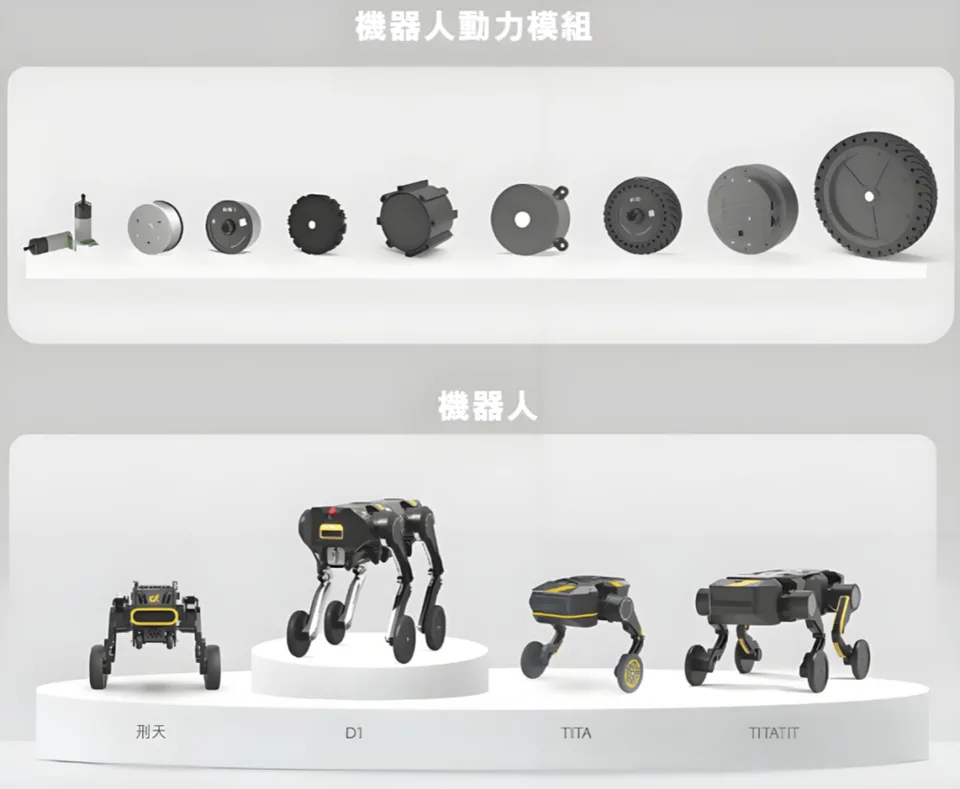
Benmo shipped 12,000 embodied joint modules in 2025, generating RMB6.8 million. It had also supplied one of China’s five leading embodied-intelligence robot makers, ranked by orders on hand in 2025. TMTPost does not identify that customer or establish whether the supply represented pilot use or scaled production.
The company’s direct-drive design combines a motor, position sensor and control electronics without a gearbox. This can reduce noise and improve response. An industry insider quoted by TMTPost said the approach fits consumer products such as drive wheels and roller brushes, where speeds and loads are relatively modest.
Humanoid robots present a harder test. Their arms and legs need high torque in tight spaces, while managing impact and heat. Removing a gearbox also removes mechanical torque multiplication. TMTPost says leading humanoid joints still mainly use harmonic or planetary gearboxes.
Benmo’s own complete robots are wheeled-legged, not humanoid. It sold 240 of them in 2025, generating RMB7.31 million, but the company has not produced its own humanoid robot to demonstrate its route.
For now, readers should view Benmo as a component supplier with an embodied-robot option, not a humanoid-robot maker. Its next meaningful step is proving that joint modules can meet humanoid torque, heat and durability demands while becoming a material business beyond robotic vacuums.