DeepRoute frames AI as physical world infrastructure
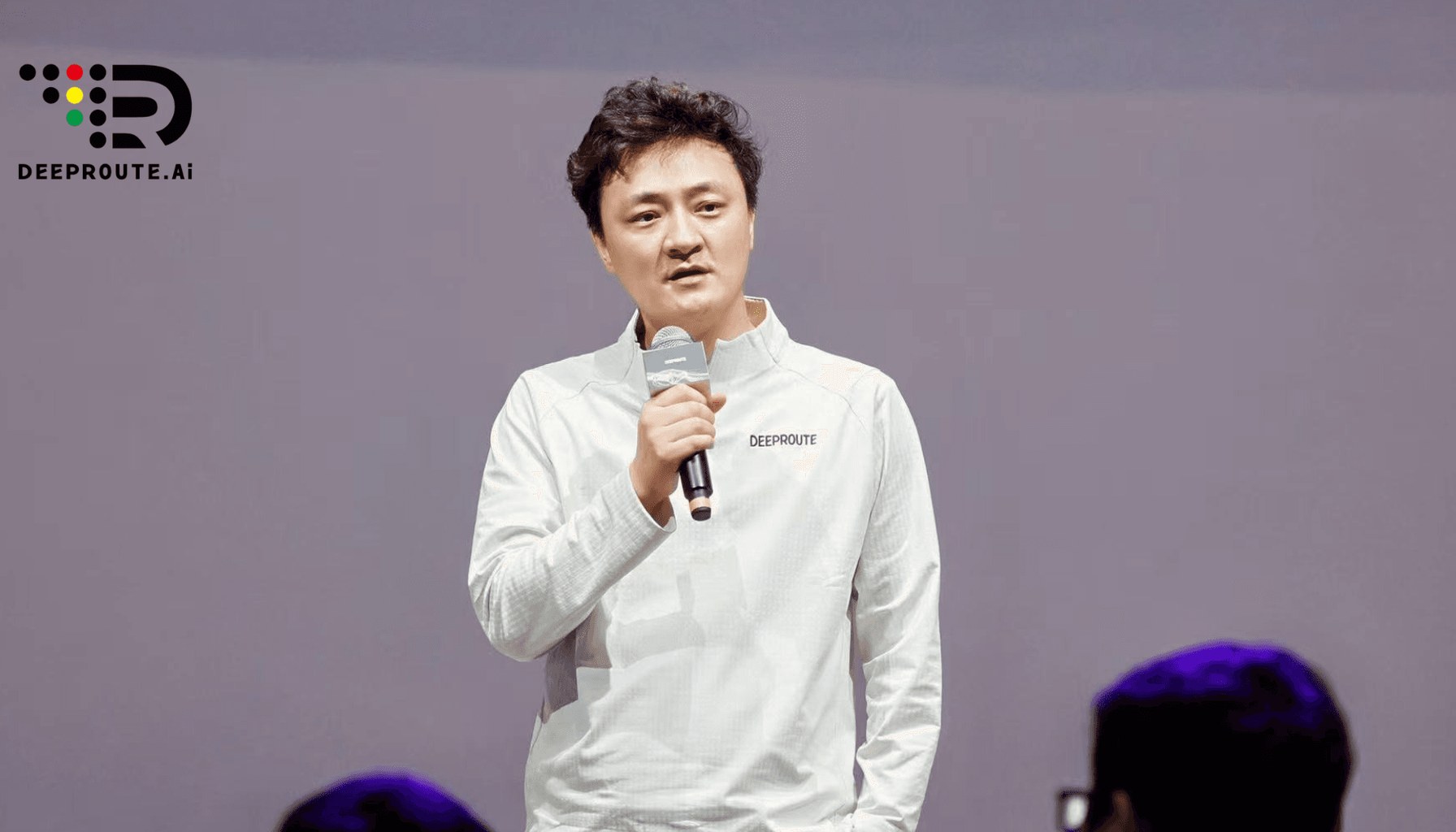
Image / pandaily.com
There was no vehicle on display as DeepRoute.ai rolled out a broader thesis. On April 25, 2026, in Hall A4 of the China International Exhibition Center in Beijing, the company treated a showroom floor as a stage for ideas, not cars, signaling a shift from product launches to platform ambition.
CEO Maxwell Zhou used the moment to declare a top level strategy built around what Chinese engineers call 物理世界 AI, or Physical AI. In practical terms, DeepRoute aimed to sell not a hardware package but an entire software stack that acts as the brain for autonomous driving. The company framed its architecture around a 基础模型, a Foundation Model specialized for physical interactions, and a 舱驾一体化代理, an integrated cabin driving agent designed to operate across vehicle interiors. The goal is to turn AI advances into a universal control layer that can be deployed across multiple OEMs and models, rather than tying customers to a single hardware line.
The company framed its vision as a full stack proposition that goes beyond carmakers. DeepRoute described itself as the brain builder, not a carmaker, and emphasized a market position: one in every three new urban NOA equipped vehicles in China now runs on DeepRoute’s system, equating to more than 300,000 cars on the road. It was a dramatic statistic intended to anchor the thesis in reality, a tangible share for a software stack supposedly on the verge of becoming a city-scale infrastructure.
Midway through the event, Chief Scientist Ruan Chong took the stage for the first time since joining DeepRoute, signaling that the company intends to anchor its claims in deep research credibility. Ruan, formerly the head of R&D at DeepSeek and a core multimodal AI researcher, appeared to reassure industry watchers that the push to connect AI breakthroughs with physical world impact is more than talk. The blunt message was: the industry is watching and the field is ready for a broad platform play.
The presentation was a deliberate departure from the spectacle of concept cars and glossy specs that normally fill such halls. By not displaying hardware, DeepRoute underscored a policy-minded truth from the Chinese manufacturing environment: the fastest route to scale is to control the software backbone and the data it learns from, rather than rely solely on hardware cycles. In a market where local automakers, sensor suppliers and components makers are locked in a race to reduce cost while boosting safety, a “brain” platform offers a potential data moat and a route to standardization across dozens of models and cities.
Two practitioner takeaways stand out for supply chain managers and investors watching China’s AI auto layer closely. First, DeepRoute’s model highlights a shift toward platform risk. If the Foundation Model approach scales, fleets across OEMs can share data and swap modules, but the core risk is the reliance on a single software platform to govern critical safety logic. Second, the event signals the importance of the data network. With more than 300,000 DeepRoute-equipped cars on the road, the potential for real world learning accelerates, tightening a feedback loop that would be hard for newcomers to match without meaningful fleets in the wild. For suppliers, that means a premium on high reliability sensors, compute modules, and edge infrastructure compatible with a shared foundation layer.
The unveiling also hints at policy and market realities in China. The capital is pushing AI for manufacturing and mobility as a national infrastructure project, which creates a favorable climate for software-first auto tech players to scale through OEM partnerships and city deployments. Yet the path from stage to street will require strict safety validation, regulatory alignment, and clear delineation of data governance across multi-brand vehicles operating in dense urban environments.
What happens next will determine whether this is an industry pivot or a cunning packaging of hype. DeepRoute’s insistence on the brain over the chassis is a reminder that the Chinese market is increasingly favoring scalable software platforms capable of absorbing learning across fleets. If the 300,000-vehicle milestone holds and the Foundation Model approach proves adaptable across models, the supply chain implications will be profound, reshaping who controls data, who owns the software stack, and how quickly cities can move from demonstrations to daily reality.
- From DeepSeek to DeepRoute: Why a Top AI Researcher Bet on the Physical Worldpandaily.com / Published APR 29, 2026 / Accessed APR 29, 2026