Electrically driven muscles power next-gen humanoid actuation
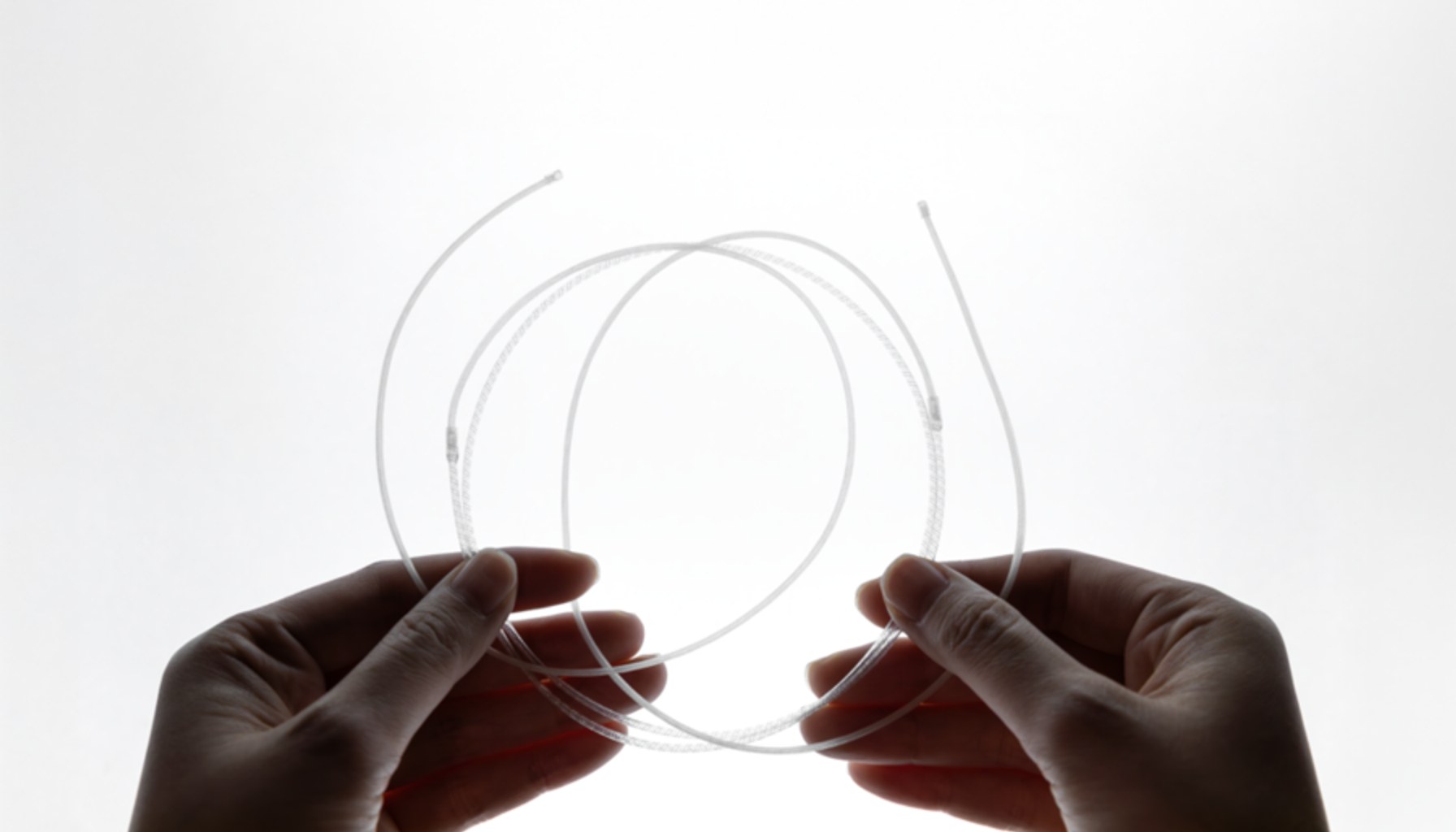
A fiber-scale muscle, powered by silent electric forces, could finally quiet the clamor of future humanoids.
Engineering documentation shows researchers at MIT Media Lab and Politecnico di Bari have stitched two advanced actuation concepts into a fiber-friendly package: a thin McKibben actuator that inflates and contracts like a biological fiber, and a miniaturized solid-state pump based on electrohydrodynamics (EHD) that drives pressure inside a sealed fluid chamber without moving parts or an external fluid supply. In Science Robotics, the team describes how these electrofluidic fiber muscles can be arranged in configurations tailored to a task, promising a level of compliance and quiet operation that has long eluded rigid servo systems. The combination aims to deliver muscle-like force and speed without the bulk, noise, or heat that typically come with motors and pumps.
What makes this development noteworthy for humanoid design is the fiber form factor. Traditional soft actuators rely on bulky pneumatic lines or hydraulic hoses; even compact artificial muscles struggle with integration into wearable skins or textiles. The new approach, by contrast, embeds actuation directly into a fiber, opening possibilities for weaving muscles into sleeves, hands, or entire limbs. The EHD pump is especially important: it can generate pressure in a sealed fluid cavity without moving parts, eliminating the need for external pumps or continuous fluid supply. In practice, that means actuators could be embedded in fabrics or flexible joints with fewer failure-prone components and less noise—an appealing combination for real-world humanoid robots that must operate around people.
From a practical engineering standpoint, there are clear constraints to watch. First, long-term reliability remains unproven. Fluid seals at fiber scale can be vulnerable to micro-leaks, fatigue, and material creep after repeated cycles. The MIT/Bari team’s results are grounded in lab testing; published benchmarks confirm proof-of-concept performance, but not yet field durability. Second, the energy budget and control strategy for large networks of these fibers are still open questions. A robust humanoid would require coordinated actuation across dozens to hundreds of fibers, with sensors and feedback loops that keep posture, grip, and gait stable. The researchers’ use of a solid-state pump helps reduce external hardware, but it also concentrates power demands in a compact region, which raises heat and battery sizing considerations that are not yet resolved in public disclosures.
For humanoid designers, the potential benefits are compelling enough to warrant close watching. If the fiber muscles scale effectively, designers could weave actuation directly into a gloves-and-sleeves interface, letting the hand and forearm flex with muscle-like precision while staying quiet enough for shared-work environments. The nature of the actuation—compliant, soft, and naturally integrated with textiles—could reduce injury risk during human-robot interactions and improve tolerance for human co-worker proximity. In terms of performance, the actuation mechanism aims to strike a balance between force, speed, and controllability, without the harshness of stiff motors. But until run-time metrics, cycle-life data, and full-system integration tests are published, it remains an exciting concept with a long runway before “field-ready.”
In context, this work marks a meaningful incremental step rather than a leap. It builds on the soft-actuator lineage—where flexible materials offer safety and adaptability—but sidesteps some of the practical baggage (bulk, noise) that has deterred widespread adoption. Compared with earlier fluid-driven approaches, the fiber-based integration paired with an internalized pump offers a path to textiles-enabled actuation. Yet the transition from lab proof-of-concept to humanoid-ready hardware involves solving manufacturing yields, scaling energy delivery, and ensuring long-term reliability across repeated gait cycles and gripping tasks.
If the researchers successfully translate this into robust, scalable modules, the next few years could see humanoid designers experiment with fabrics that literally flex with the robot’s intent, rather than relying on clunky joints and hoses. The promise is alluring: quieter, softer, more integrated actuation that feels less “machine” and more natural. The caveat remains bluntly technical—durability, energy, and control must prove out in real-world environments before we call this a field-ready actuation paradigm.
TRL-wise, this work sits squarely in the lab-demonstration realm, with controlled-environment validation likely to follow before any serious field testing. The published results confirm the concept, but the path to a reliable humanoid hardware platform will demand iterative engineering, independent replication, and transparent lifecycle testing.
- A new type of electrically driven artificial muscle fibernews.mit.edu / Primary source / Published APR 09, 2026 / Accessed APR 11, 2026