Gig workers train humanoid robots at home
By Alexander Cole
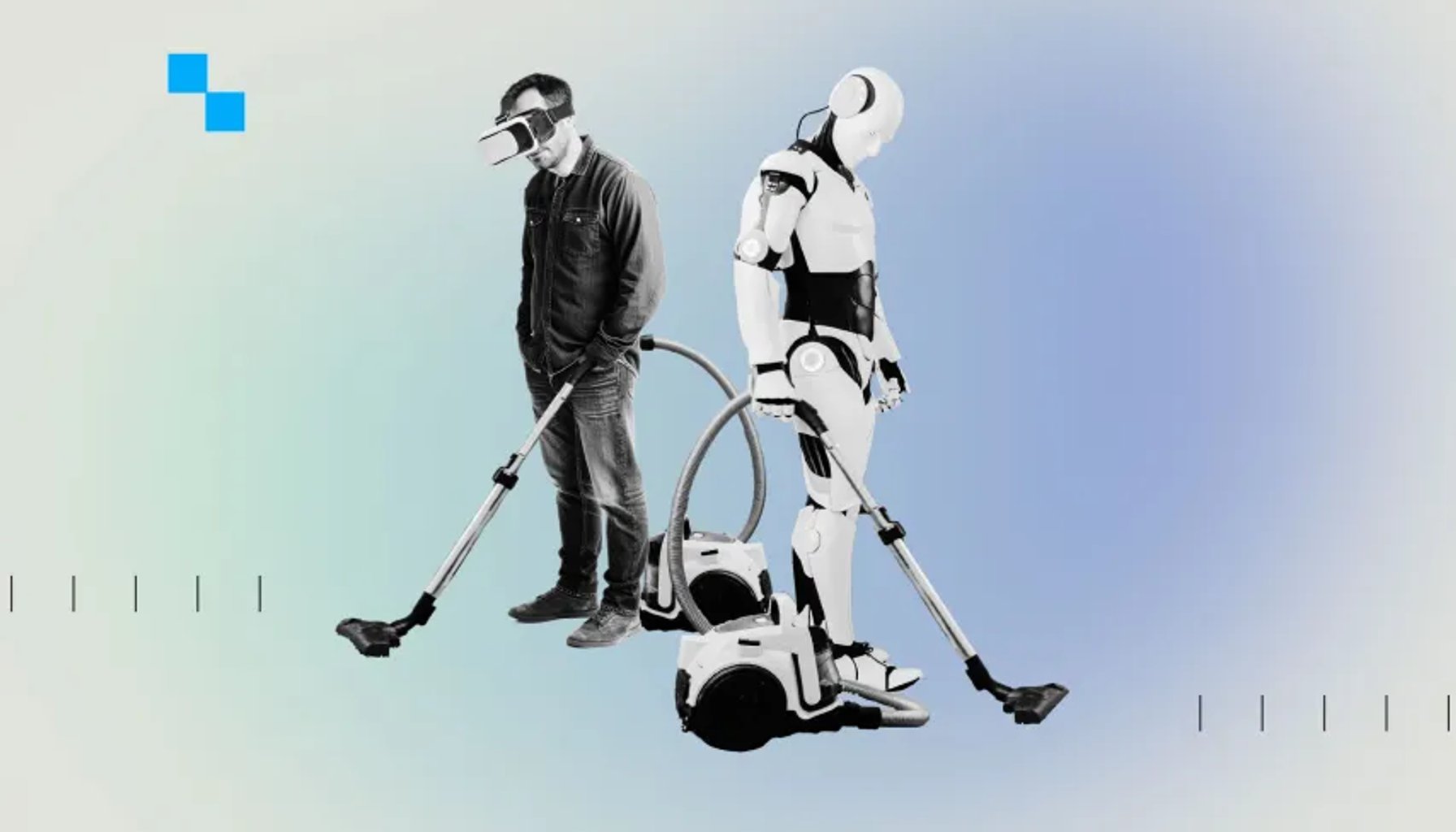
Image / technologyreview.com
A ring light and an iPhone strapped to the head are teaching tomorrow's robots.
Two Technology Review pieces lay out a quiet, global shift: humanoid robots are learning not in pristine labs but in living rooms, kitchens, and studios—courtesy of gig workers who record themselves performing everyday chores. Micro1, a US outfit, has hired thousands of contract workers in more than 50 countries to capture real-world footage that robotic firms say speeds up the jump from lab to home. Zeus, a medical student in Nigeria, straps his device to his forehead after long hospital shifts to film himself folding laundry or washing dishes, turning a routine evening into training data for the robots of the future. The arrangement pays well by local standards, but it also raises thorny questions about privacy, consent, and who owns what gets learned in a person’s home.
The broader picture is equally unsettled. As companies like Tesla, Figure AI, and Agility Robotics race to build humanoids that can move and assist in real life, the data streams from gig workers are becoming a hot—and controversial—fuel. The data, the article notes, isn’t just about pretty pictures. It’s about sequences of actions, context, and timing—the kind of multi-step variability that yields robots that can fold laundry, set a table, or navigate a cluttered apartment. Yet the practice sits at a tension point: how do you ensure informed consent when workers in dozens of countries are recording intimate, private spaces? How do you guard against misuse of footage or sensitive content, and how do you comply with shifting privacy norms across jurisdictions?
Beyond privacy, the reporting circles back to a long-standing debate in AI evaluation. The Download highlights a sobering critique: AI benchmarks have long rewarded isolated capabilities rather than robust, long-horizon performance in messy, real-world environments. In robotics terms, the difference between passing a toy-task test and reliably operating in a home is enormous; the new data streams underscore how far we are from trustworthy, end-to-end behavior in domestic settings. That skepticism isn’t a nitpick—it’s central to product viability. If a robot can’t reason through a sequence of chores in a real apartment, it’s not ready to ship, even if it aces a handful of sandbox tasks.
For practitioners, a few hard truths emerge. First, data governance is not optional. The gig-data model introduces consent, provenance, and cross-border transfer challenges that go beyond typical lab datasets. Second, quality control isn’t just about footage quantity; the real-world variability—lighting, camera angles, household artifacts—must be captured and labeled with careful standards to avoid embedding harmful biases in robot behavior. Third, benchmarks matter in practice. The push for longer-horizon, multi-step evaluation—measuring how a robot plans, adapts, and completes complex domestic tasks—will determine which products actually land in homes this quarter, not just in research papers. And finally, the economic angle matters: while local pay is attractive, the fragility of the data pipeline (regulatory shifts, worker protections, platform incentives) can ripple into product timelines and risk models.
For the product teams racing to ship this quarter, the takeaway is pragmatic: build with privacy by design, diversify data streams to cover diverse homes and tasks, and align evaluation metrics with real-world use, not lab proxies. The data-from-homes trend offers a powerful, if ethically fraught, shortcut to realism—but only if governance, transparency, and rigorous, long-horizon benchmarking keep pace with it.
The real novelty here isn’t just more footage—it’s a reimagining of how robots learn: from the chaos of real kitchens to the design room. The question is whether teams can harness that chaos responsibly, or if the next wave of humanoids will stall on the doorstep of the home they’re meant to serve.
Sources
Newsletter
The Robotics Briefing
Weekly intelligence on automation, regulation, and investment trends - crafted for operators, researchers, and policy leaders.
No spam. Unsubscribe anytime. Read our privacy policy for details.