NJ Ruling Undermines State Bets on Kalshi
By Riley Hart
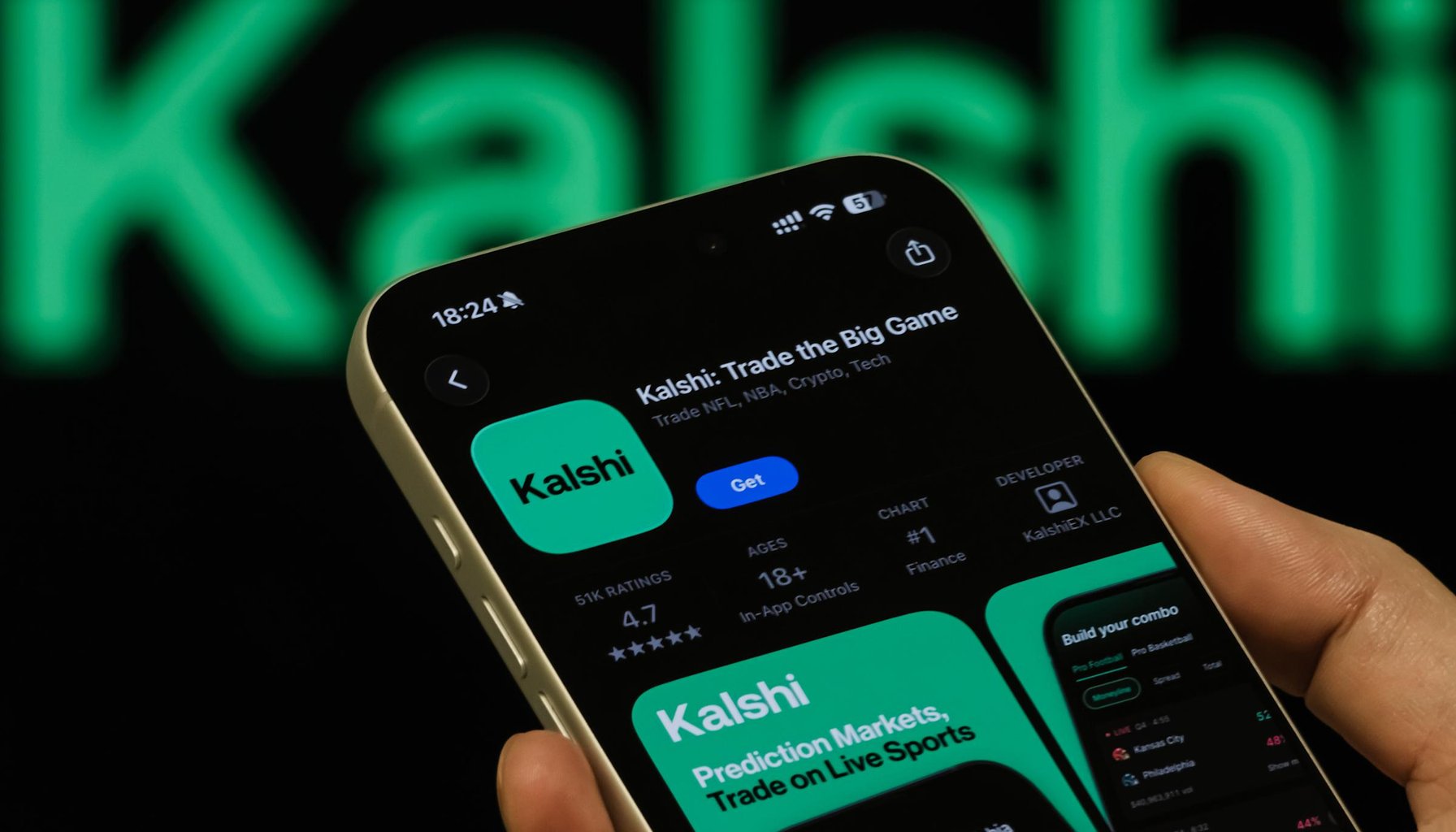
Image / engadget.com
A federal appeals court just told New Jersey: don’t try to ban Kalshi’s prediction market.
A three-judge panel of the 3rd U.S. Circuit Court of Appeals on Monday ruled that New Jersey lacks the authority to regulate Kalshi’s platform, which lets people wager on the outcomes of events—from sports results to geopolitical developments. In what’s effectively a clash over where federal oversight ends and state authority begins, the court said the Commodity Futures Trading Commission (CFTC) holds the regulatory leash for prediction markets, not the Garden State.
The decision colors a larger tug-of-war between states eager to police new online betting formats and a federal framework that treats these markets as futures-like contracts under the CFTC’s remit. The panel’s ruling effectively preserves Kalshi’s ability to operate in New Jersey, at least for now, while underscoring the role of the CFTC as the central regulator for prediction markets. The agency’s leadership, led by Michael Selig, a Trump appointee, has been an outspoken advocate for these markets, framing them as innovative financial tools rather than simple gambles.
The broader political and regulatory context is telling. Kalshi’s and Polymarket’s emergence has coincided with unusually high political engagement around prediction markets, including questions about who controls information and how markets price events that can carry geopolitical consequences. The article notes a notable cross-current: the Trump orbit has been publicly supportive of Kalshi and Polymarket, with Donald Trump Jr. serving as a paid adviser to Kalshi and an unpaid adviser to Polymarket, and Truth Social preparing to launch its own market. The arrangement highlights how prediction markets have become entangled with political branding and messaging, raising questions about governance and consumer protections.
Beyond the legal back-and-forth, the piece points to concerns about the integrity and economics of prediction markets. Industry observers have flagged instances of insider information and outsized payouts tied to high-stakes events, such as military actions in the Middle East and other geopolitical flashpoints. DeFi Oasis, a blockchain analytics firm cited in the coverage, notes that a tiny sliver of users—fewer than 0.04 percent of Polymarket accounts—captured more than 70 percent of profits, amounting to roughly $3.7 billion. The data spotlight the risk that prediction markets can become highly skewed toward a small cohort of savvy players, a dynamic policymakers say regulators must address through transparent rules and safeguards.
For consumers contemplating participation, the ruling signals both opportunity and caution. On the upside, federal preemption provides a clearer, more uniform framework for Kalshi’s operations across states, which can reduce the patchwork of state-by-state restrictions that previously muddied access. On the downside, the legal environment remains unsettled in important respects, and enforcement actions across the broader ecosystem—coupled with concerns about insider trading and market manipulation—mean participants should approach these markets with disciplined risk awareness. Practitioners note that liquidity, event scope, and the platform’s compliance with evolving rules will remain decisive for user experience. If you’re considering a prediction market, expect ongoing regulatory refinement, not a settled landscape.
What to watch next: the CFTC’s ongoing stance on enforcement in this space, any clarifications from the courts about state authority versus federal power, and how platforms handle disclosure, anti-manipulation safeguards, and the distribution of profits among participants. The Kalshi NJ ruling is a reminder that as prediction markets ride a wave of innovation, they’ll also ride a wave of regulatory scrutiny.
Sources
Newsletter
The Robotics Briefing
Weekly intelligence on automation, regulation, and investment trends - crafted for operators, researchers, and policy leaders.
No spam. Unsubscribe anytime. Read our privacy policy for details.