Pony ai Debuts Next Gen Domain Controller on NVIDIA Hyperion
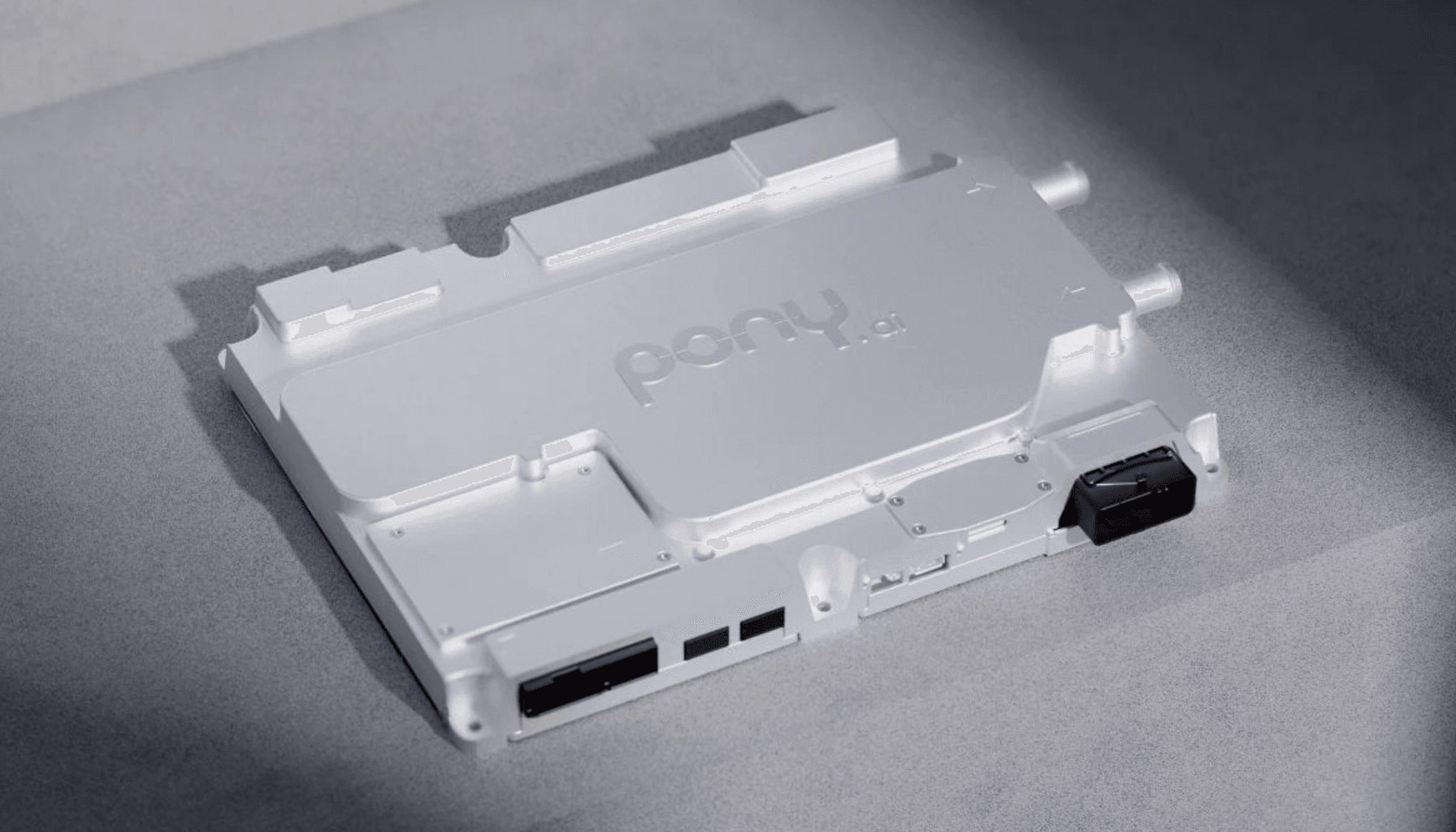
Image / pandaily.com
Pony.ai unveiled a driverless dream machine built on NVIDIA DRIVE Hyperion. The company’s next-generation autonomous driving domain controller, developed with NVIDIA, is built atop the DRIVE Hyperion platform and powered by DRIVE AGX Thor with NVLink, aimed at enabling Level 4 robotaxi operations and broader autonomous-drive applications. The system promises meaningful leaps in AI computing power, energy efficiency, and support for advanced AI models, key for multi-sensor fusion, full-scenario perception, and complex environment understanding.
The platform is designed for flexibility, offering configurable compute levels and cooling options to suit urban and highway use cases. It supports both single-chip and multi-chip configurations and is positioned to incorporate NVIDIA NVLink to achieve high-speed, low-latency communication between two DRIVE Thor system-on-chips. In practical terms, that could mean up to 4,000 FP4 TFLOPS of combined computing performance, a metric Pony.ai touts as pivotal for real-time perception and planning under challenging city conditions. The architecture is described as scalable, with the goal of smoother deployment across fleets and a clearer path to driverless operations at scale.
Pony.ai’s co-founder and CEO James Peng framed the announcement as a milestone in a long-running collaboration with NVIDIA, underscoring how the partnership has supported multiple key milestones in the company’s autonomous driving journey. With the new domain controller, Pony.ai indications point toward a more robust platform for the next phase of robotaxi commercialization and a broader push into owning more of the on-vehicle compute stack.
Contextualized within China’s rapidly evolving AV landscape, the news signals how high-end on-board computing remains a linchpin for moving beyond pilot programs toward city-scale operations. The emphasis on multi-sensor fusion, full-scenario perception, and adaptable deployment reflects the industry’s push to meet stringent safety and reliability demands for L4 rather than lower-level demonstrations. It also highlights a central tension in the domestic ecosystem: while Chinese players increasingly want local data sovereignty and rapid iteration, their most powerful AI compute remains tethered to foreign hardware ecosystems, at least for now.
For operators and suppliers, the development offers concrete takeaways. First, the move to NVLink-enabled multi-chip configurations can unlock higher throughput and finer parallelism for perception and planning stacks, but it comes with greater thermal and power management challenges that must be solved on the vehicle. Second, the ability to tailor compute and cooling configurations is essential for real-world deployment across climates and traffic densities, a non-trivial constraint in many Chinese megacities. Third, Pony.ai’s reliance on NVIDIA hardware reinforces how global semiconductor and software ecosystems still anchor much of China’s most advanced AV capabilities, a reality that pushes both risk management and policy considerations toward diversifying supply chains or cultivating domestic alternatives over time.
In short, the disclosure marks a notable advance for Pony.ai and a clear signal of how edge AI hardware choices are shaping the roadmap of driverless operations in China’s fast-moving EV and AV landscape.
- Pony.ai Unveils Next-Gen Autonomous Driving Domain Controller Built on NVIDIA DRIVE Hyperionpandaily.com / Published APR 26, 2026 / Accessed APR 27, 2026