Toosheh Bypasses Iran Blackout via Satellite TV Signals
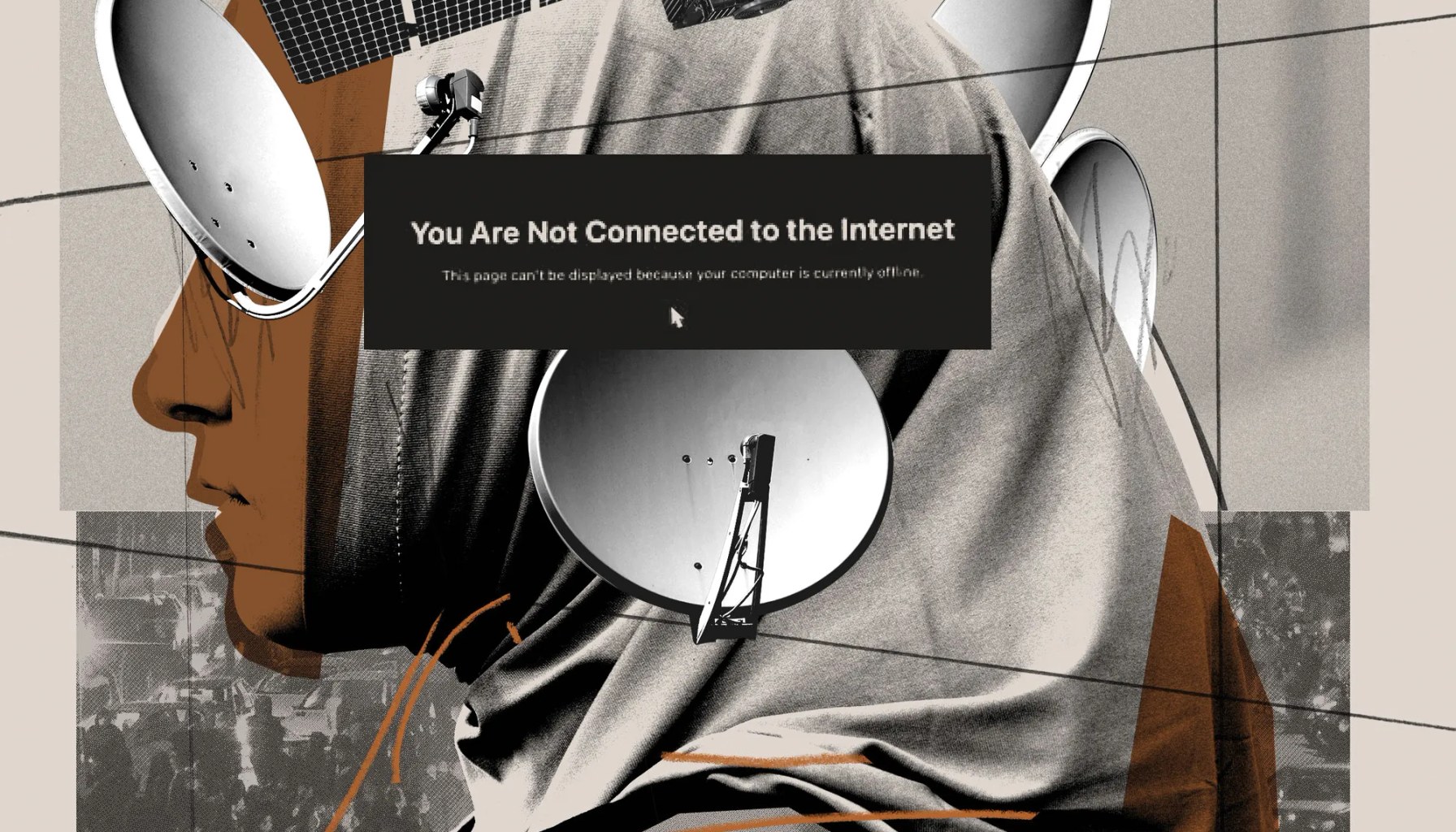
Iran's internet blackout finally met its match, carried over ordinary satellite TV signals.
When the government slapped a near-total communications shutdown on January 8, 2026, more than 90 million people were left isolated from the world and from each other. The outage wasn’t just a hiccup in social feeds; it shut down everything from government intranets and VPNs to text messages, calls, and even landlines. The country’s authorities doubled down in the weeks that followed, and by late February, after U.S. and Israeli airstrikes, information flows across the country remained severely restricted. In that information vacuum, NetFreedom Pioneers (NFP) rolled out a system designed for exactly this scenario: Toosheh, a method to transmit files over broadcast satellite TV signals.
Toosheh isn’t a new app or a clever mesh of phones; it’s a broadcast-oriented solution built to ride on channels people already own and access. As soon as the blackout took hold, NFP turned to a mechanism they had designed for moments like this, a way to push data through the same satellite-TV infrastructure that billions rely on for entertainment. The approach sidesteps the standard internet backbone entirely, delivering information through channels that remain accessible even when the conventional internet is cut off. In practical terms, it means a single broadcast can disseminate updates, critical documents, or public information to large swaths of a population without requiring on-demand two-way connectivity.
The January suspension wasn’t a minor blip. Iran’s leadership faced a rare, sustained information outage alongside a political moment of mass mobilization. Protests in the streets reflected a society confronting economic stress and political repression, making the outage not just a technical problem but a political instrument with real human stakes. The numbers attached to that moment—more than 90 million offline, thousands of investigations into fatalities, and a government response that tightly constrained communication—underscore how a resilient information channel could alter the balance between repression and resistance.
From a technology‑readers’ perspective, Toosheh is a pointed reminder of the tradeoffs between traditional internet-dependent tactics and broadcast-based resilience. Its core strength is scale and reach: a broadcast signal is inherently multicast, so a single transmission can service many recipients in parallel without the need for server-side handshakes, roaming IPs, or last-mile cellular coverage. That makes it a compelling fallback in environments where two-way connectivity is unreliable or censored. Yet it’s not a panacea. The system’s strengths rest on one-way data delivery; real-time interactivity, rapid two-way updates, and large‑scale dynamic services still depend on broader connectivity. For field-deployed robotic teams and disaster-response workflows—where robots may need to coordinate with humans or receive critical updates in austere urban or rural contexts—Toosheh-like broadcast channels could offer a valuable sidepath to keep people informed or to distribute mission briefs when cellular networks fail. It’s a vivid demonstration of the kind of “no-flow, no-fail” redundancy that engineers consider when designing resilient operations in hostile environments.
What to watch next, from a practitioner’s lens: first, scalability and reliability under pressure. How well does Toosheh perform as the broadcast load grows, and what are the limits of data integrity and latency when a nation is simultaneously fighting outages and political disruption? Second, security and privacy concerns will matter as such channels become more widely used for sensitive information; encryption, authentication, and tamper-resistance become as important as reach. Third, interoperability with existing digital ecosystems will determine whether this approach remains a niche workaround or becomes a standard layer in a layered resilience strategy. And finally, observers will want to see whether similar broadcast-based approaches find uptake in other regions facing internet suppression or network outages, turning a clever workaround into a broader tool for information security and civil resilience.
In a landscape crowded with “demo reels” for revolutionary networks, Toosheh offers a sobering reminder: practical, scalable resilience often comes from reusing proven channels, not inventing new ones from scratch.
- Stealth Signals Are Bypassing Iran’s Internet Blackoutspectrum.ieee.org / Source role not classified / Published APR 15, 2026 / Accessed APR 15, 2026