What we’re watching next in humanoids
By Sophia Chen
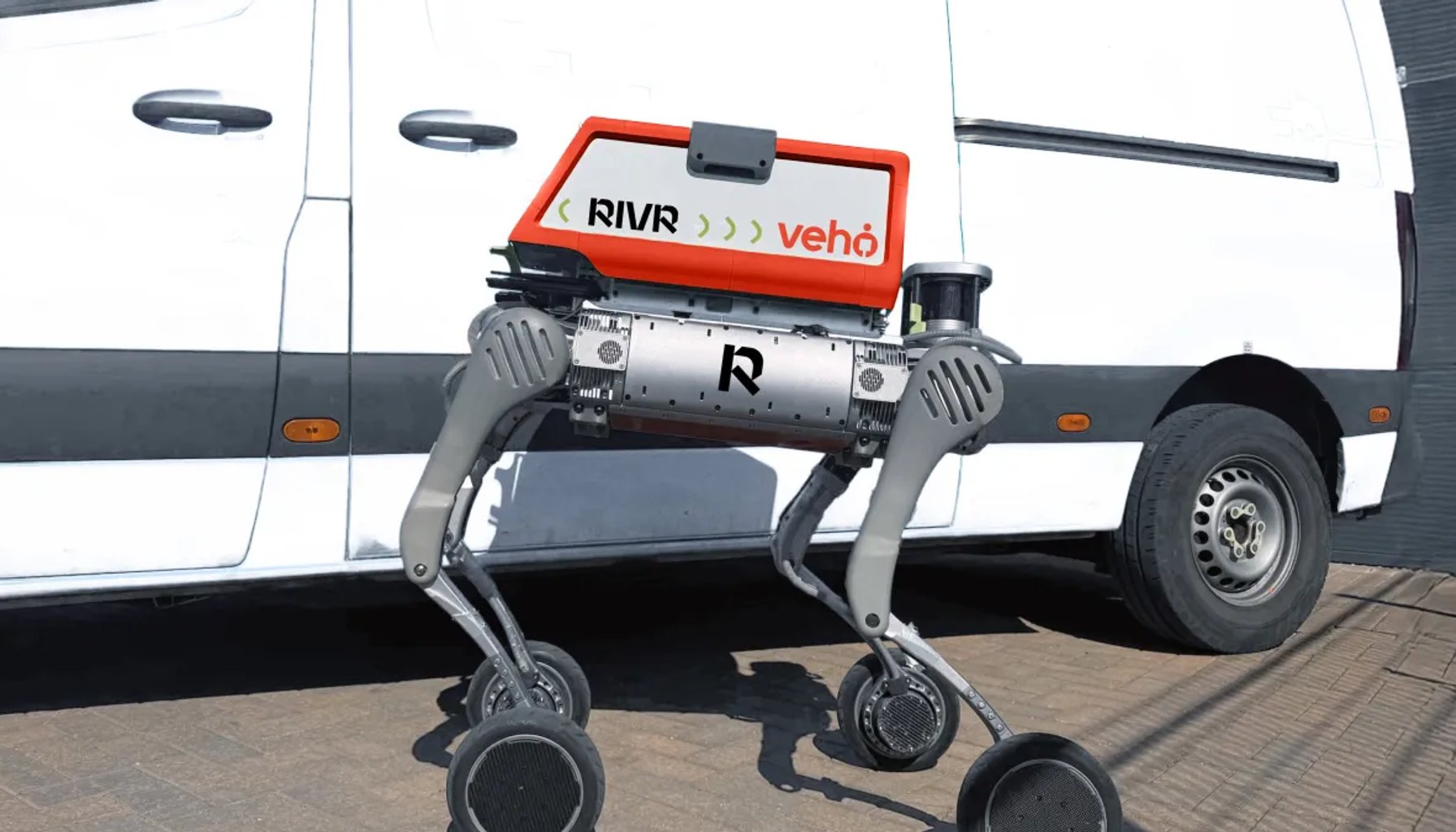
Image / techcrunch.com
Amazon just bought Rivr’s stair-climbing delivery robot, a move that quietly rewrites last-mile logistics.
TechCrunch reports that the e-commerce giant had previously invested in Rivr, and the acquisition signals a deliberate tilt toward doorstep delivery systems that can negotiate multi-story buildings without human assistance. Rivr’s core claim is simple in concept—deliveries that climb stairs—but the implications are deeper: if you can haul a package up a flight of stairs without a human courier, you unlock a sizable slice of urban and suburban delivery economics. The deal suggests Amazon wants a more vertically capable, weather-agnostic tool in its arsenal, one that can handle the steep grade between foyer and front door in apartment blocks as well as single-family homes.
The actual machine remains, for most observers, a Black Box. Public-facing specifications are sparse, but the gist is clear: Rivr built a robot designed to operate on stairs, a notoriously difficult mode of traversal for robots that prefer flat, controlled ground. The acquisition doesn’t guarantee a field-wide rollout tomorrow; it signals a pipeline shift. A robot that can reliably ascend staircases, avoid common tripping hazards, and dock autonomously for recharging would fill a critical gap in a network that still relies on human labor for many vertical transitions. The tension—the one that keeps skeptics honest—is that stair negotiation introduces a cascade of edge cases: variable step heights, carpeted landings, loose debris, and evolving building-access policies.
The technical details remain under wraps, and that matters. In lab terms, Rivr’s stair-capable platform has to balance torque, traction, and control algorithms with a payload that’s realistically a package or two per trip. The math becomes nontrivial quickly: every extra kilogram amplifies power draw on a stair incline; every shift in center of gravity can trigger a stumble. For Amazon, the bet is less about novelty and more about reliability across tens of thousands of apartment layouts, with a need to integrate with existing routing software, safety protocols, and building access controls. If Rivr’s demonstrations translate into predictable, repeatable performance at scale, the company joins a growing cohort of logistics robots that aim to replace routine vertical hops in the delivery chain. If not, the deal will look like a cautious pilot inflated into a strategic narrative.
What this means for the humanoid and robot-delivery ecosystem is twofold. First, the market will demand explicit, verifiable specifications—power source, runtime, charging interface, and, crucially, DOF counts and payload capacity for any humanoid-adjacent platforms that claim stair competence. Second, the industry will scrutinize safety margins and regulatory readiness in real-world environments—public stairs, building entryways, and mixed-use corridors present a litany of constraints that no lab demo fully captures.
In the near term, you’ll see the Rivr acquisition translate into behind-the-scenes deployment trials, software-integration work, and building-block collaborations with property managers and carriers. The outcome will hinge on reliability and integration, not glossy marketing.
What we’re watching next in humanoids
Sources
Newsletter
The Robotics Briefing
Weekly intelligence on automation, regulation, and investment trends - crafted for operators, researchers, and policy leaders.
No spam. Unsubscribe anytime. Read our privacy policy for details.