π0.7: Physical Intelligence’s New Robot Brain Learns Tasks
By Sophia Chen
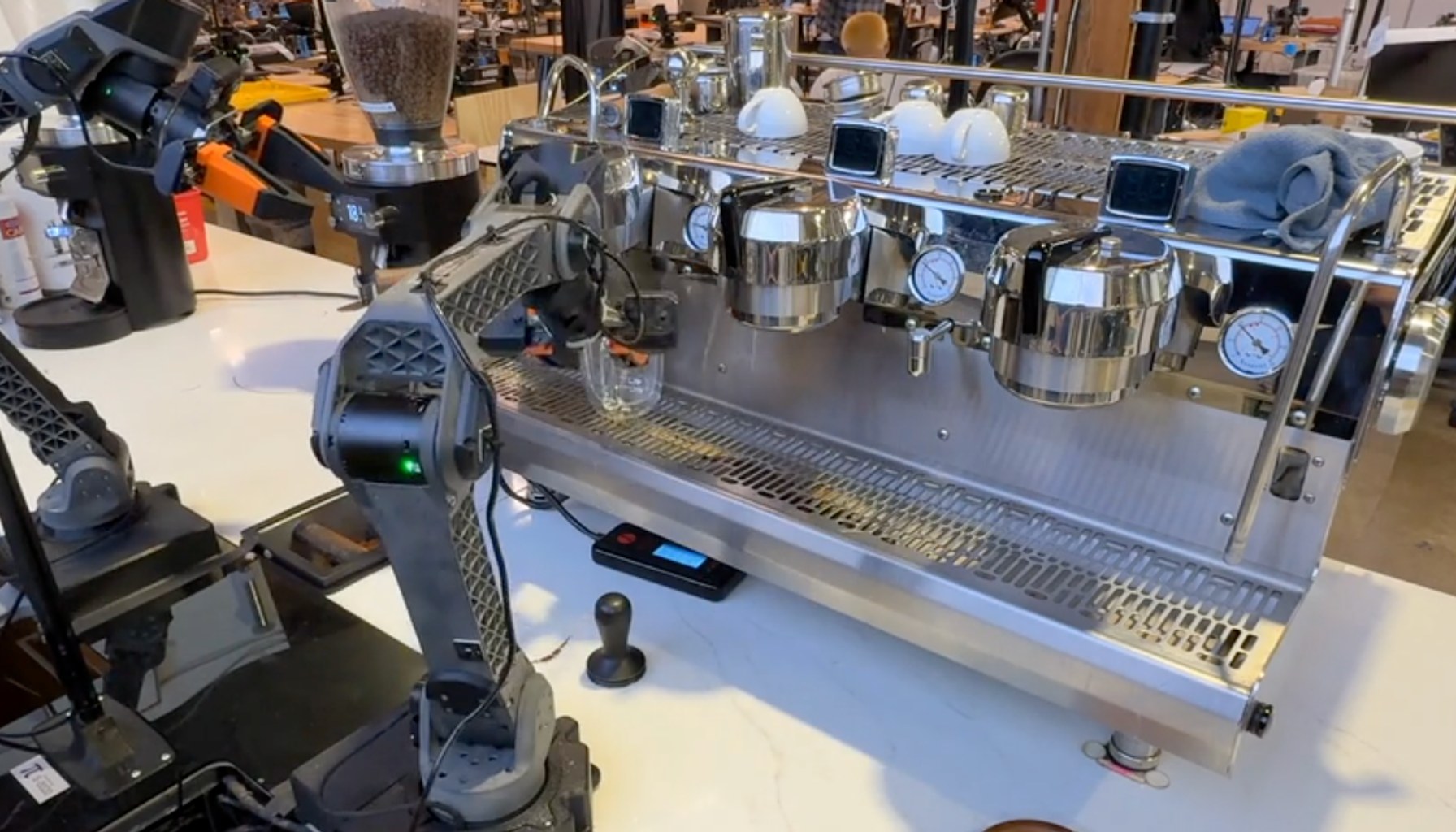
Image / techcrunch.com
π0.7’s brain learned unseen tasks without being taught.
Physical Intelligence, the buzzy robotics startup, claims its new robot brain can figure out tasks it was never taught, marking a notable if early signal toward a truly general-purpose robot controller. The company unveiled π0.7 as an “early but meaningful step” in giving robots the kind of flexible problem-solving that used to be the domain of human programmers. Demonstration footage cited by TechCrunch shows the system inferring strategies for tasks it hadn’t been explicitly trained to perform, a hallmark of the unsupervised and self-guided learning that investors have long craved as a shortcut to broad capability.
In practical terms, π0.7 is positioned as a software brain that could, in principle, sit atop different robot bodies. The press around π0.7 emphasizes generalization—less hand-tuning for each new job, more ready-to-adapt behavior when the robot encounters a new task in a controlled setting. The article notes that this is still early in the development curve, with the company framing the milestone as a step toward the long-sought goal of a robot capable of reasoning through tasks it hasn’t seen before.
As a humanoid-robot observer would expect, the report does not publish hardware benchmarks like degrees of freedom, payload, or actuator specs for a particular body. There are no disclosed DOF counts or payload capacities for any humanoid tied to π0.7 in this coverage, and details about power sources, runtime, or charging requirements remain undisclosed. The emphasis is squarely on the brain, not on a specific chassis. The TechCrunch write-up frames π0.7 as an early model in a lineage that the company hopes will eventually enable more autonomous, adaptable robots across tasks and environments.
From a practitioner’s vantage point, this is encouraging but not a numbers game yet. The claim that a robot brain can infer unseen tasks hinges on robust representations of perception, planning, and control that survive real-world noise. Engineering documentation suggests the system relies on learned priors and sensorimotor knowledge to generalize, but the boundary conditions of those generalizations—the kinds of tasks, the lighting and clutter conditions, or the variability in robot hardware—aren’t laid bare. Demonstration footage shows progress, but the leap from a curated lab setup to messy real-world environments is nontrivial. In other words, today’s π0.7 is a promising software asset; tomorrow’s field-ready generalist robot requires hardware integration, safety guarantees, and rigorous testing on diverse tasks.
Two concrete practitioner observations stand out. First, the unsupervised generalization narrative must contend with reality: field-ready robots demand predictable, verifiable behavior in safety-critical contexts. Even if the brain can propose a plan for an unseen task, translating that plan into reliable motor commands on a physical humanoid or mobile platform requires tight coupling with control loops, fault detection, and energy budgeting. Second, the work’s impact depends on data efficiency and transferability. A genuine generalist brain must learn from limited data, transfer knowledge across hardware platforms, and resist brittle behaviors when sensory inputs drift. The π0.7 narrative hints at progress on these axes, but concrete payloads for real-world operation—and how much compute, memory, and power that implies—will be the real test.
What to watch next: can Physical Intelligence translate π0.7’s capabilities into a hardware-agnostic backbone that runs in real time on diverse bodies? Will it demonstrate reliable task generalization outside carefully staged demos? And how will the company quantify improvements over its prior π-series iterations beyond the qualitative push toward broader generalization? Until those metrics are laid out, this remains a demonstrator’s milestone rather than a field-ready revolution.
In the end, π0.7 is a signpost—not a verdict. The industry has waited years for a robot brain that can learn on its own; π0.7 delivers a credible, carefully framed step in that direction. The next few demonstrations—ideally with transparent benchmarks, explicit DOF/payload data once a humanoid is involved, and clear power and runtime figures—will determine whether this is a demo-reel moment or the start of a durable platform.
Sources
Newsletter
The Robotics Briefing
A daily front-page digest delivered around noon Central Time, with the strongest headlines linked straight into the full stories.
No spam. Unsubscribe anytime. Read our privacy policy for details.