π0.7 Robot Brain Targets General Tasks
By Sophia Chen
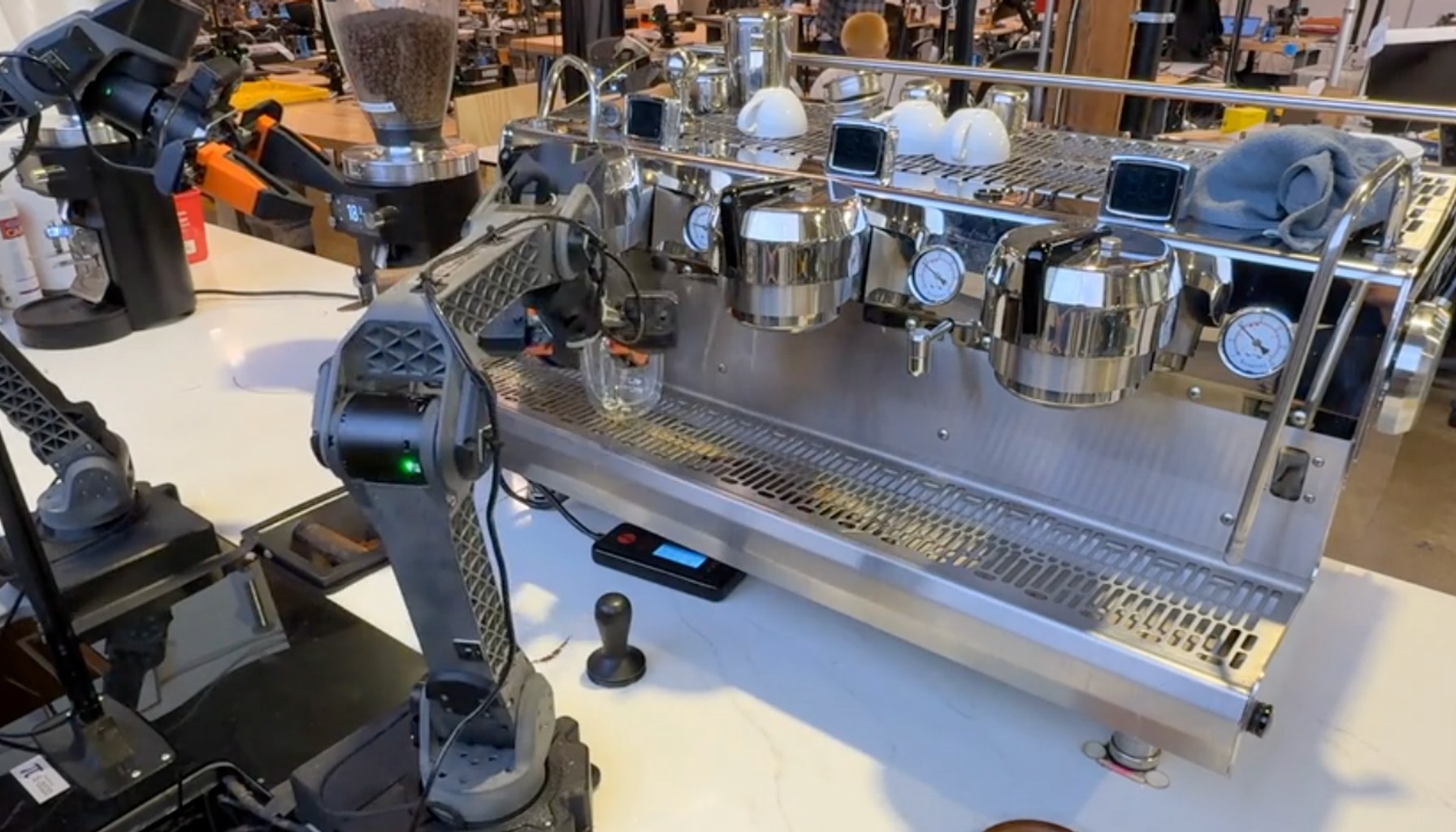
Image / techcrunch.com
A robot brain learns tasks it wasn’t taught, and it’s called π0.7.
Physical Intelligence, a hot robotics startup, is marketing its newest model as an early but meaningful step toward a general-purpose robot brain. The company’s claim centers on a brain that can infer solutions to tasks it hadn’t explicitly been trained for, a capability tech observers have long pegged as the hardest rung on the ladder to flexible, real-world autonomy. TechCrunch coverage emphasizes the π0.7 as “an early but meaningful step,” not a finished product, signaling the team is chasing generality with an emphasis on practical, testable demonstrations.
The core pitch is straightforward: a single robot-brain stack can generalize from a handful of demonstrations to execute tasks it hasn’t seen before. In the coverage, the team points to demonstrations where the brain selects strategies for unfamiliar objectives without being rewritten for each task. The narrative language signals a shift from rigid, task-specific programming toward a more adaptive planning capability that could, in theory, span a broader class of manipulation and interaction scenarios. In practice, that’s the kind of capability that would reduce reprogramming frictions if and when it scales outside carefully curated lab setups.
The article notes that the π0.7 sits in a lab-demo/controlled-environment stage rather than field-ready deployment. Demonstration footage shows the brain handling new objectives with limited prior instruction, a hallmark of generalization work. Yet—and this is important—the article does not publish engineering specs that would allow a direct comparison to older, more constrained robotics stacks. No explicit DOF counts or payload capacities are disclosed for any humanoid or hardware platform connected to π0.7, and power, runtime, and charging requirements are likewise not published. The absence of these details is not unusual for early-stage claims, but it does mean readers must treat the progress as a capability narrative rather than a systems specification.
From a practitioner’s perspective, several key considerations emerge. First, generalization at the brain level is necessary but not sufficient for real-world usefulness. A capable planner must still contend with perception reliability, safety constraints, and robust low-level control across diverse hardware. The π0.7 claim—if it holds up under independent testing—would need to be validated across perception pipelines, grippers or end-effectors with known torque envelopes, and real-world payloads. Second, the technical readiness level suggests this is a lab-demos-and-speculation stage; meaningful field trials would require partnering with hardware teams, safety certifiers, and industrial partners to define mission profiles that stress both cognition and actuation. Third, the absence of disclosed power and runtime details is a reminder that edge compute budgets, thermal management, and battery life are now the bottlenecks that separate hype from practical utility. Fourth, comparative progress is real but narrow: any improvement on zero-shot generalization in a single architecture must be weighed against prior generations that often overfit to narrow tasks; real-world value will hinge on cross-domain performance and predictable failure modes.
Two to four concrete practitioner insights stand out. One, the industry should watch for how π0.7 handles ambiguity in perception and sensor noise when moving from curated demos to messy environments. Second, expect the critical path to hinge on end-effector integration and torque-aware control—without concrete DOF and payload data, it’s hard to gauge if a platform could lift, grip, and manipulate common industrial objects without retooling. Third, collaboration with established hardware ecosystems will be necessary for real-world use; a generic brain only buys value if it can be paired with compatible actuators and compliant safety systems. Fourth, safety controls—regulatory and architectural—will define the pace of adoption. A brain that autonomously infers tasks must be backed by verifiable constraints to prevent unintended actions in public or workplace settings.
Compared to prior generations, π0.7 is positioned as a step toward a more generalist cognitive core rather than a fleet of specialized controllers. The move toward a brain that can figure out tasks it wasn’t explicitly taught marks progress on the ambitious road to versatile, self-adapting robots—yet the path from demonstration to deployment remains littered with classic engineering hurdles: perception reliability, actuator limits, power budgets, and safety guarantees.
In short, π0.7 is noteworthy but not a ticket to ubiquity. It signals a promising direction toward general-purpose robot reasoning, but real-world impact will hinge on transparent, verifiable specs and robust field testing across diverse hardware.
Sources
Newsletter
The Robotics Briefing
A daily front-page digest delivered around noon Central Time, with the strongest headlines linked straight into the full stories.
No spam. Unsubscribe anytime. Read our privacy policy for details.