ABB Robotics and Roche Target Pathology and Central Diagnostics With Clinical Lab Automation Collaboration
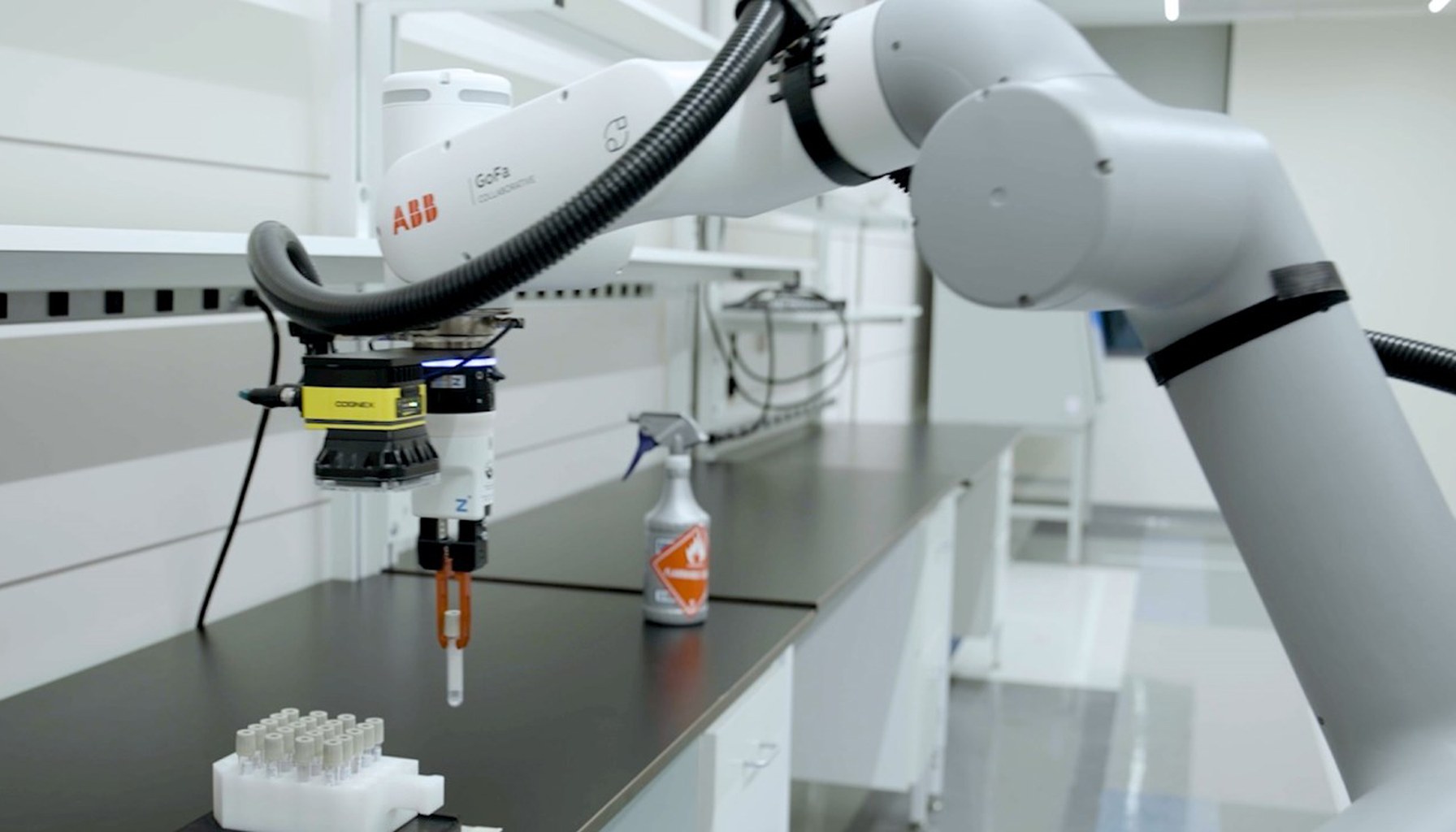
Image / designworldonline.com
The companies will begin with pathology slide handling and autonomous movement of samples and materials between instruments, but have not disclosed commercial terms, deployment dates, or expected throughput gains.
ABB Robotics has announced a global collaboration with Roche Diagnostics to develop and commercialize robotic systems for clinical laboratories, beginning with pathology slide handling and material movement in central diagnostics labs.
The partnership targets two labor-intensive parts of laboratory operations. In Roche’s pathology business, ABB Robotics plans to develop systems that handle and organize slides for digital and connected pathology workflows. In central diagnostics laboratories, ABB plans to use autonomous mobile manipulators to move samples and materials between instruments.
ABB said the systems are intended to support more flexible and reliable workflows, including sample preparation and intra-laboratory logistics. Roche will provide diagnostics and clinical application knowledge, while ABB will develop the automation platforms using its robotics portfolio, software and manufacturing footprint.
For laboratory operators, the immediate operational value rests less on replacing analytical instruments than on reducing the manual transport, sorting and handling steps around them. Those steps can create bottlenecks when samples wait for transfer between analyzers, staging areas or imaging systems. Automated movement could help laboratories keep instruments supplied and reduce the repetitive handling work assigned to laboratory staff.
The companies have not disclosed cycle times, samples per hour, slide throughput, staffing reductions or anticipated payback periods. That leaves laboratory managers without the figures needed to compare the proposed systems with existing conveyor installations, manual courier workflows or fixed robotic cells. The practical business case will depend on how much time technicians currently spend moving samples and slides, the number of handoffs between instruments, and whether the robots can operate across multiple shifts.
Integration will be the central implementation issue. A mobile manipulator moving specimens between instruments must work with laboratory information systems, instrument interfaces, sample identification processes and the physical layout of the lab. Pathology slide automation also needs to preserve traceability and support the laboratory’s digital pathology workflow. ABB and Roche said the effort will focus on connected lab systems, but they have not specified which instruments, software interfaces or laboratory configurations will be supported first.
The collaboration comes as diagnostic laboratories face staffing pressure and rising testing demand. The U.S. Food and Drug Administration and Centers for Medicare & Medicaid Services have said diagnostic tests inform about 70% of treatment decisions, underscoring the operational importance of consistent sample processing and result turnaround.
ABB said the Roche collaboration fits its broader strategy of working with laboratory ecosystem partners to address workflow bottlenecks. The company also cited its use of physical AI, which it describes as using real-world data to help robots adapt to changing environments. Neither company has identified a rollout schedule, whether the agreement is exclusive, or whether additional automation partners will participate.
For now, the announcement establishes a development and commercialization effort rather than a quantified deployment program. The next meaningful indicators for lab operators will be validated throughput, transfer cycle times, integration requirements and the extent to which the systems augment laboratory technicians rather than simply shift work into new exception-handling tasks.
- ABB Robotics and Roche collaborate on lab automationdesignworldonline.com / Trade / Published JUL 17, 2026 / Accessed JUL 17, 2026