Analysis
Policy, markets, chips, safety, and the strategic forces shaping the robotics economy.
Latest Analysis
Privacy Win Reinforces Location Data Protections
The Supreme Court just reaffirmed your right to privacy in location data. In Chatrie v. United States, the court’s decision is framed by the EFF as a crucial check on broad government access to location information, a form of data that can reveal where you go, when you go, and who you meet. The ruli
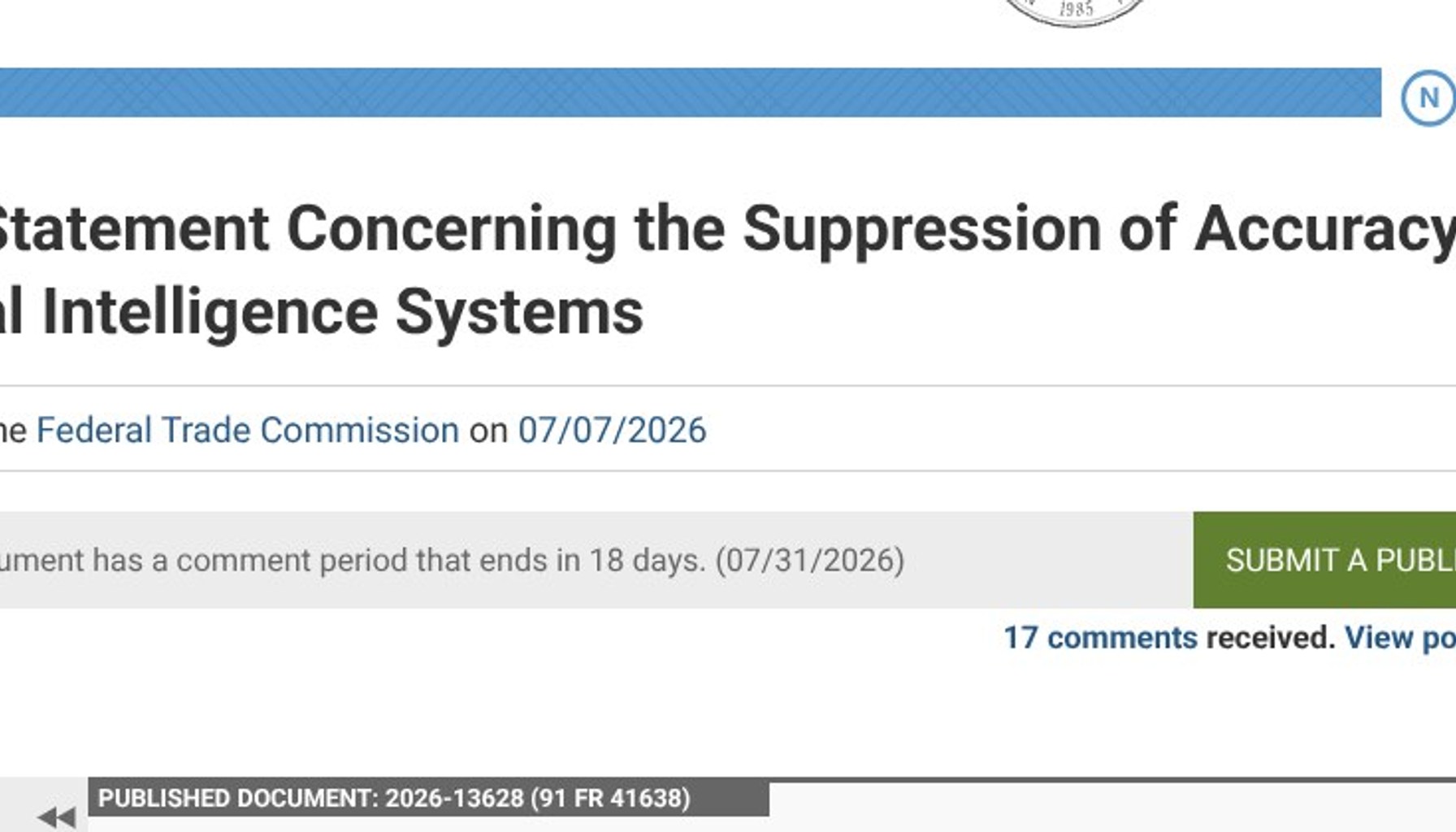
FTC Unveils Rules to Curb Deceptive AI Promises
The Federal Trade Commission published a policy statement applying the FTC Act’s broad ban on deceptive acts or practices to companies marketing artificial intelligence systems. In a move observers see as a sharpened regulatory focus, the agency says AI vendors could be held accountable not only for

EU Drops Social Networking Interoperability Plan
Europe just shut the door on a key DMA feature that would have let users move between social networks without losing connections, a decision that reshapes how vendors think about platform competition and user choice. The European Commission’s first review of the Digital Markets Act states it will no
EU Parliament Revives Chat Control 1.0 to Scan Private Messages
On 9 July, the European Parliament revived Chat Control 1.0 to scan private messages for CSAM. The move restores the interim derogation from the ePrivacy Directive Regulation 2021/1232, signaling a return to a framework that would authorize voluntary, indiscriminate scanning of private communication

EFF Launches Two-Week Push to Cut AI Hype
This summer, EFF kicks off a two-week push to cut AI hype and fund watchdog work. The Electronic Frontier Foundation is turning up the volume on AI accountability. In a period when tech firms flood the market with new tools and promises, the nonprofit says ordinary people deserve privacy and free ex
Fix the Great American AI Act Now
Congress aims to install a federal safety spine for AI, but critics warn the plan could erase useful state rules. The Lawfare analysis argues that the Great American AI Act (GAAIA) presents the strongest federal framework proposed so far for AI safety, yet its sweeping preemption of state AI laws ri
Data Center Boom Faces Reality Check on Water and Costs
The data center boom runs on water and price. In a Lawfare discussion, Andy Masley joined editors to challenge the industry’s most repeated claims about the footprint of data centers, from water use to land take and the price of power. Masley insists that growth projections and siting narratives are
Age rules tighten as House backs a kids safety bill
Age rules tighten as House backs a kids safety bill. The House has pushed forward the KIDS Act, a package that would revise KOSA and COPPA 2.0 and steer online platforms toward collecting less data, turning off certain engagement features, blocking certain recommendations, and giving families new co
FTC Should Reject X Waiver of Privacy Order
X wants to end a 20 year privacy watchdog now. X Corp. filed a petition with the Federal Trade Commission on May 15 to set aside or modify a 2022 consent decree that requires the company to report regularly on its handling of user data after violating privacy promises. The filing spotlights a long
Global AI Progress Hub to measure responsible AI
A new public record for responsible AI launches today. The Partnership on AI unveiled two global initiatives, the Global AI Progress Hub and the Global Responsible AI: Measures of Progress report, during the first Global Dialogue on AI Governance, a United Nations convening that brings together gove
Location data now requires a warrant Supreme Court rules
Your location history now demands a warrant. The Supreme Court in Chatrie v United States has rejected the old playbook that treated data handed to a third party as fair game for police, ruling that accessing location history is a Fourth Amendment search no matter how much data is involved or who st
Illinois Pritzker urged to veto sweeping age gate bill
Illinois could turn every device into a parental gate, and privacy advocates are sounding the alarm. The filing states that House Bill 5511 would impose a sweeping, device-level age-gating framework across nearly all internet-enabled hardware, operating systems, and online services. Under the measur
U S AI Crackdown Sparks China Gap Wake Up
Across the policy world, observers say the crackdown on artificial intelligence tools and related export controls is delivering a paradoxical punch: while meant to slow Beijing, it appears to be accelerating China s push to close the technology gap. The Center for Security and Emerging Technology fr
AI as Second Look for Radiology Safety
Radiology reports could get a second AI check before you see them. A co-founder of Zauron Labs says the next wave of AI in radiology is not replacing radiologists, but acting as a second-look safety layer that reviews imaging exams for high-impact missed findings before outcomes are realized. Kal Cl
FTC Finalizes $1.5M Order Against Publishing.com
The FTC just ordered Publishing.com to pay $1.5 million for misleading earnings claims in its self-publishing programs, and to back future earnings assertions with real substantiation. The final order, handed down after an April 2026 complaint, targets a scheme the agency says promised substantial o
UK Sets July 2025 Deadline for Age Checks on Harmful Content
Starting July 2025, UK platforms must verify that users are over 18. The filing states that a broad swath of online services will have to confirm a user’s age before granting access to content the government and Ofcom classify as harmful. In practice that means any site or app that hosts material de
FTC Fines Amazon 2.25 Million for FCRA Violations
Amazon must pay 2.25 million dollars to settle FTC charges that it knowingly violated the Fair Credit Reporting Act by blocking identity theft victims from getting fraud records about fraudulent transactions in their names. The FTC says Amazon refused to provide transaction and application records w
FTC Seeks Comment on AI Accuracy Policy
AI outputs could be shaped to mislead, the FTC says. The Federal Trade Commission is inviting public input on a proposed policy statement that would treat distortions of AI system outputs to advance undisclosed ideological objectives as possible unfair or deceptive conduct under the FTC Act. The Com
Briefing
EU finalizes AI Act oversight and labeling code
Supreme Court Protects Location Data Privacy in Chatrie

EU AI Safeguards Rolled Back Before They Apply
Algorithmic Benchmarks Trap Kenya's Content Moderators
Frontier AI Labs Face Legal Hurdle as Pause Plan Draws Antitrust Scrutiny