EU Drops Social Networking Interoperability Plan
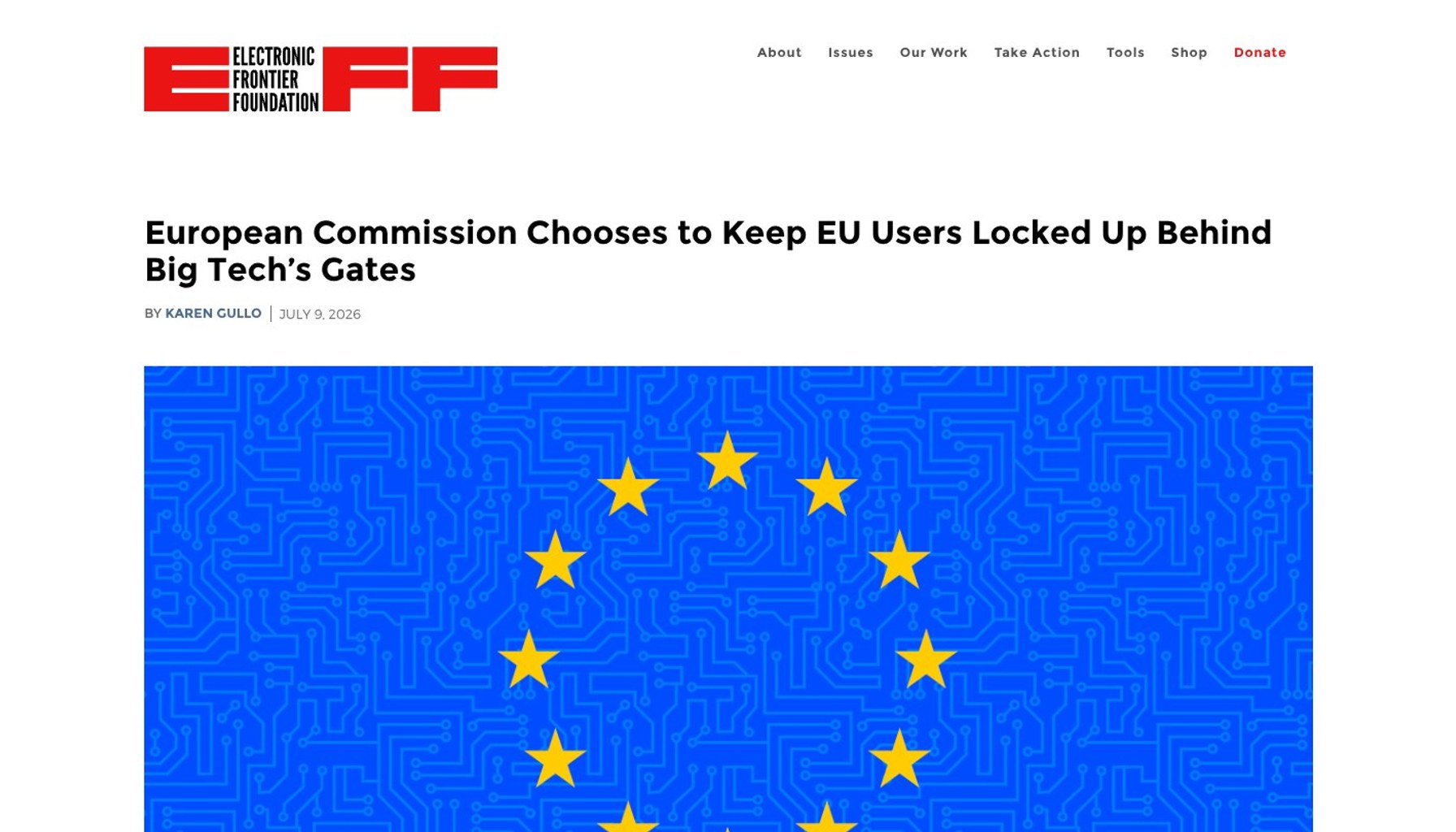
Image / EFF Updates
Europe just shut the door on a key DMA feature that would have let users move between social networks without losing connections, a decision that reshapes how vendors think about platform competition and user choice.
The European Commission’s first review of the Digital Markets Act states it will not extend the interoperability mandate to social networking at this time. In plain terms, the plan to force big social platforms to talk to each other and to allow independent apps to interoperate remains off the regulatory table. The Commission argued there is no clear demand from users or businesses for such interoperability and that it is technically complex to implement today. The move comes despite years of pressure from digital rights groups and smaller players who argued that interoperability would diminish lock in and give Europeans more control over their online experiences.
This decision matters for compliance teams and senior leaders at large platforms. Interoperability would have created a new set of technical and governance obligations, including cross platform data sharing, consent regimes, and API access rules. With no deadline or enforcement timetable set for this particular interoperability clause, the immediate compliance burden for social networks is unclear, even as other DMA obligations remain in force. The DMA itself, which went into full effect in 2024, still carries a broad enforcement framework, but the Commission did not spell out how it would apply to social networking interoperability if the policy option were revisited later. For EU users, the outcome means the status quo holds for now: continue to use the platform you’re on, with limited automatic pathways to switch communities without some friction or friction is the word reviewers hear most often.
Industry observers will not be surprised by the policy signal. The Commission has highlighted that broad, cross platform interoperability touches a wide range of technical and governance questions, from identity verification to moderation standards and data portability. Critics argue that postponing the interoperability mandate preserves the advantages that large platforms enjoy from network effects, while leaving users with fewer practical pathways to escape entrenched ecosystems. For startups and independent apps, the news is a mixed bag. On one hand, no new interoperability obligation reduces immediate compliance risk; on the other hand, it signals that the EU plans to monitor a complex interoperability pathway rather than hurry a rollout. In practice, compliance teams should prepare for a shifting regulatory bet on this front, and keep an eye on the DMA’s broader enforcement posture as regulators continue to test the boundaries of what cross platform cooperation might look like in the future.
Three practitioner takeaways stand out for the next 12 to 24 months. First, the tradeoff between user freedom and platform risk remains acute: interoperability could unlock user choice but would force significant technical and governance changes for market leaders. Second, the lack of a deadline for enforcing this component creates a moving target for roadmap planning and system design, heightening the importance of modular, auditable controls that could be scaled if and when a future mandate arrives. Third, the decision underscores the DMA’s core tension: how regulators reconcile the benefits of competition with the operational realities of large, global platforms. Compliance officers should track not only the active mandates but also any signals from the Commission about future reviews or reopenings of the interoperability question. And tech leaders should consider building interoperable interfaces in a way that can be turned on or off without destabilizing user experiences, should regulators revisit the idea.
In short, the European Commission has chosen not to extend social networking interoperability as part of the DMA’s first review, at least for now. The decision preserves the status quo for users while leaving a potential path open for future policy shifts. Compliance programs should stay ready for a possible reexamination, and platform teams should weigh the practicalities of future interoperability against the current regulatory landscape.
- European Commission Chooses to Keep EU Users Locked Up Behind Big Tech’s GatesEFF Updates / Mainstream / Published JUL 09, 2026 / Accessed JUL 13, 2026