AI-driven manufacturing reshapes Hannover Messe 2026
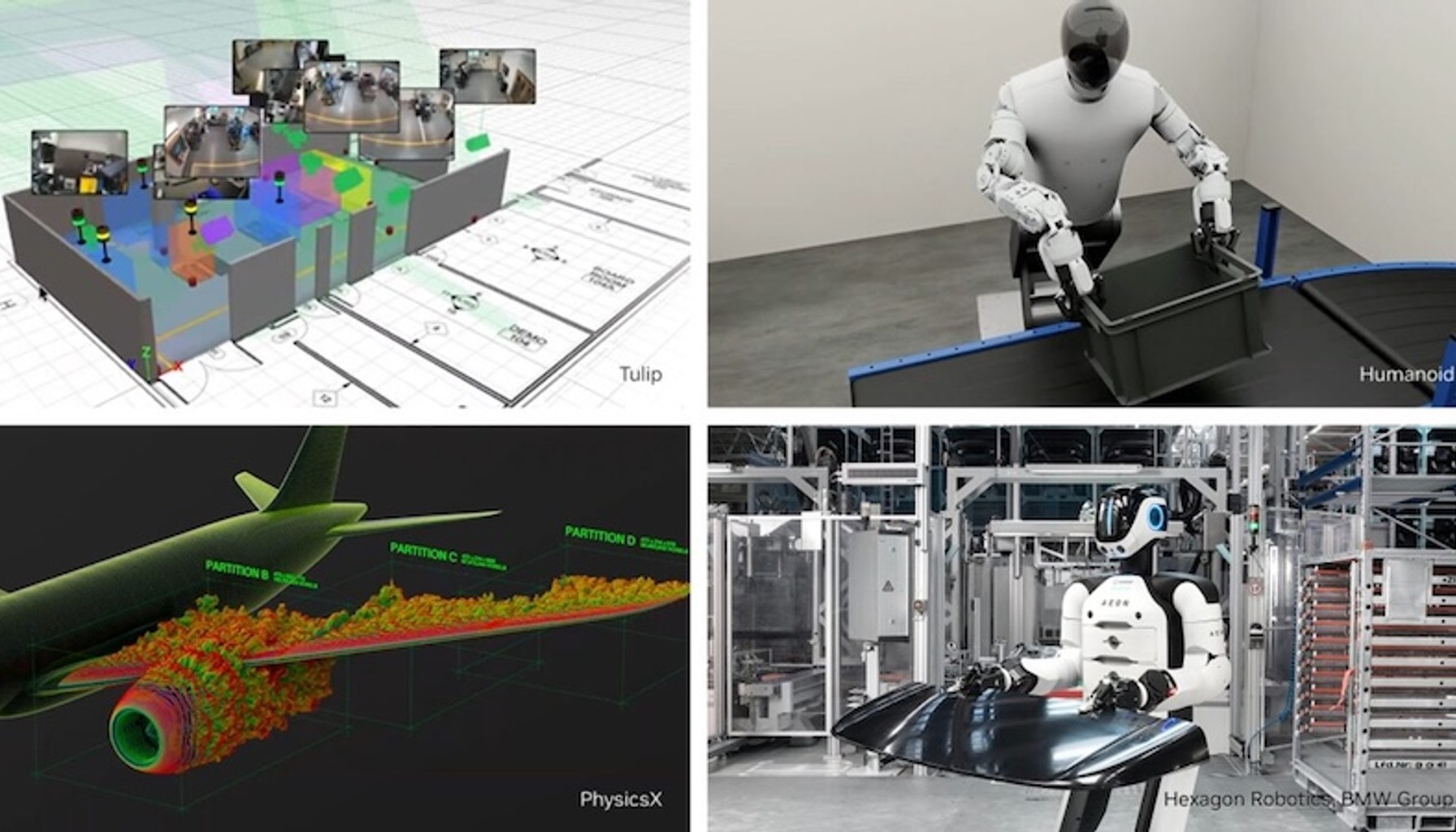
AI-powered factories strutted into Hannover Messe 2026, and the data are already proving the bet.
At the heart of the show, Nvidia and a broad ecosystem of industrial partners rolled out AI-driven manufacturing systems aimed at turning data into real-time, end-to-end factory orchestration. The centerpiece isn’t a single robot or a flashy demo—it’s a software-and-systems fabric that stitches PLCs, MES, CAD/PLM, ERP, and edge-to-cloud analytics into a single operating rhythm. Siemens, SAP, ABB, Dassault Systèmes, and Microsoft joined Nvidia to showcase how this fabric is moving from pilot-plant curiosity to scalable deployment, with digital twins, predictive maintenance, and autonomous decision loops becoming part of the daily routine rather than a future ambition.
What’s new, industry observers say, is not just AI in isolation but AI-as-an-architecture for the factory. The messaging centers on orchestration: an AI layer that connects planning, scheduling, quality, and maintenance so decisions can be made and executed at the cell or line level in milliseconds or minutes, not hours. Production data show a shift from isolated automation projects to integrated systems designed to operate across multiple lines and even multiple sites. The emphasis is on repeatability, not a one-off demo, and on the governance that keeps models aligned with evolving processes and product mixes.
From the floor, integration teams report that the real barrier to scaling remains data interoperability and the “last mile” of deployment. You don’t just install an AI model on a robot arm; you need a robust data pipeline, standardized schemas for shop-floor data, and a lifecycle framework for models that can adapt as conditions change. Floor supervisors confirm that the new stacks demand rethinking of space planning, power provisioning, and high-bandwidth network topology to avoid latency that can derail real-time decisions. In short, AI is working best when it’s treated as a factory-wide operating system, not a standalone add-on to a single machine.
But this is not a world where humans disappear. Operational realities remain stubborn: there are still many tasks that require human intervention and domain knowledge. Humans are pivoting to roles in model validation, exception handling, and tool calibration, while AI handles routine, repetitive decision tasks, quality screening, and predictive maintenance scheduling. The engineering teams stress that human-in-the-loop workflows are essential in the near term to catch edge cases, maintain regulatory compliance, and preserve product traceability.
The economics, for now, remain a moving target. ROI documentation from deployments tied to these AI-driven systems shows payback windows that vary widely with application, product mix, and how aggressively a site commits to data governance and workforce training. Vendors are less eager to promise specific payback timelines in press materials and more inclined to point to the value of reduced cycle-time variability, fewer unplanned stoppages, and the ability to shift work to higher-value tasks. In practice, that means payback hinges on the scale of the AI architecture, the maturity of the digital twin, and the extent to which data can be trusted and reused across lines and shifts.
industry observers note several practical implications. First, integration is a multi-year program, not a single procurement. Second, the floor is still the bottleneck for many deployments—space, power, and clean, reliable network connectivity must be provisioned upfront to avoid bottlenecks at go-live. Third, there’s a meaningful training burden: operators, maintenance technicians, and data scientists must learn new interfaces and model governance processes, or the supposed “lights-out” vision will stall at the edge of the plant floor. Finally, vendor promises of seamless integration should be read with caution; the path to reliable, scalable AI is paved with customization, data-cleaning, and a disciplined change-management plan.
From Hannover’s show floor to the plant floor, the sentiment is clear: AI-driven manufacturing isn’t a marketing demo anymore. It’s a deployment approach that, if planned and funded with discipline, can reshape cycle-time consistency, quality, and throughput across an ecosystem of machines, software, and people. The real test—how quickly and sustainably these systems translate into measurable, repeatable gains—will unfold over the next 12 to 24 months as pilot lines scale and integrate into broader manufacturing networks.
- Nvidia and partners showcase AI-driven manufacturing systems at Hannover Messe 2026roboticsandautomationnews.com / Source role not classified / Published APR 20, 2026 / Accessed APR 21, 2026