Automation Upgrades, Not Replaces: Skilled Trades
By Maxine Shaw
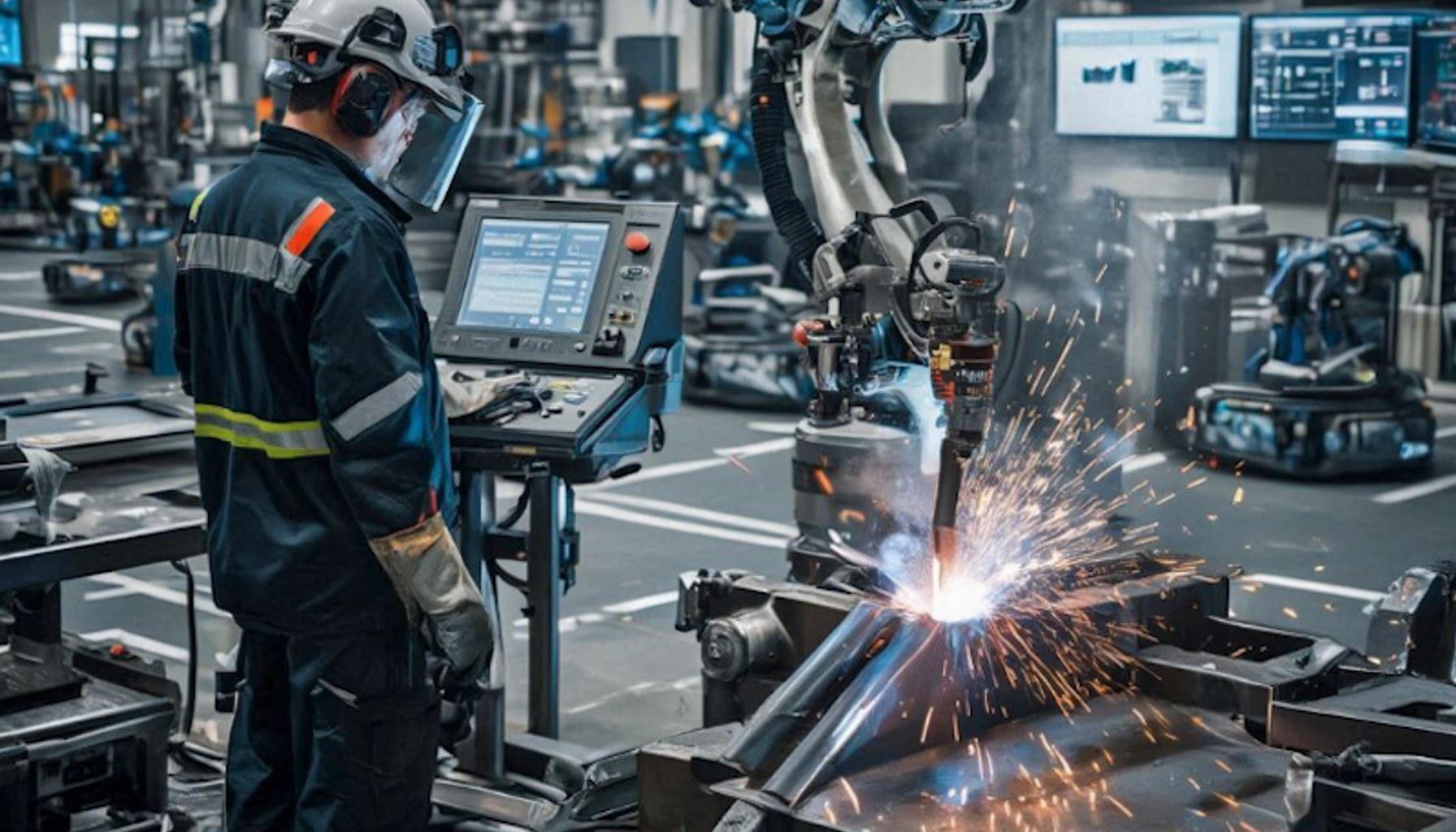
Image / roboticsandautomationnews.com
Robots aren’t stealing jobs; they’re turning welders into system integrators.
Across shop floors from automotive lines to refrigeration racks, automation is arriving as a collaborative partner, not a bright-footed replacement. That’s the throughline of a 2026 panorama: robots, sensors, and AI are landing, but they live or die by the people who install, program, and maintain them. The industry’s current moment isn’t about dramatic automation breakthroughs alone—it’s about the operational discipline to deploy them so they actually improve cycles, throughput, and reliability. In other words, the “robot” is only as good as the cell around it.
The central tension is simple and stubborn: automation promises speed and consistency, but the real payoff depends on skilled workers who can wire, teach, and troubleshoot. The article “10 Automation Trends Shaping Skilled Trades” emphasizes that automation is upgrading the trades, not replacing them. Production data shows that the most visible improvements come when plants commit to end-to-end integration—planning for hardware, software, and people in lockstep. Integration teams report that the biggest early costs are not the robots themselves but the creation of a capable maintenance and programming cadre who can keep a welding cell or a line AI-enabled rather than a viral downtime liability.
Among the concrete trends, robotic welding cells stand out as a recurring pattern—an elegant example of progress that still depends on human know-how. Floor supervisors confirm that the value isn’t just in the robot’s speed but in the ability to tune weld quality, manage cycle timing, and ensure part flow remains stable across shifts. The takeaway is not “robots fix everything” but “robots fix the repetitive parts of the job while humans handle variability, setup, and continuous improvement.” Integration teams report that even with a single welding cell, you must plan for multiple weeks of calibration, safety interlocks, and data collection to understand how the robot interacts with feeders, jigs, and downstream processes.
But the story isn’t purely about machines; it’s about the ongoing human costs that aren’t always visible in the glossy vendor decks. Floor space, power supply, and, crucially, training hours shape every deployment. Industry observers emphasize that automation projects stall or underperform when these constraints aren’t quantified early. The article notes that the trades reap benefits most when a factory-specific training regime is built into the project scope, not retrofitted after the fact. As one integration lead puts it, “the robot is the spark, the program and the maintenance plan is the fuel.” In practical terms, that means an automation program needs a pipeline for operators and technicians to become proficient in robot teach pendants, PC-based programming, and real-time debugging.
Where the hidden costs emerge, vendors often gloss over them. Operational metrics show that beyond the upfront purchase, ongoing software licenses, data integration, and spare-part logistics can erode the apparent ROI if left untracked. ROI documentation reveals that the payoff is highly project-specific: some lines close payback quickly when cycle-time reductions and defect-rate improvements align with downstream throughput gains; others drift longer if the integration footprint is larger than anticipated or if the workforce isn’t fully trained to exploit the new capabilities.
Two practitioner-level insights emerge clearly. First, cycle-time and throughput gains are real but highly contingent on end-to-end planning. The trend line is positive when plants allocate time and money to training and to the development of a robust maintenance capability. Second, even when automation accelerates production, human workers remain essential for tasks that require judgment, adaptation, and problem-solving. As the article’s framing suggests, automation is most effective when it complements skilled trades rather than attempting to replace them.
Looking ahead, the sector’s resonance is practical: upgrade the skill set, not abandon the floor. Companies that map training hours, verify floor-space needs, and calibrate welding and programming workflows tend to extract the most value from the investment. The surprise isn’t the demo—it’s the data: when properly integrated, a robot cell becomes a durable upgrade to a workforce that remains essential for quality and continuous improvement.
Sources
Newsletter
The Robotics Briefing
A daily front-page digest delivered around noon Central Time, with the strongest headlines linked straight into the full stories.
No spam. Unsubscribe anytime. Read our privacy policy for details.