Robots Upgrade Trades, Not Replace Them
By Maxine Shaw
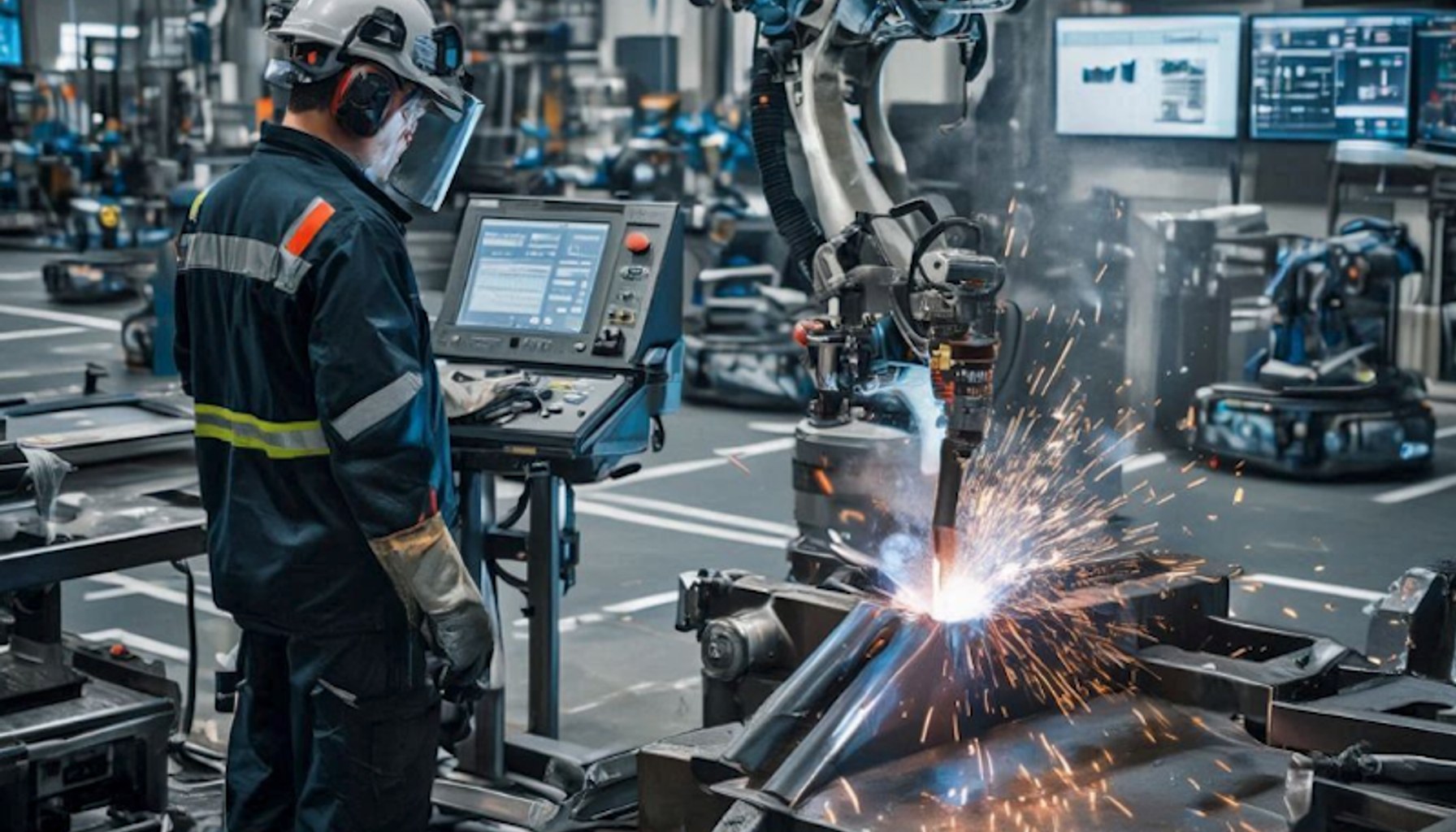
Image / roboticsandautomationnews.com
Robots aren’t replacing welders—they’re upgrading them.
A fresh wave of automation is landing on shop floors and job sites, but the trend isn’t about eliminating skilled trades. It’s about turning them into higher-value roles that pair human judgment with machine precision. The source piece on “10 Automation Trends Shaping Skilled Trades” frames automation as an upgrade—not a displacement—and real-world deployments are backing that up with measurable gains in cycle time, throughput, and capability.
Production data shows that robotic welding cells and allied automation can trim cycle times by roughly 15% to 25% in steady, repeatable tasks, with more dramatic gains—near 30%—where part handling and fixturing are optimized. In inline production, throughput scales as you reduce the non-value-added handling between stations. That’s not a magic wand; it’s the result of smart cell design, dependable sensing, and AI-assisted process control that keeps weld quality within tighter tolerances without slowing the line for manual tweaks. Integration teams report that the biggest throughput wins come when the automation is treated as a process upgrade, not a bolt-on demo.
Return on investment is the lever CFOs care about, and ROI documentation reveals payback periods that cluster around the one-year mark for many medium-volume shops, with a range from roughly 9 to 18 months depending on part mix, line configuration, and training coverage. Companies aren’t sourcing payback from a single miracle metric; they’re stacking gains from reduced rework, lower scrap, and shorter changeover times. In practice, this means pilots that prove the value of a cell before full deployment—something the trend pieces emphasize as essential for turning excitement into sustainable deployment.
Integration requirements, however, matter as much as the hardware. Floor space is rarely unlimited on the shop floor, so teams size a typical cell footprint in the low hundreds of square feet—roughly 200 to 400 sq ft for a standard welding cell, plus space for robot reach, fixturing, and security clearances. Power needs generally run in the 5 to 15 kW band depending on robot payload and plasma or laser processes, with dedicated outlets and, in some cases, a small cooling loop for process heat. Operators often require 8 to 16 hours of initial training, plus ongoing 4 to 8 hours per maintenance technician for routine calibration and software updates. Integration teams report that the best outcomes come from predefining the cell’s interface with upstream and downstream lines, so the automation breathes rather than bottlenecks.
The human role remains essential. Tasks that still rely on people include initial setup and part changeover, tool changes, in-process checks for anomalies, and corrective actions when a weld isn’t within spec. In other words, robots handle the repeatable, high-volume portions of production; humans handle the exceptions, the adaptive programming for new parts, and the rare but critical quality decisions that require context beyond the sensor readout. Floor supervisors confirm that human oversight is what keeps the line agile when parts vary or when a change in supplier introduces a new geometry.
Hidden costs are a quiet part of the math. Vendors frequently emphasize “seamless integration,” but integration teams report that software licenses, cybersecurity hardening, spare parts, and ongoing training refreshes add up over a multi-year deployment. A line that looks affordable in year one often reveals maintenance and software subscription costs that, if ignored, erode ROI over time. The winning programs are the ones that bake these costs into the initial business case and plan for regular upskilling of the workforce.
In the end, the narrative from shop floors and ROI trackers is consistent: automation isn’t a substitute for skilled trades; it’s a way to multiply their impact. With careful piloting, thoughtful cell design, and disciplined training, a cobot-enabled line can deliver faster cycle times, steadier throughput, and a payback that finally makes CFOs smile—while welders, electricians, and refrigeration techs gain new, higher-value responsibilities.
Sources
Newsletter
The Robotics Briefing
A daily front-page digest delivered around noon Central Time, with the strongest headlines linked straight into the full stories.
No spam. Unsubscribe anytime. Read our privacy policy for details.