AI-Powered Palletizing Upgrades Peak-Jacobi Venture
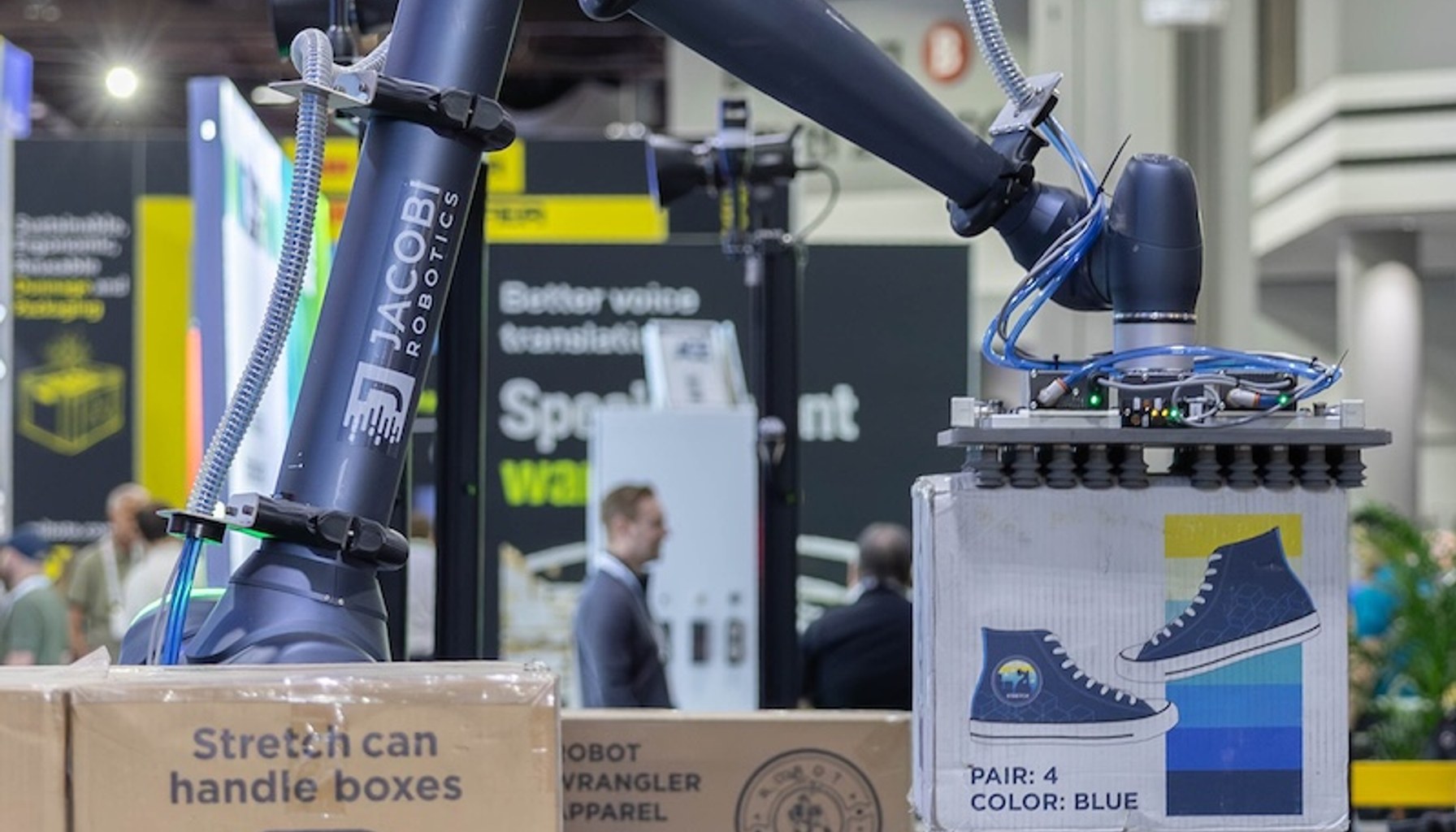
AI-powered palletizing just turned the corner on warehouse throughput. Peak Technologies and Jacobi Robotics unveiled a collaboration to bring next-generation mixed-case palletizing to complex warehouses and distribution centers, anchored by Jacobi’s OmniPalletizer physical AI platform.
In practical terms, the partnership aims to fuse Jacobi’s physical AI with Peak’s automation portfolio to handle mixed-case palletizing with fewer bottlenecks tied to upstream buffering, sorting, and sequencing. The OmniPalletizer is positioned as a central, AI-enabled cell that can orchestrate varied case sizes and configurations without the rigid pre-planning that has long constrained traditional palletizing lines. Production data shows that in the right environment, this approach can reduce handling steps and improve consistency across SKUs that don’t fit neatly into uniform pallets. However, like any high-end automation, the real test is deployment, not a glossy demo.
From the floor, integration teams report that the big leverage point is data-to-action alignment. To really work, the system must talk cleanly to the WMS and ERP, and to the upstream conveyors and buffer stations still in play at most DCs. Floor space matters; you’re not dropping a robot into a pawnshop backroom. Expect a dedicated cell footprint, plus the staging area needed for inbound items and outbound packing. Power is nontrivial too: three-phase supply and reliable network connectivity are prerequisites for real-time decision-making and fault handling. Training hours for operators and maintenance staff tend to run longer than a typical line-side swing shift, and the organization must allocate time for the edge-compute mindset shift—the idea that a lot of “know-how” is now driven by software intelligence on the floor rather than just gravity and gravity-fed chutes.
Human tasks don’t disappear; they shift. Operators still seal, label, and verify packed pallets, and supervisors must monitor for edge cases that the AI might not anticipate—exception handling that currently consumes a disproportionate slice of throughput-improvement promises. The system handles the predictable, high-variance aspects of mixed-case packing, but rummaging through unexpected carton shapes, fragile items, or SKU substitutions remains a human-in-the-loop discipline. From an operations perspective, this reallocation of labor often translates to a different schedule and a different skill mix rather than wholesale headcount reduction.
Hidden costs are the usual suspects vendors gloss over: software updates and licensing for the AI layer, ongoing cybersecurity hygiene, and scheduled maintenance for the robotic cell. There’s also the integration debt—the time and effort spent aligning the OmniPalletizer with a facility’s unique conveyor topology, sort sequences, and inbound QC gates. The decision to proceed hinges on more than the promise of higher throughput; it rests on a clear plan for data cleanliness, change management, and a realistic path to steady-state operation after go-live.
Industry observers will be watching for real-world metrics, not marketing claims. The immediate priority is to quantify cycle-time gains, error reduction, and the impact on downstream bottlenecks once the mixed-case palletizing cell is integrated with existing systems. If the numbers prove favorable, Peak and Jacobi’s alliance could tilt the economics of complex DCs toward AI-enabled physical platforms rather than isolated “demo” cells.
This partnership signals a notable inflection point: AI-driven decision-making on the floor is no longer a curiosity but a deployable capability tied to a physical automation asset. What remains to be seen is the discipline of rollout—footprint, power, data integration, and operator training—turning a promising platform into sustained, payback-driven performance.
- Peak Technologies partners with Jacobi Robotics to deliver next-generation mixed-case palletizing automationroboticsandautomationnews.com / Source role not classified / Published APR 16, 2026 / Accessed APR 16, 2026