Humanoid robot begins autonomous logistics at Siemens
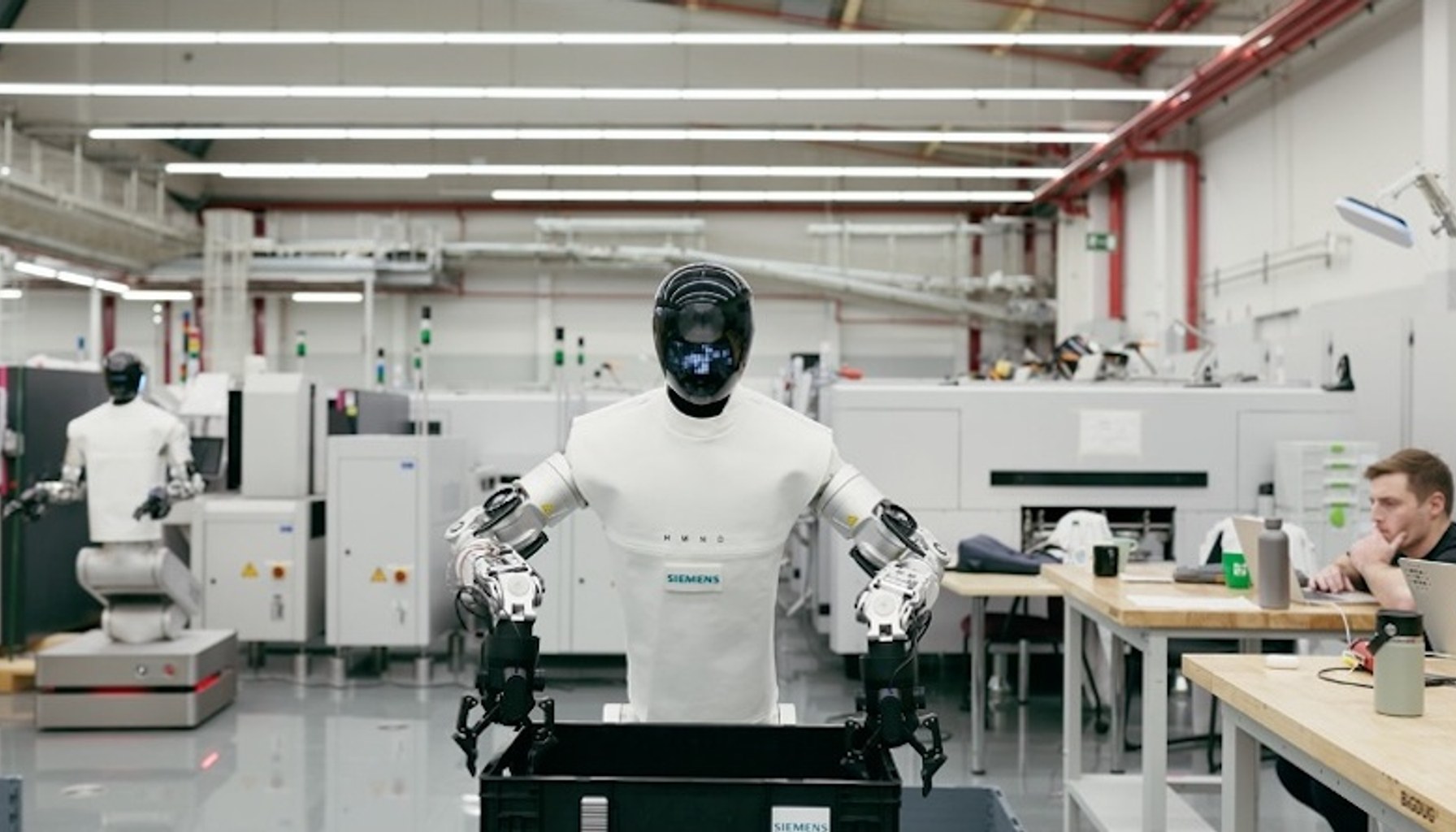
A humanoid robot just started moving pallets autonomously in a Siemens plant. Siemens and Humanoid say the Erlangen electronics factory test of the HMND 01 Alpha wheeled humanoid, built on Nvidia’s physical AI stack, marks a milestone in bringing physical AI from vision to the factory floor to perform autonomous logistics tasks.
Siemens is touting the test as more than a showcase. The HMND 01 Alpha, a wheeled humanoid designed for payload-handling and intra-plant transport, is operating in a production-like setting, guided by Nvidia’s physical AI stack that combines perception, planning, and control in real time. The pairing aims to push autonomous logistics beyond camera-based quality checks into hands-free material movement—moving parts, totes, and pallets across short distances with minimal human intervention. In Erlangen, the deployment sits at the nexus of AI processing, robot autonomy, and real-world shop-floor safety.
Industry watchers say the milestone reflects a broader shift: moving “physical AI” from the lab into the line. Production data shows that many factories still rely on conventional automation for fixed tasks, while flexible logistics—especially in high-mix, high-variance environments—has lagged. The Siemens-Humanoid test, framed as a landmark by both sides, demonstrates a tangible path for humanoid platforms to operate in dynamic environments where humans and robots share space, equipment, and paths.
Integration teams report that turning a vision-stack prototype into reliable shop-floor logistics is a disciplined, months-long endeavor. The Erlangen pilot emphasizes autonomous pallet handling, routing, and docking at loading points without constant human guidance, but it also surfaces a long list of practical constraints. Floor space must accommodate safe robot navigation around conveyors, trolleys, and human operators; charging and power provisioning must be synchronized with production schedules; and the networked stack requires robust cybersecurity and resilient data flows to prevent misrouting or collision events. Operators and maintenance staff need targeted training to supervise the AI system, respond to exceptions, and recalibrate sensors after wear or minor impacts.
Even with the promise, the work remains collaborative rather than replacement. Tasks that still require human workers—such as exception handling, heavy-lift beyond the robot’s payload envelope, or reconfiguring routes when lines change—will persist for the foreseeable future. Floor supervisors confirm that the HMND 01’s success hinges on well-defined handoffs, predictable package loads, and clear zones for automated movement. The robot’s strength is in handling repetitive, high-frequency transport within a constrained footprint, not in performing every task humans currently do on the floor.
Hidden costs vendors don’t mention upfront loom as well. Hardware calibration, sensor maintenance, software updates, and ongoing safety certifications add to lifecycle expenses. In many deployments, cybersecurity audits and remote-management overhead become recurring line items. Integration teams caution that the economics hinge on a clear, bounded use case—where the robot handles a steady, repeatable transport flow and the value of reduced internal transport trips justifies the investment over time.
If Siemens and Humanoid can translate this pilot into a scalable pattern, the implications for the discipline are meaningful: more factories may experiment with physical AI as a way to smooth material flow, reduce bottlenecks, and free human workers for higher-value tasks. But the path from one-off demo to deployable asset remains rigorously technical, cost-conscious, and data-driven. The next disclosures will show whether this Erlangen trial translates into measurable cycle-time gains, defined payback, and clear integration playbooks for broader rollout.
- Siemens, Nvidia and Humanoid partner to bring physical AI into factory operationsroboticsandautomationnews.com / Source role not classified / Published APR 16, 2026 / Accessed APR 17, 2026