Benchmark Arms Race Tightens AI Evaluation
By Alexander Cole
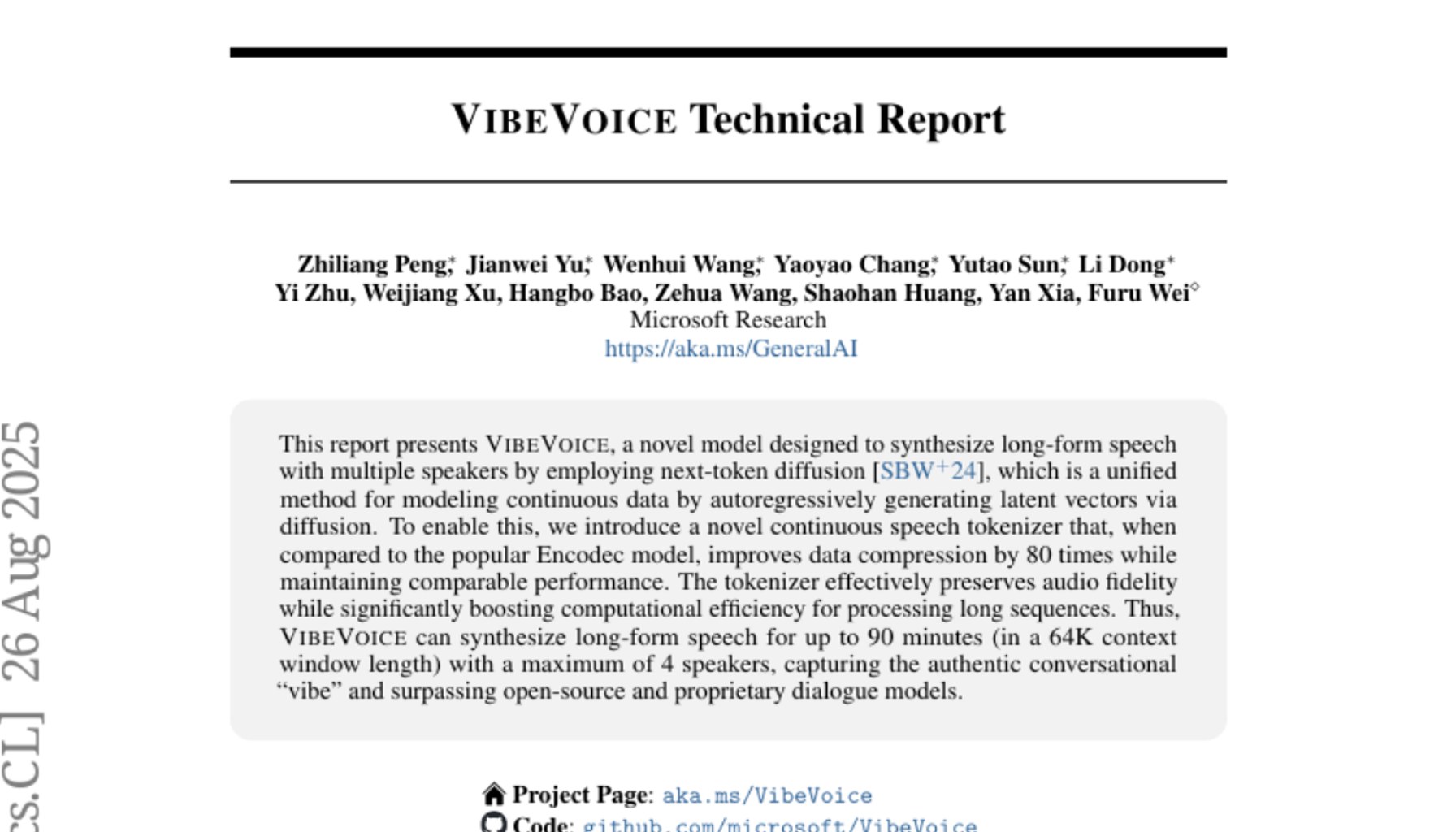
Image / paperswithcode.com
Benchmarks just got tougher, and AI models are being forced to prove it.
A wave of recent AI research signals a clear shift: researchers are prioritizing tougher, more comprehensive evaluation regimes. Across arXiv’s cs.AI feed, Papers with Code leaderboards, and OpenAI’s research publishings, the throughline is consistent—more rigorous tests, better alignment between what we measure and what matters in deployment, and a cautionary eye on whether scores generalize beyond white-box benchmarks.
The arXiv cs.AI listings are piled with papers that scrutinize how we judge model behavior, not just how we train it. Many of these studies push for broader testbeds, debiasing methods, and reliability checks that move past vanilla accuracy toward practical usefulness. The technical report details a growing recognition that a model can appear excellent on a curated set of tasks while stumbling in real-world use if we don’t stress-test for distribution shifts, safety constraints, and interpretability. While the exact numbers vary, the signal is uniform: you win more by proving robustness and honesty under diverse conditions than by chasing a single score.
Papers with Code, the go-to hub for benchmarks and implementations, mirrors this shift with updated leaderboards and more nuanced evaluation categories. Benchmark results show gains on standard tasks but increasingly insist on transparency about training data, compute budgets, and ablation studies. The platform’s emphasis on reproducibility means we’re finally getting a clearer picture of what helps, what doesn’t, and where the pitfalls lie when models move from the lab to production. It’s not just about bigger models or slicker finetuning; it’s about how you prove emergent capabilities are real and not artifacts of a particular benchmark pipeline.
OpenAI Research adds its own flavor to the conversation by highlighting evaluation-centric design choices—how to measure reliability, safety, and alignment in ongoing model development. The technical report details frameworks and metrics that push teams to anticipate edge cases, test for prompt leakage, and defend against brittle performance in unexpected settings. In short, these papers argue that evaluation is not a checkbox at the end of a sprint, but an evolving backbone of the productization process.
Analytically, this convergence matters because benchmarks have outsized influence on product roadmaps. The temptation to optimize for a leaderboard can overshadow genuine reliability if the test suite doesn’t reflect real user needs. The risk is real: models that look impressive in controlled experiments but stumble under multiturn conversations, tool usage, or adversarial prompts. The industry needs transparent reporting around data provenance, compute, and model scale to avoid creating systems that look good on paper but underperform in the wild.
What this means for products shipping this quarter is practical and clear. Build evaluation into the development loop early and make it a real constraint on release timing. Favor diversified benchmark suites that test robustness, safety, and real-world use cases over surface-level gains. Invest in leak-proof data handling, rigorous ablations, and independent reproducibility checks. And design product features that degrade gracefully under distribution shifts rather than hoping benchmarks stay perfectly aligned with user reality.
What we're watching next in ai-ml
Sources
Newsletter
The Robotics Briefing
A daily front-page digest delivered around noon Central Time, with the strongest headlines linked straight into the full stories.
No spam. Unsubscribe anytime. Read our privacy policy for details.