Cheap Deep Sea Bots Spark Science and Mining
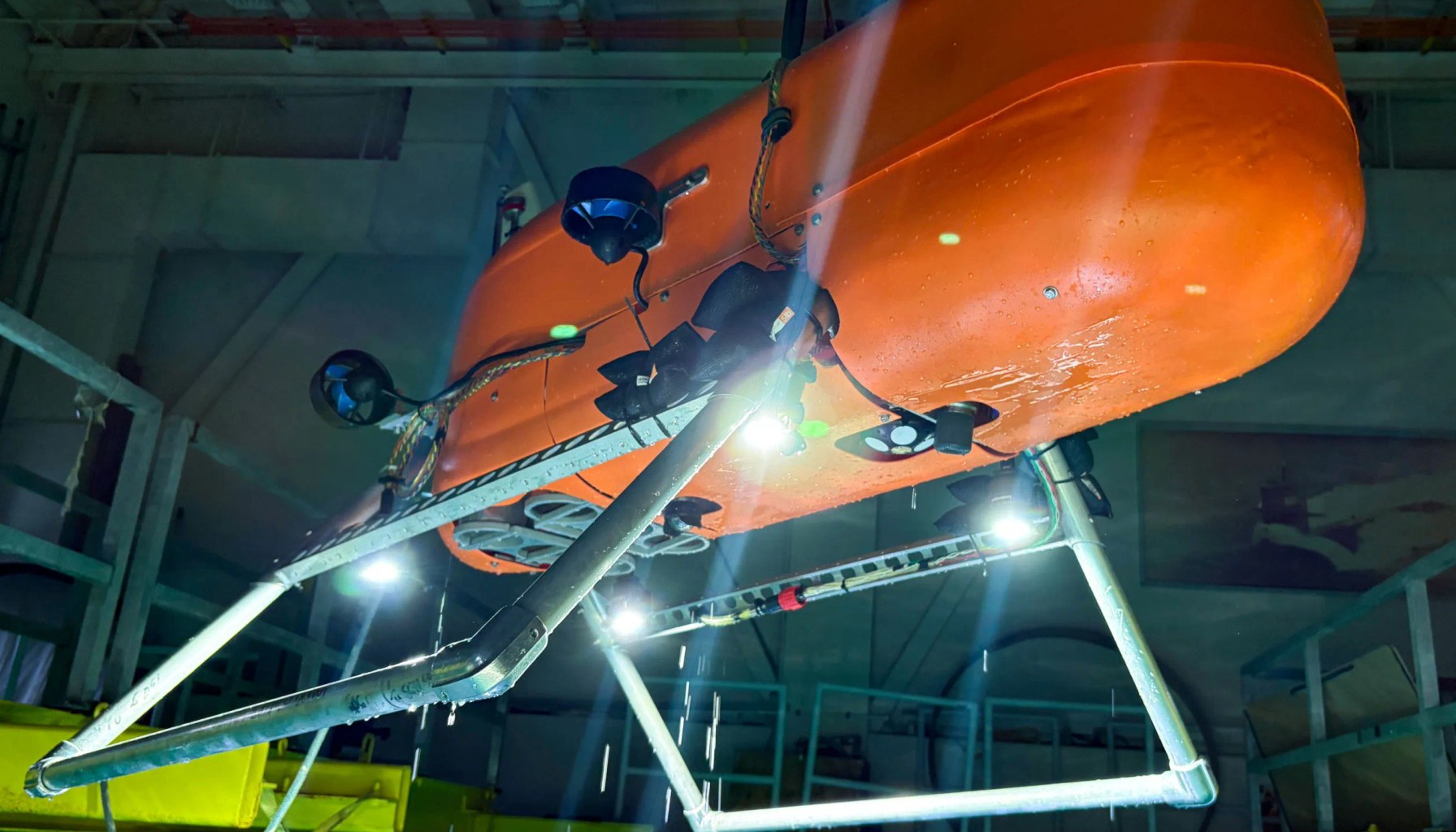
Two neon submersibles just slipped into the Pacific to chase seafloor minerals for a fraction of the usual cost.
NOAA’s Rainier is mapping more than 8,000 square nautical miles of seafloor in a hunt for critical mineral deposits, and it has two unconventional assistants along for the ride. The Orpheus Ocean vehicles, tiny by deep sea standards and built for “deep for cheap,” will push about 6,000 meters down to bounce along the seafloor, drilling cores and collecting life in the process. The monthlong mission, smack in the middle of a region studded with metal-rich nodules, signals a potential shift in how scientists and industry might study and exploit the ocean floor.
Orpheus Ocean, a startup born out of the Woods Hole Oceanographic Institution in 2024, is betting on a simple slogan to redefine a stubborn bottleneck in deep sea work: cost. The two vehicles in use for this mission cost a couple of hundred thousand dollars apiece to build, a sliver next to the usual price tag of established ocean vehicles that can run from five to ten million. They are neon and elongated, not the glossy, high-end behemoths that have dominated the deep. But they are designed to do something a lot of sea robots struggle with: go to the seafloor, stay close to the sediment, and siphon up cores that reveal both the geology and the biology of a world that remains mostly unmapped.
Scientists and engineers see immediate value in the approach. The vehicles are not just for show; they’re built to sample sediment layers and the creatures within, offering a first-hand look at life that thrives in the cold, high-pressure abyss. Copper, cobalt, nickel and manganese nodules are the kinds of resources that underpin modern electronics and renewable energy tech, and the ability to cheaply and quickly map where those nodules lie could accelerate both science and the mining conversation. The mission plays out as a test of doctrine as much as technology: can a low-cost platform deliver reliable cores, high-resolution imagery, and usable environmental data at scale?
That question sits at the intersection of policy and practice. The deep sea has long been a frontier of discovery and debate. If cheap, easy-to-deploy robots can rapidly expand our understanding of biodiversity and deposit distribution, they could also quicken the tempo of discussions about mining and environmental safeguards. The prospect raises a chorus of questions about long-term impacts on deep-sea ecosystems, how data from these missions gets shared, and who sets the rules for extraction when resources are finite and ecosystems are slow to recover.
From a product and engineering lens, the initiative offers clear takeaways. First, the cost curve matters: when hardware costs drop to levels where a wider range of universities and startups can field multi-vehicle campaigns, exploration accelerates, but reliability and maintenance must keep pace. Second, sampling breadth matters as much as spectacle. The ability to push into the seafloor and retrieve sediment cores expands what scientists can infer about habitability and mineral distribution, but it also demands rugged sampling tools and robust contamination controls. Third, governance and return on data will shape adoption. If the data deliverables are not standardized or openly shared, the scientific and policy communities may push back, even as industry eyes the potential for early reconnaissance work.
Analysts and operators watching this Rainier run will be asking the same practical questions as any startup deploying new hardware: what is the true uptime, how do you mitigate loss of tools in a hostile environment, and what comes next after the first round of mapping and coring? If Orpheus can prove ongoing, reliable deep-sea sampling at low cost, the field could see a flurry of new experiments and partnerships that blend oceanography with mineral exploration. The industry will likely translate this into a broader push for scalable, field-tested platforms that can handle the rigorous demands of deep-water science and the early stages of resource prospecting.
In the end, the glowing little machines may not just collect data; they could redefine how we learn about the abyss and what we decide to do with what we find. The next months will reveal whether the deep sea can truly be explored cheaply without compromising the ecosystems that call the ocean floor home.
- Inexpensive seafloor-hopping submersibles could stoke deep-sea science—and miningtechnologyreview.com / Source role not classified / Published MAY 01, 2026 / Accessed MAY 01, 2026