Huawei Unveils DriveONE Powertrain at HarmonyOS Launch
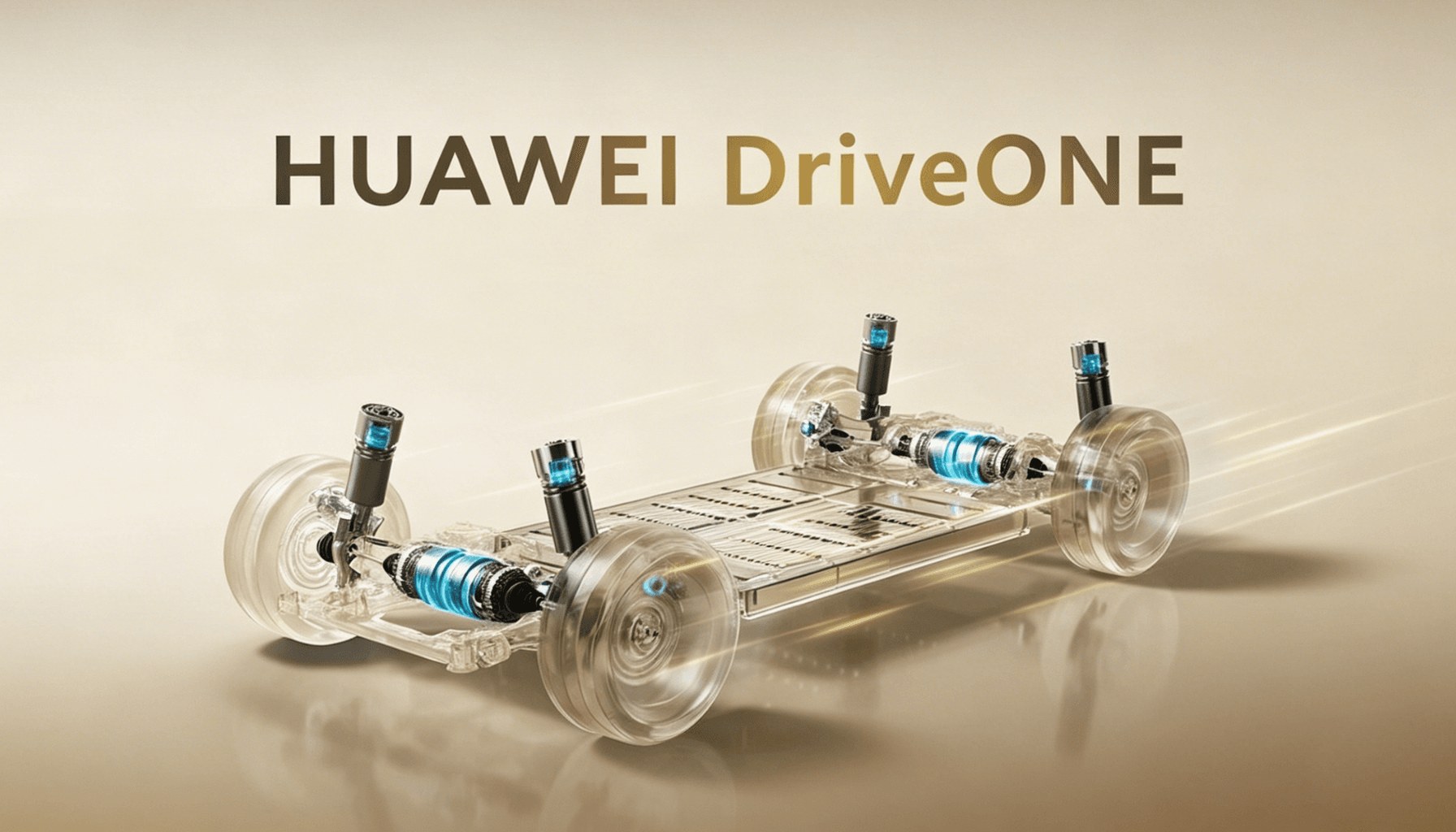
Huawei’s DriveONE powertrain brand arrives with a bold claim: 94% efficiency, mass production, and a leg up for premium EVs in China.
At the HarmonyOS Smart Mobility Spring Launch Event, Huawei put a spotlight on DriveONE, a new EV powertrain framework billed as a vertically integrated stack spanning silicon carbide-based hardware, control algorithms, and software. Huawei executive Yu Chengdong framed DriveONE as a decisive step for vehicles priced above RMB 300,000 (roughly $41,500), asserting DriveONE ranks first in powertrain quality performance and shipments in that segment. Huawei also touted a vast field database—over 40 billion kilometers of safe driving mileage—to back its reliability claims.
Technically, DriveONE rests on a dual 94% efficient silicon carbide (SiC) power platform, with a range-extender generation that surpasses 94% efficiency (compared with a 91% industry average) and pure electric efficiency exceeding 94% (versus about 92% industry average). In other words, Huawei is selling not just components but a traceable energy-management philosophy: high efficiency, lower heat, and better endurance across a variety of operating modes. The system supports an automatic off-road mode, featuring an adaptive dog-clutch differential lock and ultra-low-speed crawling down to 0.5 km/h, reducing speed fluctuations on rough terrain by more than 55%. Huawei also emphasized a vertically integrated stack—its own SiC modules, a 56‑turn high-efficiency motor, and AI-driven control algorithms—that, in combination with a planetary gear architecture, low-viscosity lubricants, and a 0.15 mm ultra-thin insulation system, is intended to rethink EV powertrain efficiency benchmarks.
DriveONE has already entered mass production, Huawei said. The brand’s first live deployment appears in the GAC Toyota Bozhi 7, launched in March 2026, where the vehicle line is equipped across all variants with Huawei’s integrated electric drive system. That collaboration signals Huawei’s aspiration to become a standard powertrain option for automakers pursuing a premium, software-enhanced approach to propulsion, especially in the Chinese market where automakers are accelerating vertical integration to trim supply-chain latency.
The announcement sits at an inflection point for China’s EV ecosystem. Huawei’s public push into powertrains mirrors a broader industry shift toward in-house control of critical hardware and software—driving not just performance, but also OTA-enabled updates and tighter software-hardware integration. For global manufacturers and suppliers, DriveONE’s entry raises the bar for what “made in China” can mean in high-end EV propulsion: a system that travels billions of kilometers in real-world use, with a claimed advantage in both efficiency and control fidelity.
Two practitioner takeaways stand out. First, for OEMs and Tier-1s, DriveONE underscores China’s appetite for system-level integration. If Huawei can reliably scale, we could see more Chinese automakers seeking turnkey powertrain solutions rather than stitching together disparate motor, inverter, and control modules from multiple suppliers. Second, the supply chain implications for silicon carbide and high-turn motors are non-trivial. Huawei’s in-house SiC modules and 56-turn motor indicate a shift toward domestic, end-to-end capability within China, potentially altering sourcing strategies for other automakers and eroding some historical advantages held by foreign suppliers—though geopolitical and export-control realities will shape how far DriveONE can spread beyond the Chinese market.
In short, DriveONE is more than a branding exercise. It represents a concrete, production-ready move toward fully integrated, software-enabled powertrains in China’s premium EV segment, with real-world backing from a major automaker partnership and measurable efficiency claims that challenge conventional benchmarks.
- Huawei Launches New EV Powertrain Brand “DriveONE” at HarmonyOS Eventpandaily.com / Source role not classified / Published APR 23, 2026 / Accessed APR 23, 2026