NEURA eyes up to $1.4B Series C for physical AI
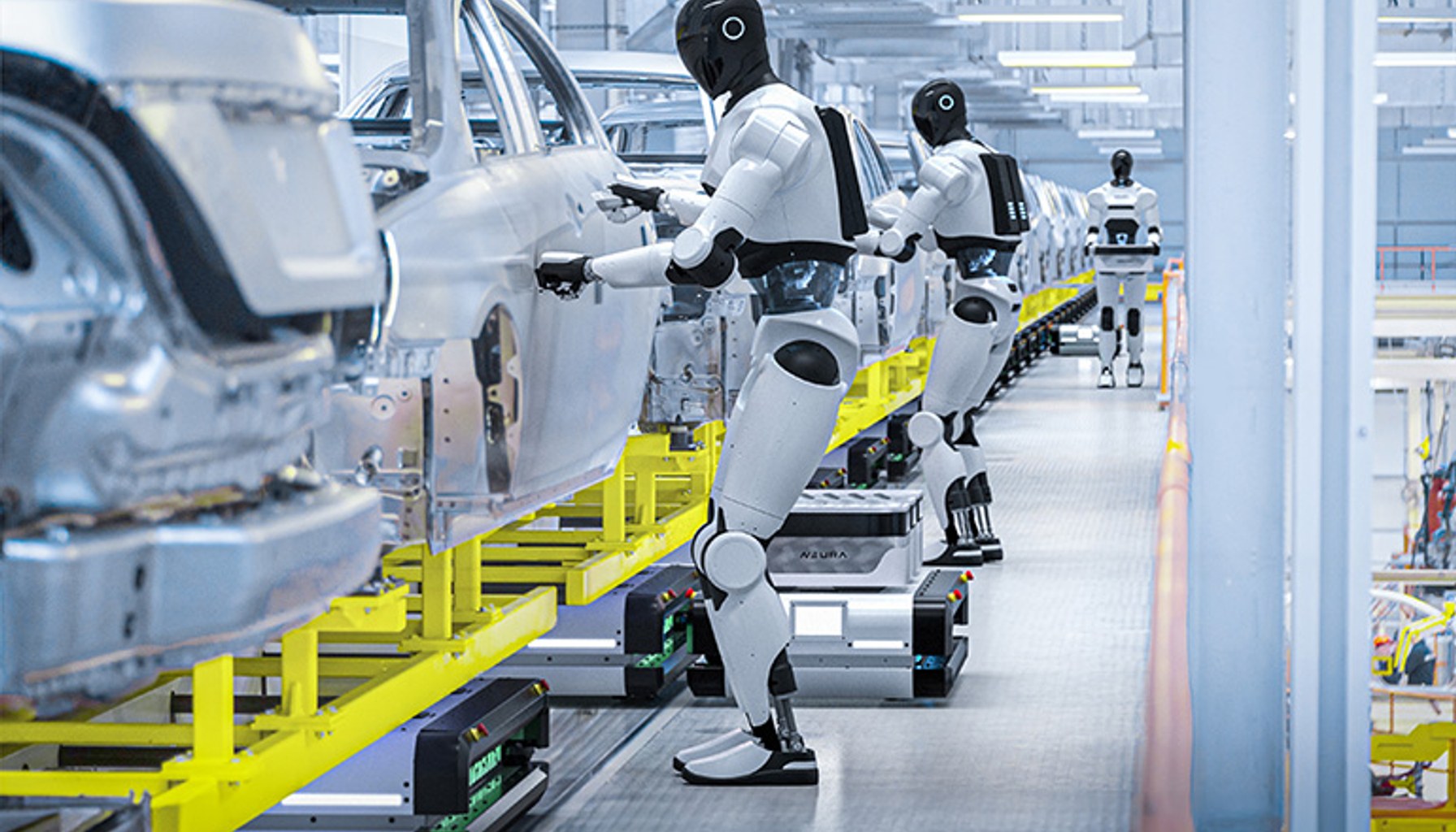
NEURA is pursuing a Series C that could reach up to $1.4B, contingent on investor conditions it did not disclose. The Berlin startup said the round could hit that target, depending on factors it has yet to reveal.
Testing shows investors are still willing to back a bold bet on cognitive robotics that blur the line between software and hardware. NEURA frames its mission as building systems that continuously learn, collaborate, and operate across real world environments through a shared intelligence network it calls the Neuraverse. In other words, the company wants a scalable, open stack that combines robotics, artificial intelligence, sensors, edge compute, and data infrastructure into a single architecture.
At the core, NEURA is selling more than modular machines. It is pushing a software and data backbone designed to let light robot arms, mobile robots, and humanoid robots work together in a common ecosystem, with sensor kits aimed at manufacturing and supply chain use cases. The company said it is building the software, AI, and data infrastructure needed to deploy intelligent machines at scale. The vision, as founder and CEO David Reger put it, is that AI will not stay on screens. It will move, interact, learn, and work beside people in the real world. He described physical AI and cognitive robotics as a potential technology shift on the scale of past industrial transformations, capable of altering manufacturing, logistics, healthcare, services, and even household robotics.
Industry observers will watch carefully how NEURA translates ambition into practice. The investor appetite for physical AI underscores a few practical constraints that define the path from lab to production. First, orchestration across robot classes, such as arms for manipulation, mobile platforms for transport, and humanoids for complex interactions, requires a unified control layer and standardized interfaces. That alignment is essential for any claimed shared intelligence to actually reduce integration time and risk in a real factory or warehouse. Second, edge compute and energy management matter. Real world deployment means constant perception, planning, and control must run locally with tight latency, while battery life and charging logistics for mobile robots remain non trivial, even for so called light arms. Third, data and safety govern operating in public or semi public environments. Continuous learning hinges on robust data pipelines, validation loops, and governance to prevent unsafe behaviors as robots encounter new tasks. Fourth, the economics must pencil out. Even with a strong software backbone, hardware uptime, maintenance, and the cost of retraining models at scale will determine whether a platform like Neuraverse delivers meaningful ROI in high churn environments like manufacturing lines or logistics hubs.
These constraints help explain why a Series C of up to 1.4 billion signals more than just capital. It signals belief that a hardware plus software platform can be a durable differentiator if the ecosystem can attract third party developers, sensors, and compatible modules. If NEURA can prove that its Neuraverse can absorb multiple robot types, share perception data safely, and coordinate tasks with minimal downtime, operators might see faster onboarding and lower incremental integration costs. The risk, of course, remains in delivering reliable performance at scale. A universal platform is only as good as its transfer from controlled demonstrations to messy, real world environments.
For manufacturers and logistics operators watching from the floor, NEURA’s proposal offers a concrete critique of how to think about automation investment. The company frames cognitive robotics not as isolated unit upgrades but as a networked, evolving system where hardware and software must be synchronized through common data models and continuous learning loops. Practitioners should watch for concrete milestones: how openness of the Neuraverse interfaces with existing automation stacks, how data pipelines handle real time sensor streams across robot classes, and how safe operation is validated as learning continues.
What to watch next is not just the size of the Series C, but the cadence of real world deployments and the robustness of the shared ecosystem. If NEURA can deliver a scalable, interoperable stack that keeps robots learning while staying reliable on the factory floor, the promise of physical AI may finally become an everyday reality rather than a compelling slide.
- NEURA Robotics to raise up to $1.4B in Series C funding for physical AIThe Robot Report / Independent source / Published JUN 10, 2026 / Accessed JUN 12, 2026