Nuclear power to Mars: NASA's bold propulsion bet
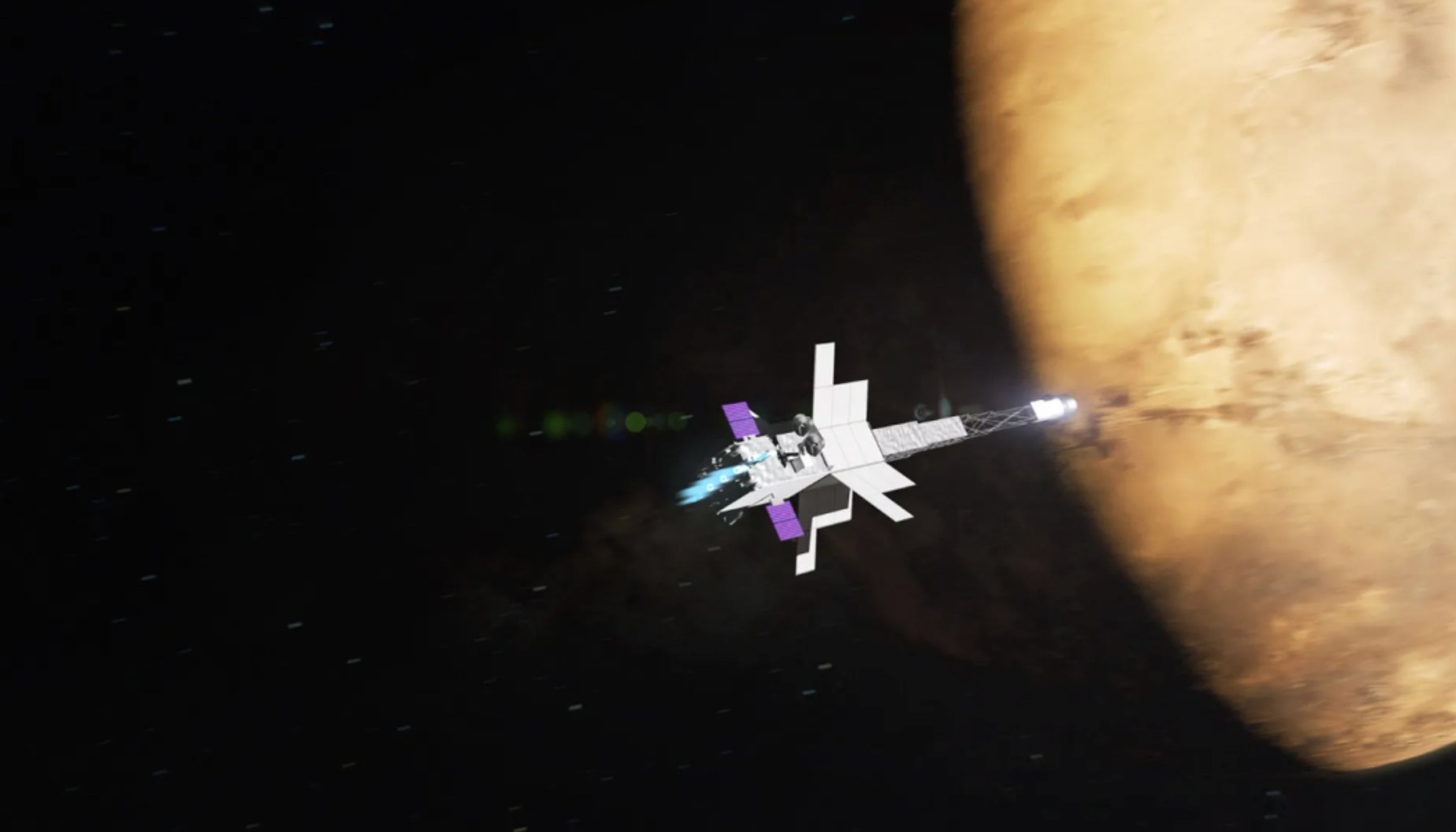
NASA plans to fly a nuclear reactor-powered spacecraft to Mars by 2028, a high-stakes leap that could redefine interplanetary travel—and American leadership in space tech.
The plan lands in a moment when Artemis II has just completed its lunar slingshot, and the agency is eyeing a much longer, more daring voyage. MIT Technology Review’s The Download frames this as one of the marquee bets in space propulsion: a reactor-powered mission intended to push Mars mission profiles beyond what chemical rockets can achieve. Official specifics remain shrouded, but the thrust is clear: nuclear power could unlock higher speeds, heavier cargo, and more resilient autonomy for long-duration deep-space trips. The project’s ambition sits against a backdrop of global competition—fueled in part by concerns that the U.S. may be pulled into a race with China for lunar and Martian footholds.
What makes this plan compelling is the core propulsion dilemma. Nuclear options come in two broad flavors: nuclear thermal propulsion (NTP), which uses a reactor to heat propellant for thrust, and nuclear electric propulsion (NEP), which powers electric thrusters with reactor-derived electricity. Each path promises dramatically higher specific impulse than conventional chemical stages, potentially shortening flight times and broadening payload envelopes. The tradeoffs are real, though: NTP delivers stronger thrust and faster transits but demands robust shielding and safe, reliable reactor operation within a launch vehicle and deep-space environment. NEP trades raw thrust for high efficiency and sustained operation, but it requires enormous, radiation-tolerant power systems and complex propulsion-in-the-loop optimization. The technical report details are still forthcoming, and NASA officials say the project remains one of the more mysterious, high-visibility undertakings in modern spaceflight.
From a pure AI and autonomy standpoint, the implications are equally outsized. A nuclear-powered craft capable of long, autonomous deep-space cruises will rely on sophisticated onboard decision-making, fault detection, and contingency planning—areas where AI and robotics research is racing ahead. Delays in Earth-to-ship communication in deep space mean the ship must “think” and act with minimal human input, increasing the relevance of robust, auditable autonomy architectures, resilient perception systems, and explainable onboard control. In practice, that elevates requirements for radiation-hardened compute, rigorous verification, and fail-operational strategies—topics that many space-tech teams are already weighing for future missions.
Analysts and engineers should brace for a few realities. First, the path from concept to flight is a long, expensive, and tightly regulated journey. The reactor affords strategic capability, but it also amplifies risk—launch safety, accountability for a nuclear system on a launch vehicle, and the challenge of proving new propulsion in a testbed before a crewed mission. Second, the mission’s timeframe is ambitious: by the end of 2028, a Mars flight would be one of the boldest demonstrations of propulsion and autonomy to date, with implications for propulsion vendors, launch providers, and national space policy. Third, even in the best case, the plan will hinge on modular, scalable architectures that can be validated in Earth orbit or near-Earth space before the deep-space stretch to Mars.
Analogy: think of it as mounting a sun on the nose of a spacecraft and telling it to navigate the solar system with a crew of one, while the ship learns to repair itself and its own route on the fly.
For practitioners, two to four practical takeaways stand out:
What does this mean for products shipping this quarter? Space-tech startups and AI-for-autonomy teams should watch for early demonstrations of robust on-board decision-making, radiation-hardened compute strategies, and safer fault-management demonstrations in modular testbeds. It’s a reminder that the next leap in space propulsion isn’t just a bigger rocket; it’s systems-level integration where propulsion, power, autonomy, and safety co-evolve.
- The Download: NASA’s nuclear spacecraft and unveiling our AI 10technologyreview.com / Source role not classified / Published APR 15, 2026 / Accessed APR 15, 2026