One thousand humanoids coming to Schaeffler plants
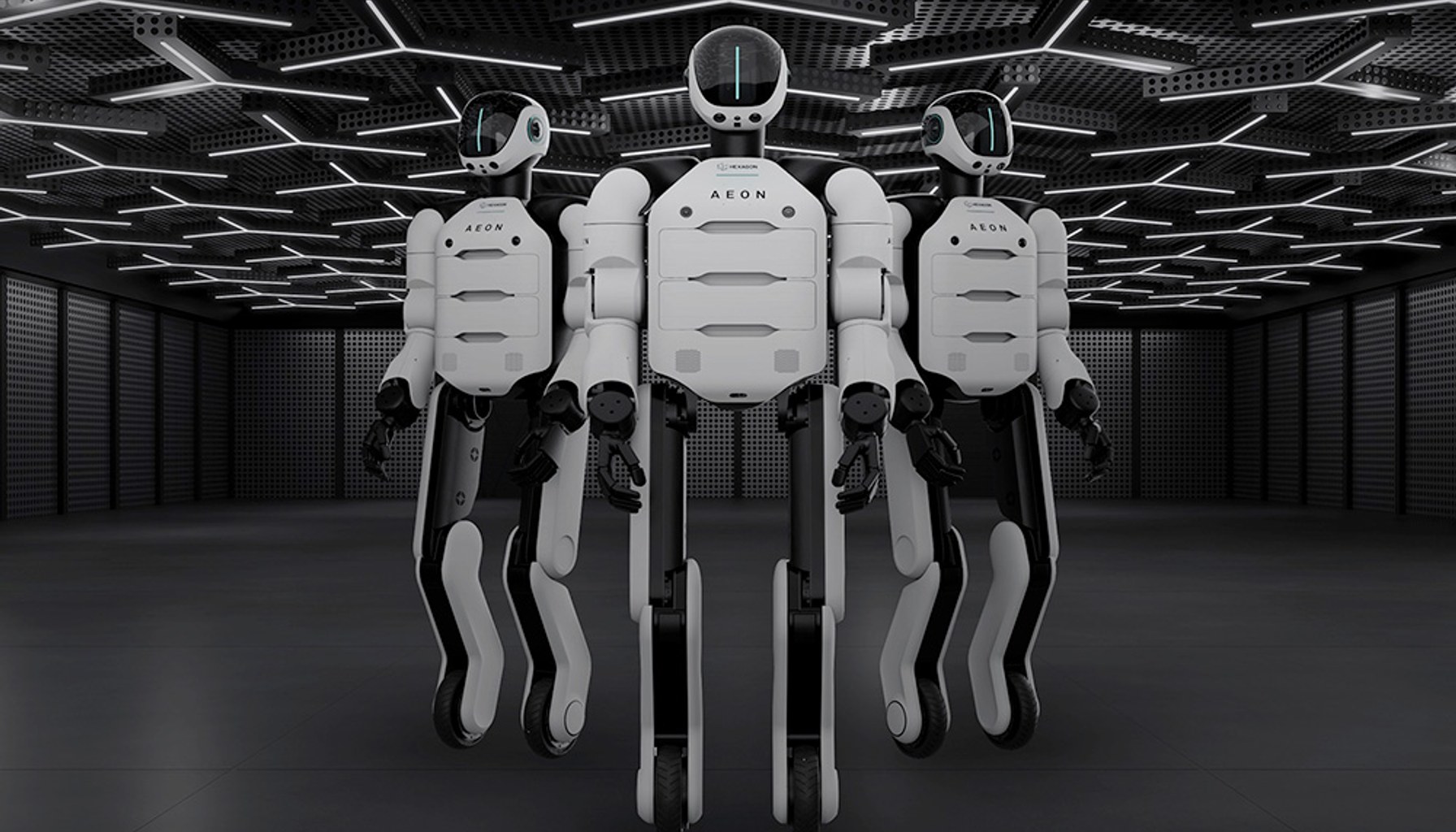
One thousand humanoids are coming to Schaeffler plants by 2032.
Schaeffler is expanding its partnership with Hexagon Robotics, announcing plans to deploy at least 1,000 AEON humanoid robots across its global production system within the next seven years. The move follows a successful pilot and deepens the collaboration around high-precision actuation and sensing, with Schaeffler supplying its own actuators to the AEON platform. The AEON humanoid relies on a sensor fusion stack, spatial intelligence, and what Hexagon describes as physical AI to guide movement and manipulation in factory environments. The parties say the collaboration is designed to deliver tangible business value across a range of applications and factory formats, not just a single demo.
The pilot phase last year gave Schaeffler a real-world read on what the AEON unit could do beyond a lab bench. AEON demonstrated high-precision manipulation at a multi-machine station, handling load, unload, and inspection tasks with its onboard sensor suite and wheel-based locomotion. The company now intends to scale that capability, emphasizing the robot’s adaptability to diverse layouts and line configurations. In addition to material handling, the plan calls for new applications such as automated parts inspection, targeted for rollout starting at the end of 2026. The shift from pilot to deployment reflects a broader push in industrial robotics to turn demonstrations into repeatable, site-wide deployments rather than isolated proofs of concept.
From an operations perspective, the project highlights the classic tension of big automation: scale brings both promise and complexity. Integrating 1,000 AEON units with Schaeffler’s existing production system will require careful floor planning and interfaces to the plant’s controls and data networks. Industry observers note that true ROI in these scenarios hinges on more than the robot’s accuracy; it depends on how well the automation stack aligns with PLCs, MES, and maintenance practices. Integration teams report that the real work often arrives after the first robot is installed, when path planning, safety interlocks, and preventive maintenance routines must be codified across many cells.
Two practitioner themes stand out. First, the wheel-based locomotion in AEON, designed for industrial floors, may offer a meaningful advantage over traditional bipedal designs when deployed in cluttered or varied environments. It can sidestep some traversal bottlenecks that slow fixed-robot cells, enabling more consistent throughput at the line level, provided the floor configuration supports reliable traction and load stability. Second, expanding from loading and unloading to automated inspection represents a meaningful elevation of the robot’s role in quality control. If successful, it could compress cycle times by catching defects earlier and reducing rework, but it also expands the need for data capture, traceability, and software updates across a large fleet.
The roadmap signals a broader trend: industrial buyers are leaning into large-scale humanoid deployments, but the knock-on costs and risks are non-trivial. Hidden costs (spare parts, ongoing software maintenance, cybersecurity, and the training footprint required to keep thousands of devices in sync) will determine the real payback. Floor supervisors and integration teams will be watching closely for execution discipline: how quickly sites can absorb new tooling, whether line changeovers remain smooth, and how quickly operator teams gain proficiency with the AEON work cell. If Schaeffler and Hexagon can publish credible, site-specific performance data as deployment expands, the 2032 target could become a meaningful case study in translating a scalable humanoid platform into measurable gains.
As the rollout advances, the industry will be listening for concrete metrics: cycle time improvements, throughput gains, and a transparent payback horizon that goes beyond vendor press materials. The trend line here is clear: when a global manufacturer commits to 1,000 of these devices, the test moves from pilot to operating reality, and that transition will define the next wave of factory automation.
- Schaeffler plans to deploy 1,000 Hexagon humanoids by 2032therobotreport.com / Source role not classified / Published APR 29, 2026 / Accessed APR 29, 2026