Physical AI Steps Onto Siemens Factory Floor
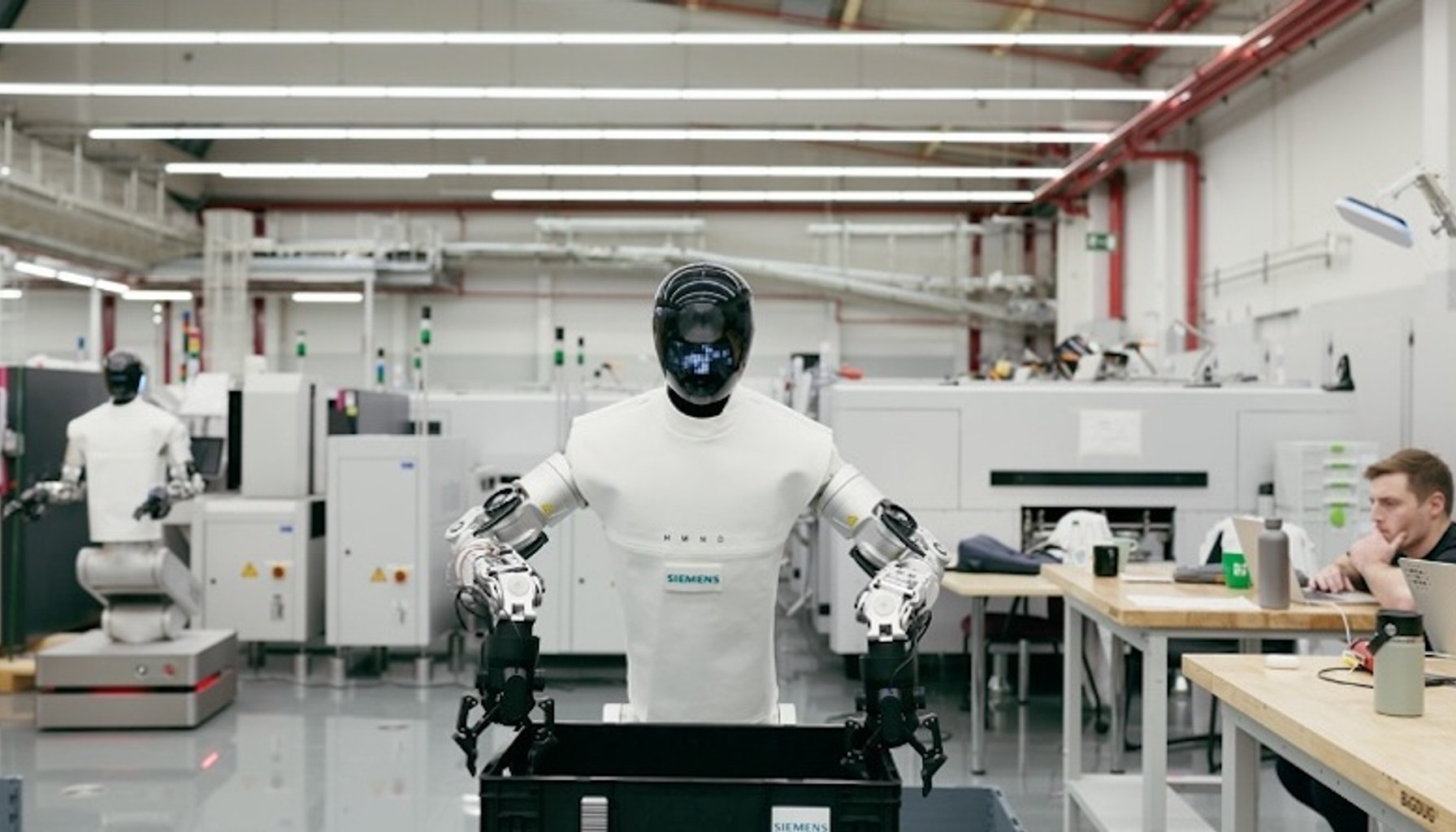
A wheeled humanoid just moved materials on a Siemens line.
In a move Siemens calls a milestone, Humanoid’s HMND 01 Alpha robot—built to run on Nvidia’s physical AI stack—has been put to work inside Siemens’ electronics factory in Erlangen, Germany, performing autonomous logistics tasks. The collaboration, announced as a landmark in moving AI from vision to industrial action, signals a path beyond merely teaching machines to “see” toward teaching them to move, pick, and place within a live production flow.
Production data shows the initial deployment is a carefully staged pilot rather than a full blown rollout. Still, the test operates in a real factory environment, not a controlled lab. The HMND 01 is designed as a wheeled manipulator that can navigate busy aisles, identify pallets and totes, and transfer goods between stations without direct human intervention—at least for routine tasks. Nvidia’s AI stack underpins perception, decision-making, and control, while Humanoid brings the physical chassis and software integration layer. The result, Siemens officials say, is a tangible step toward autonomous logistics that can coexist with existing automation lines rather than replace them.
Industry observers frame the move as more than a novelty demo. Integration teams report that the robot’s autonomy depends on a careful choreography with Siemens’ floor layout, conveyors, and the plant’s warehouse management system. The goal isn’t just to prove the robot can move; it’s to prove it can work at scale, with predictable handoffs to human workers when exceptions arise. The Erlangen site serves as a live testbed for how physical AI can handle the handful of tasks that typically bottleneck material flow: locating the right crate, selecting the appropriate route through a busy factory, and ensuring the correct destination is reached during a shift change or a changeover.
There are clear practitioner takeaways for plant managers contemplating a similar path. First, integration requirements matter as much as the robot’s sensing power. Floor space, charging infrastructure, and safe operating zones need to be carved out and validated with real-time corridor mapping. Second, training hours and operator supervision remain essential. Even autonomous units require a human-in-the-loop for exceptions, system updates, and ongoing maintenance planning. Third, data and cybersecurity cannot be afterthoughts. A robot piggybacks on the plant’s network and ERP/WMS interfaces; robust access controls, latency safeguards, and clear override procedures are non-negotiable for production stability. Finally, a successful pilot hinges on how well the system can scale beyond a single line. The next phase will test multi-line coordination, inventory accuracy, and the ability to handle rough edges—like damaged pallets or ambiguous labels—without cascading disruptions.
Operational metrics in this early stage are still evolving, but the potential is persuasive. With autonomous logistics, plants expect reduced manual handling in heavy, repetitive tasks, improved traceability of materials, and smoother handoffs between shifts. The question most finance teams ask is payback: will this deliver a clear return, and on what timeline? ROI documentation remains preliminary—unlike the pure-play demos of the past, this is a tightly scoped, real-world deployment that will need months to reveal durable gains. For now, what’s undeniable is that the Erlangen test keeps the industry honest about what “physical AI” can deliver: not a cure-all, but a meaningful, measurable step toward smarter, safer, and more predictable material flow.
As the Safer, Smarter Factory narrative evolves, Siemens’ Erlangen test will likely become a benchmark for future scale-ups. The market will watch closely to see whether this blend of humanoid robot hardware, Nvidia’s AI backbone, and a deeply experienced manufacturing partner can translate ambition into dependable, repeatable gains on the plant floor.
- Siemens, Nvidia and Humanoid partner to bring physical AI into factory operationsroboticsandautomationnews.com / Source role not classified / Published APR 16, 2026 / Accessed APR 16, 2026