Quiet Fiber Muscles Push Soft Robotics Forward
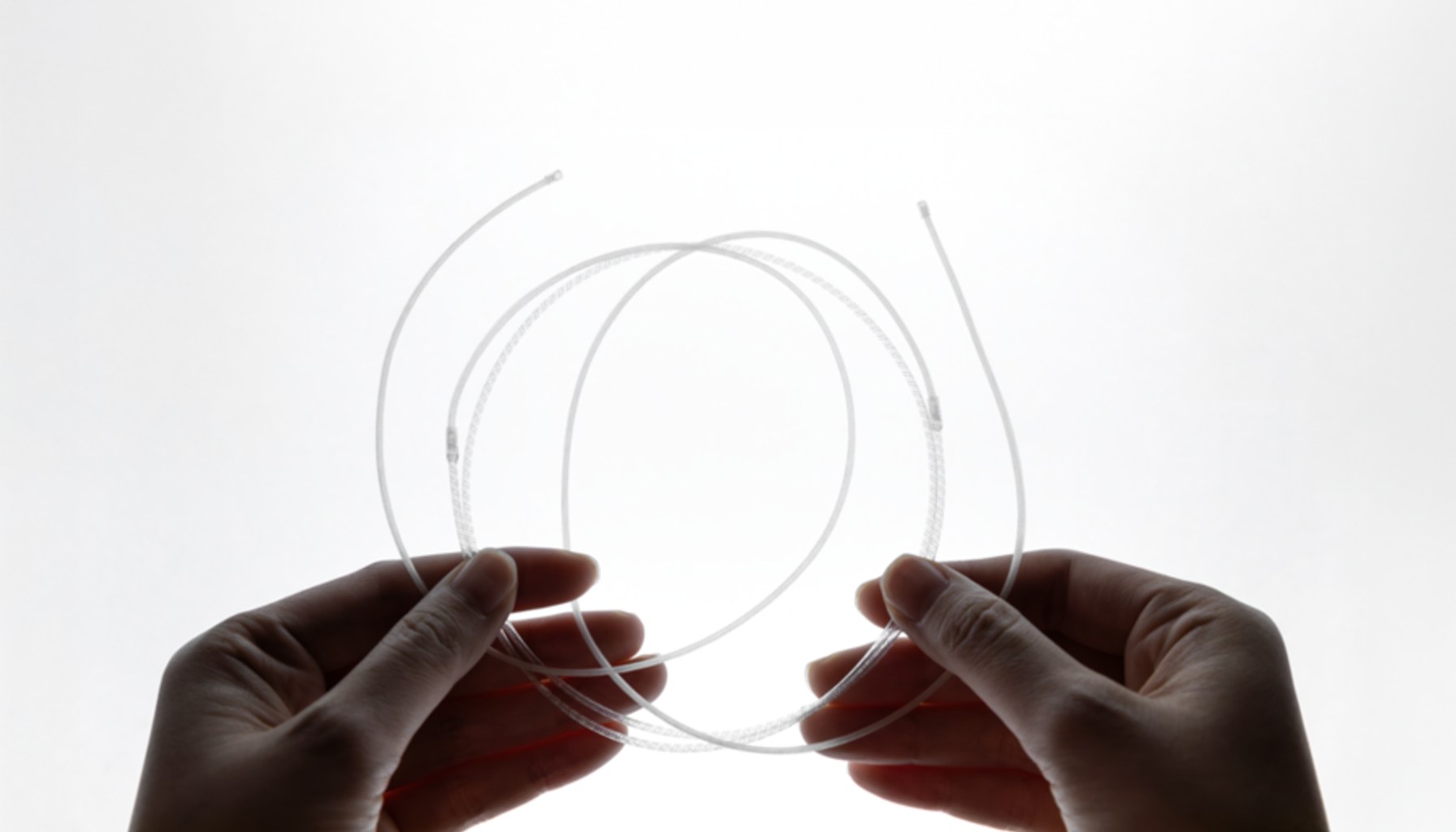
These artificial fiber muscles move without motors.
A collaboration between MIT’s Media Lab and Italy’s Politecnico di Bari has unveiled a new class of electrofluidic fiber muscles—actuators built directly in a fiber format that combine a thin McKibben-style fluid actuator with a miniature solid-state pump. The result, researchers say, is a compliant, silent actuation system that can be arranged in various configurations to suit different tasks, and that eliminates bulky motors, external pumps, and other heavy hardware. The work appears in Science Robotics, led by Ozgun Kilic Afsar of MIT and Vito Cacucciolo of Bari, with a small team of co-authors.
Engineering documentation shows that the fiber muscles are powered electrically and rely on a sealed fluid chamber. The core idea fuses two long-standing approaches: the fluid-driven McKibben actuator, famed for soft, muscle-like contraction, with an electrohydrodynamic (EHD) pump that can create pressure without moving parts or an external fluid source. In effect, the fiber itself becomes the actuation motor, and the pressure is generated in place by a compact, solid-state mechanism. Demonstration footage highlights the absence of traditional bulky actuation hardware and the potential for safe, body-friendly integration.
From a humanoid-robotics perspective, the biggest implication is configurability. Unlike rigid joints driven by geared motors, these fiber muscles can be bundled and oriented to reproduce the distributed, multi-axial force profiles of natural muscle groups. That modularity could translate into soft exosuits or humanoids with smoother, quieter actuation—less risk of hard contact injuries and less audible mechanical noise.
Yet the advance sits in a careful, lab-stage lane. The MIT/Bari effort is described as a laboratory demonstration of a fiber-based, electrically driven actuator system. There are no published power-density figures, battery runtimes, or field-test payloads tied to a specific robot yet. The technical scope is strong, but the readiness level remains squarely in the lab, with controlled-environment testing and no field deployments announced.
Two crucial practitioner angles emerge from the advance. First, the control and integration challenge is non-trivial. Soft, distributed actuation demands new control strategies to coordinate many fibers in real time, preserve stable stiffness, and provide precise force output across a range of poses. The fiber form offers safety and compliance, but it complicates traditional robotics control loops that assume known, rigid joints. Second, durability and reliability could be the real gatekeeper. Fluid channels, microfluidic interfaces, and the sealed fluid compartments must withstand tens of thousands of flex cycles without leaks or pressure drift. Heat from the electrohydrodynamic drive, long-term electrolyte stability, and encapsulation integrity are all live worries for a system meant to span human-scale wearables or humanoid limbs.
Compared to prior generations of soft actuators, the MIT/Bari fibers claim a clear improvement in integration density and quiet operation. Earlier fluid-driven soft actuators often relied on bulky pumps or external fluid supplies, and their form factors tended to be rigidly limited by the hardware footprint. The new fiber approach promises a scalable, modular path toward higher DOF actuation within wearable or humanoid architectures, letting designers thread muscles into apparel or limbs with less compromise on form factor. The tradeoff, as with most soft-actuation leaps, is a longer route to predictable, repeatable high-force performance in the wild, where environmental factors and user variability can stress a system unevenly.
What to watch next, as the research moves from paper to practice: (1) a clear set of performance benchmarks, including peak force, contraction speed, and energy efficiency under realistic loading; (2) demonstrable endurance data—how many cycles before leakage or drift appears; and (3) early integration results with a humanoid chassis or soft exosuit, showing how fiber actuation behaves under multi-joint coordination and dynamic tasks.
In the short term, the work provides a hopeful blueprint for quieter, more body-friendly actuation that could finally scale soft robotics closer to practical humanoid and wearable systems. It’s a meaningful step, not a finished product, and it aligns with a broader industry push to replace noisy, power-hungry motors with compliant, distributed actuation that respects human-robot interaction as a core design constraint.
- A new type of electrically driven artificial muscle fibernews.mit.edu / Primary source / Published APR 09, 2026 / Accessed APR 11, 2026