Robots Upgrading, Not Replacing Skilled Trades
By Maxine Shaw
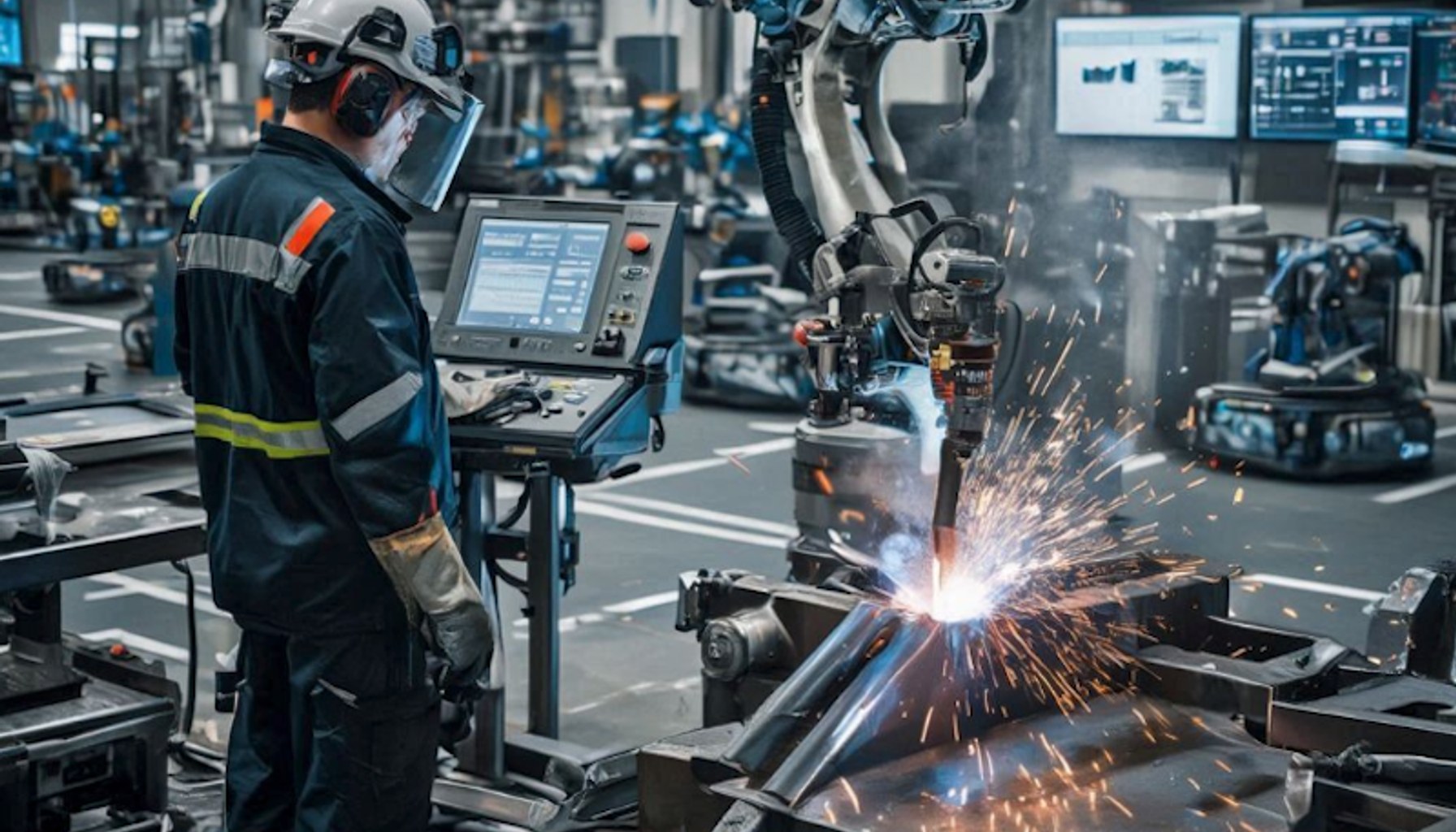
Image / roboticsandautomationnews.com
Robots are making welds faster, not stealing jobs.
A new wave of automation is reshaping the skilled trades by upgrading how welders, electricians, and refrigeration techs work, rather than eliminating them. Production data shows that robots, sensors, and AI are arriving across job sites and factories, but, as the piece notes, they still depend on skilled humans to install, program, troubleshoot, and maintain the systems. The practical truth is that the difference between a flashy demo and a durable deployment is in the details—safety, training, and a well-meshed integration plan.
Among the trends, robotic welding cells stand out as both visible and valuable. Integration teams report that these cells can deliver meaningful cycle-time improvements when floor space, power, and peripherals are laid out properly from day one. But the real gains come when shops treat the weld cell as a long-term production asset, not a one-off showpiece. Floor supervisors confirm that the best outcomes come after months of calibration and operator training, not from a vendor’s slick video. ROI documentation reveals that payback is highly sensitive to upfront planning: without it, the savings from faster cycles can be eroded by downtime and rework in the first few runs.
The broader message from the trends is striking: automation is not a replacement lever but a capability amplifier. Integration requirements—where the robot sits, how much space it needs for reach and safe operation, how power and cooling are provisioned, and how sensors tie into the control system—are every bit as important as the robot’s cadence. The article highlights that the line between “demo” and “deployment” is crossed only when engineering, safety, and maintenance teams are engaged early and repeatedly. Operators must own the knowledge transfer, from programming to preventative maintenance, and vendors that promise “seamless integration” too often overpromise and underdeliver.
Two practitioner-informed insights stand out. First, training hours matter, and the return on a robotic cell hinges on a robust upskilling plan. It’s not enough to hand a teach pendant to a few operators; teams need structured SOPs, real-time troubleshooting, and scheduled refreshers. When training is baked into the project budget, automation becomes a true lever for throughput rather than an ongoing cost of ownership. Second, hidden costs lurking in many deployments—the cost of software licenses, spare parts, routine calibration, and cybersecurity hardening—can quietly erode projected gains if not explicitly accounted for in the business case. Integration teams report that a realistic budget must include these recurring items, plus a contingency for extended commissioning and potential retrofits of the surrounding line.
For skilled trades, the shift is practical, not aspirational. Automation augments craft labor by shifting repetitive, high-precision tasks to machines, while technicians take on programming, fault diagnosis, and routine cell optimization. In field contexts, this means welders and electricians become system integrators in their own right: they install, tune, and sustain an automated cell, and they write the standards that keep the line reliable after the vendor leaves.
Looking ahead, the takeaway is clear: successful deployments are anchored in real-world readiness—space planning, power, training, and a candid view of the work still done by humans. The industry’s momentum will hinge on the ability to translate a promising demo into a productive, measurable upgrade on the shop floor, with a clear line of sight to reduced cycle times, steadier throughput, and a payback that’s more than a marketing promise.
Sources
Newsletter
The Robotics Briefing
A daily front-page digest delivered around noon Central Time, with the strongest headlines linked straight into the full stories.
No spam. Unsubscribe anytime. Read our privacy policy for details.