Schindler expands elevator robot fleet to seven
By Maxine Shaw
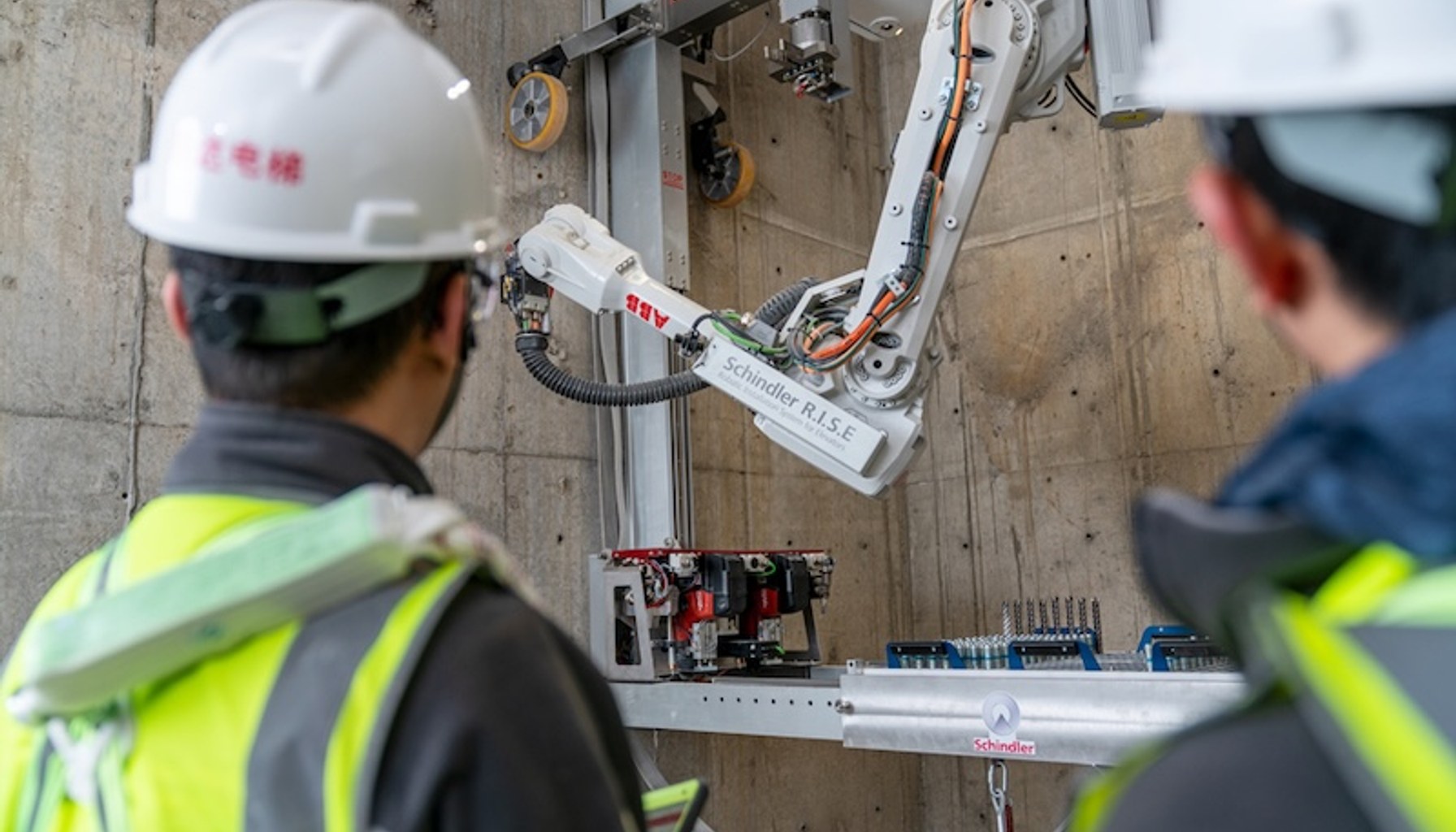
Image / Robotics & Automation News
Schindler just added two more robots to fast track elevator installs. The move grows its Robotic Installation System for Elevators, or RISE, to seven units deployed across multiple international markets, a clear signal that automation is moving from a novelty to a standard tool on elevator projects.
Deployment data shows that the expanded fleet is aimed squarely at boosting productivity, safety, and project delivery times on busy construction sites. Schindler frames the expansion as part of a broader industry shift toward construction automation, where repetitive, high-risk tasks can be offloaded to machines while human crews concentrate on critical milestones such as safety verification and system commissioning. The case study reports that projects using RISE have seen tangible gains in on-site efficiency and a reduction in exposure to hazardous manual work, even as timelines remain tight in a crowded market for new building capacity.
RISE units are designed to operate alongside human installers rather than replace them. The robots take on repetitive, alignment‑critical steps inside hoistways and with elevator components, while technicians handle integration, testing, and final commissioning. To operate smoothly, the system requires a straightforward integration footprint: reliable electrical power, data connectivity for monitoring and control, docking and charging points on the job site, and coordination with crane or hoist operations to move heavy components into position. In practice, sites must align the robot’s workflow with the broader project schedule, scaffolding and safety protocols, and the site’s existing communication channels so that robotic and human teams can work in tandem without bottlenecks.
Industry observers say the expanded fleet underscores two important realities for plant managers and project leaders. First, a growing roster of automated tools can unlock real cycle time improvements on routine installation tasks. While the article does not publish exact cycle times or throughput numbers, the emphasis on faster installation sequences and tighter delivery windows implies meaningful speedups for standard shafts and repetitive placement tasks. Second, the ROI story hinges on project mix and site readiness. The case for automation strengthens on high-volume, repeatable installations but requires careful planning for complex or custom configurations that can dilute robotics gains if not properly integrated.
A practical takeaway for field leaders is to anticipate how automation scales across projects in different markets. The global spread of Schindler’s seven-robot fleet suggests that training, spare parts logistics, and cross-market support will matter as operators rotate the same hardware across jobs with varying codes, standards, and supply conditions. And while automation clearly augments craft labor, it does so in a way that shifts the human role toward critical checks, quality assurance, and system integration rather than removing skilled labor from the equation entirely.
Looking ahead, deployment data will be watched for how quickly these robots can adapt to new shaft geometries, building codes, and customer requirements, and how owners quantify their ROI as commissioning timelines tighten and labor markets remain tight. The expansion signals that the industry’s shift toward plug-and-play automation is underway, but the real test will be whether sites can orchestrate robotic and human workflows with the same precision they expect from the elevators their fleets serve.
- Schindler expands elevator installation robot fleet as demand for construction automation growsRobotics & Automation News / Trade / Published JUN 03, 2026 / Accessed JUN 03, 2026
Newsletter
The Robotics Briefing
A daily front-page digest delivered around noon Central Time, with the strongest headlines linked straight into the full stories.
No spam. Unsubscribe anytime. Read our privacy policy for details.