Siemens, Nvidia, Humanoid Bring Physical AI to Factory
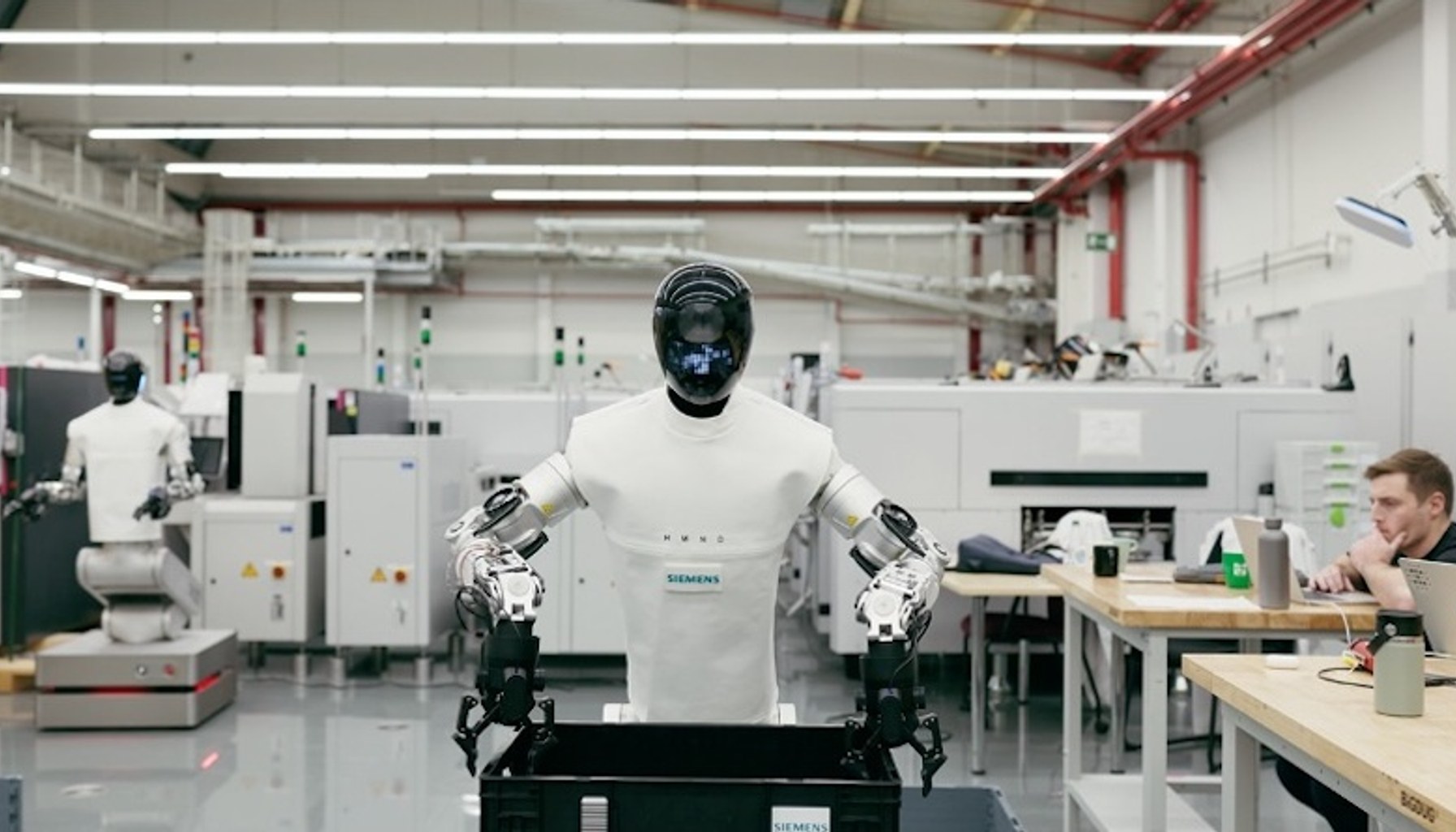
A wheeled humanoid robot is autonomously handling logistics inside Siemens’ Erlangen plant.
In a move Siemens, Nvidia, and Humanoid are calling a milestone, the HMND 01 Alpha humanoid—built on Nvidia’s physical AI stack—has been tested in Siemens’ electronics factory in Erlangen, Germany, performing autonomous logistics tasks. Announced on April 16, 2026, the collaboration aims to turn “physical AI” from a promising demo into a real deployment on the factory floor.
What makes this deployment notable is its claim to move beyond vision-first proofs to actionable, autonomous material handling. The HMND 01 is designed to navigate the shop floor, pick or route items, and coordinate with existing material handling systems. In Erlangen, the robot has demonstrated autonomous logistics tasks within an established production environment, a setting notorious for glare-prone lighting, slick floors, and ever-shifting priorities. The pairing of Humanoid’s platform with Nvidia’s AI stack is intended to give the robot perception, planning, and action all in one integrated loop, with the potential to reduce the time human workers spend shuttling parts and kits across the line.
Industry insiders will watch closely how quickly this kind of solution translates into measurable gains. The deployment signals a shift from flashy demonstrations to real-world reliability—an area where many automation vendors over-promise and under-deliver. The Erlangen trial is meant to test not just the robot’s ability to move boxes, but its capacity to operate alongside human workers and to interoperate with Siemens’ existing factory IT ecosystems, which include logistics software, scheduling, and line-side control. The success of that integration will determine whether the robot becomes a repeatable component in other cells or remains a high-profile prototype.
Two concrete practitioner insights emerge from the track record of pilot deployments like this. First, the value hinges on end-to-end integration: the robot must exchange timely data with MES and WMS systems, receive current production priorities, and feed back item-level status in near real time. Without that data plumbing, even a nimble robot will idle while a supervisor re-queues work manually. Second, the physical AI layer is only as good as its safety and maintenance plan. Integration teams report upfront needs such as adequate floor space for docking and safe navigation, a robust power supply and network connectivity, and substantial operator training hours so staff can supervise, intervene, and re-route tasks when exceptions occur.
There are still human-led tasks and realities the system will contend with. Complex or fragile parts, last-minute routing changes, or quality checks that require nuanced judgment will continue to rely on human workers for the foreseeable future. And while the promise of fewer manual steps is alluring, hidden costs tend to surface: software updates, sensor calibration, cybersecurity posture, and ongoing maintenance fees can erode the initial efficiency gains if not accounted for in the rollout plan. Expect ROI to be a function of how aggressively a facility scales the approach—one robot on one line is unlikely to deliver the same payback as a multi-cell, tightly choreographed logistics network.
The Erlangen test is an important signal that the industry is inching toward physical AI as a tangible throughput enabler rather than a showroom feature. The next steps will reveal whether the prototype’s autonomy translates into cleaner cycle-time improvements, reduced errors, and a predictable payback curve across multiple cells. Until then, the factory floor will be watching closely how a “landmark milestone” translates into real, measurable gains on the line.
- Siemens, Nvidia and Humanoid partner to bring physical AI into factory operationsroboticsandautomationnews.com / Source role not classified / Published APR 16, 2026 / Accessed APR 17, 2026