What we’re watching next in ai-ml
By Alexander Cole
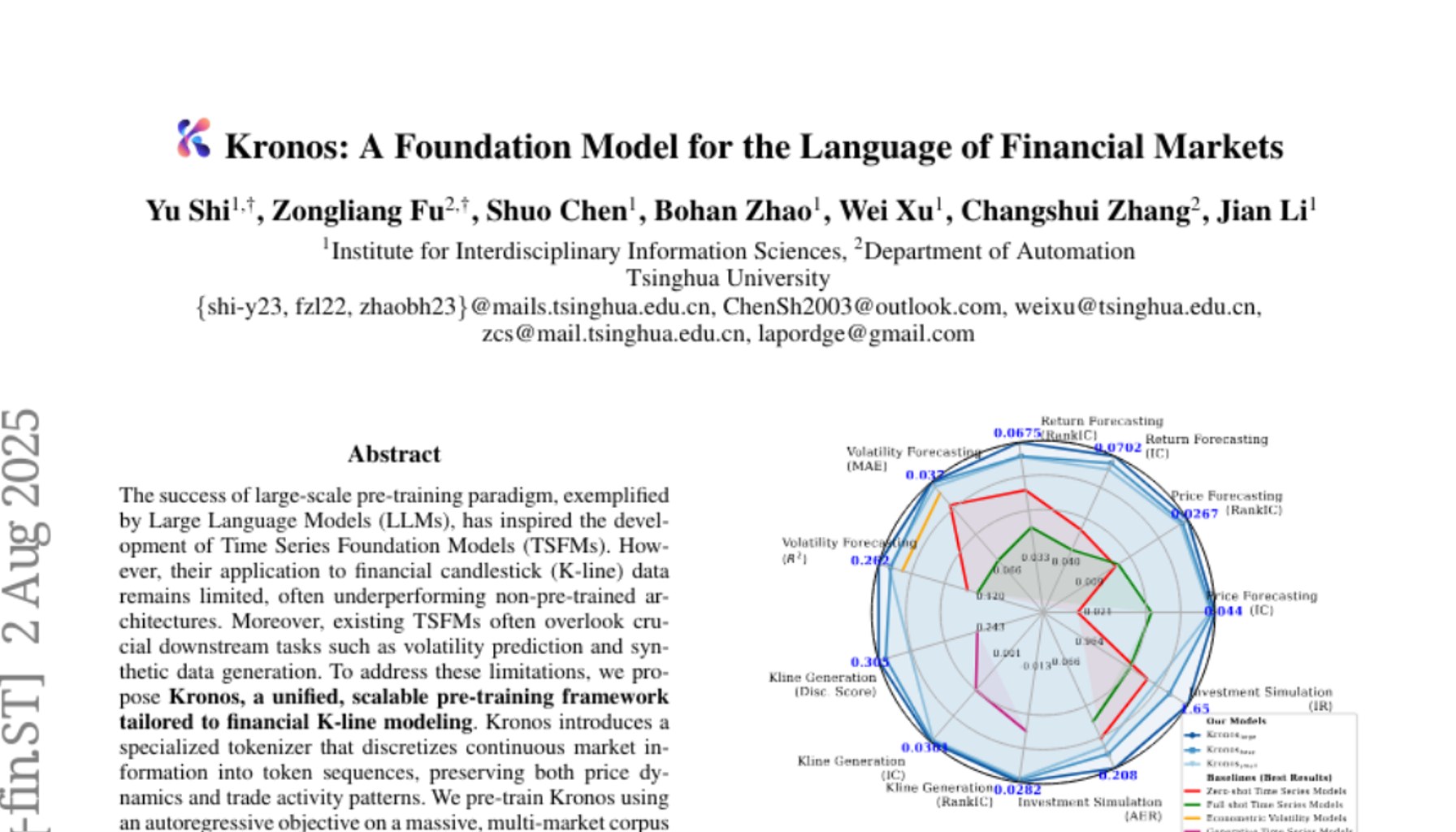
Image / paperswithcode.com
Benchmarks finally start telling the truth about reliability.
A quiet but growing consensus is taking hold: research is moving from chasing the next leaderboard edge to building robust, reproducible evaluations that actually predict real-world performance. The signal is diffuse but unmistakable across three portals: arXiv’s cs.AI recent submissions, Papers with Code’s benchmarking pages, and OpenAI Research outputs. Taken together, they sketch a future where papers are judged less by flashy scores and more by how well claims hold up under rigorous ablations, diverse datasets, and transparent reporting. If you want a mental image: it’s the difference between a showroom gloss and a test track reality check.
The arXiv cs.AI queue has increasingly featured papers that interrogate evaluation pipelines—clarifying datasets, reporting variability across seeds, and stressing robustness to distribution shifts. Papers with Code mirrors the shift by curating benchmark suites with explicit reproducibility notes, dataset licenses, and code release status, rather than simply publishing a new metric curve. OpenAI Research, meanwhile, emphasizes thorough experimentation and safety-aligned evaluation in its releases, often pairing claims with multi-part ablations and cross-domain tests. The throughline is clear: credible progress now rides on the backbone of trustworthy evaluation, not just headline numbers.
This isn’t about shaming the old metrics game. It’s about acknowledging a practical truth for teams shipping products: models that look good on a single benchmark can fail in the real world if you don’t account for data drift, edge cases, and hidden failure modes. The practical upshot is that meaningful progress will require more transparent reporting, more diverse evaluation data, and more repeatable experiments. In product terms, it’s a shift from “we beat the benchmark” to “we can dependably deploy this under real user conditions.”
Analogy time: imagine testing a car by squeezing it around a pristine track with perfect weather, then demanding the same performance in rain, potholes, and rush-hour traffic. The new research ethos is equivalent to equipping the car with rain tires, real-world terrain tests, and end-to-end trip logs before you call the model “road-ready.” That’s the discipline being codified across the three sources, and it’s likely to slow the sprint to the next ceiling, but it should raise the floor where products actually operate.
Two clear limitations to watch for: first, the transition requires more meticulous data curation and documentation, which can slow publication and raise operational costs for teams. second, there’s a real risk that the push for reproducibility becomes a gatekeeper barrier for early-stage research if tooling isn’t accessible, scalable, or affordable. Expect debates about what counts as a fair test, how to price compute for extensive ablations, and how to balance faster iteration with deeper evaluation.
What this means for products shipping this quarter: expect vendors and startups to start touting reproducibility abstracts alongside model claims, and customers to demand more transparent benchmarks and reported variance. If you’re evaluating a new model, insist on multi-dataset tests, seed variance reporting, and ablations that isolate core drivers rather than generic improvements.
What we’re watching next in ai-ml
Sources
Newsletter
The Robotics Briefing
Weekly intelligence on automation, regulation, and investment trends - crafted for operators, researchers, and policy leaders.
No spam. Unsubscribe anytime. Read our privacy policy for details.