Skip to content
SATURDAY, APRIL 11, 2026
Search
Robotics & AI NewsroomRobotic Lifestyle
Front PageAI & Machine LearningIndustrial RoboticsChina Robotics & AIHumanoidsConsumer TechAnalysis
AI & Machine LearningAPR 11, 20262 min read

What we’re watching next in ai-ml

By Alexander Cole
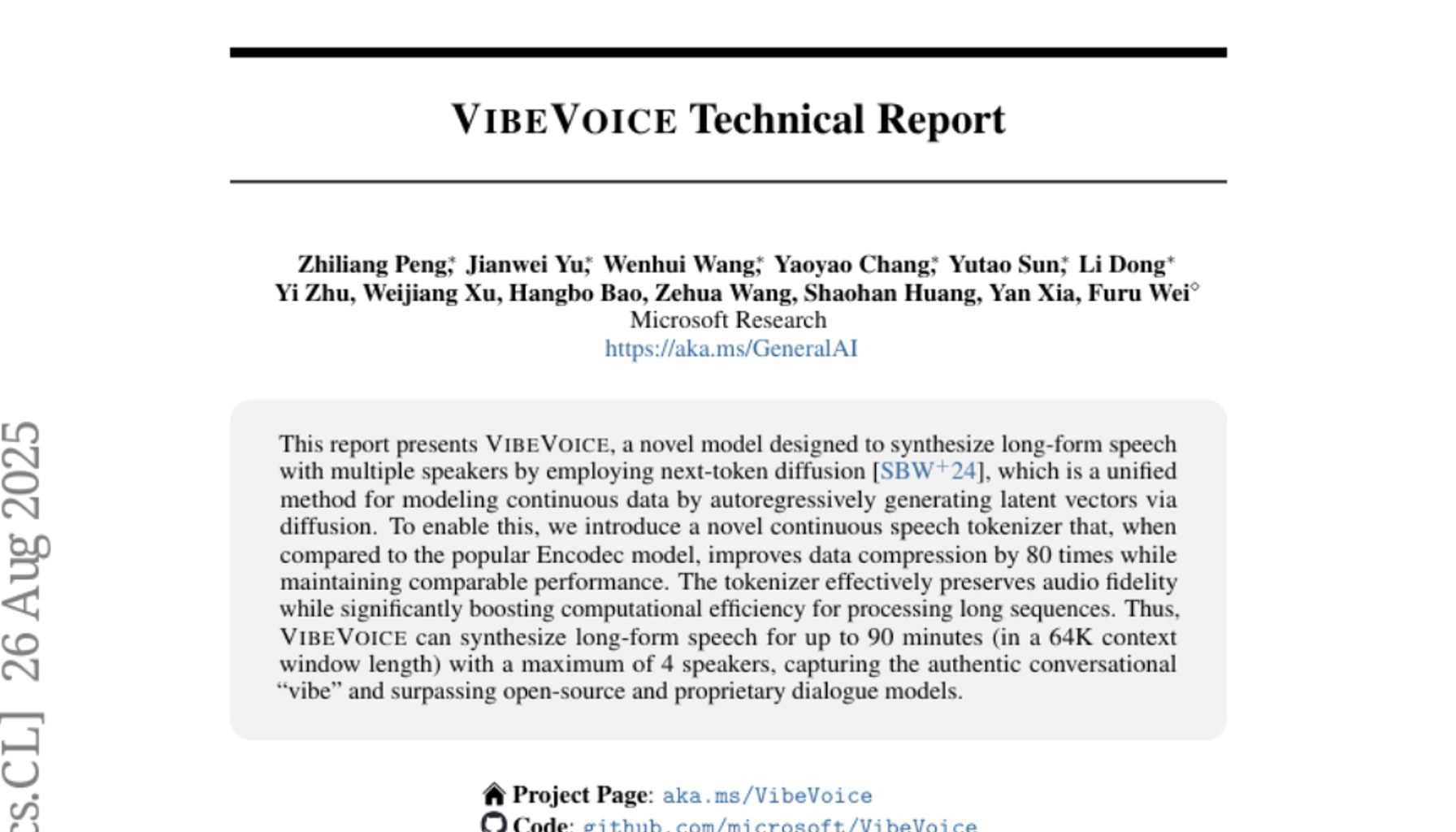
Trending Papers

Image / paperswithcode.com

Benchmarking just became the product CTO’s North Star.

Across arXiv’s AI feed and the benchmark catalogs that Papers with Code maintains, a quiet shift is underway: evaluation is no longer a quiet appendix but the engine driving product roadmaps. Researchers are publishing end-to-end benchmarks and reproducible evaluation scripts, layering datasets such as MMLU for multitask knowledge and GLUE/SQuAD-style reading comprehension as standard yardsticks. The message is clear: improvements that actually show up on well-chosen tests are what move the needle for real-world use, not just flashy architectural tweaks.

OpenAI Research and other top labs have amplified the trend by spelling out what “good performance” means beyond novelty. The technical signal is not just a higher single-number score; it’s ablations, fairness checks, and robust evaluation pipelines that survive leakage concerns and distribution shifts. Benchmark results are increasingly accompanied by explicit context about datasets, task families, and failure modes, which helps engineers translate a score into a product decision—how a model handles edge cases, how it generalizes, and where it might still falter in the wild.

It’s easy to wax poetic about progress, but a vivid metaphor helps: benchmarking is the weather report for AI capabilities. A single sunshine day on a single dataset doesn’t forecast a season; you must rain-check across tasks, data distributions, and latency budgets. The same model may ace a reading-comprehension benchmark but stumble on a multitask knowledge test or under real-time inference constraints. The latest practice is to stress-test across multi-task suites, compute budgets, and real-world data shifts to separate true progress from cherry-picked wins.

That means practical limits are front-and-center. Benchmarks can be gamed—by tuning for a specific test, leaking data into evaluation, or optimizing for one dataset while scoping out others. Real-world performance hinges on distribution shifts, latency, and safety concerns that aren’t always captured by standard tests. The emphasis on reproducibility, open evaluation pipelines, and detailed ablations helps counter these risks, but it also raises the bar for product teams: you need end-to-end measurement, not a cute leaderboard.

For products shipping this quarter, the implications are concrete. Roadmaps are increasingly anchored to benchmark-aligned milestones, not just architectural novelty. Teams will push for reproducible baselines, transparent ablations, and end-to-end user-testing that links benchmark gains to user outcomes. Expect more cross-team collaboration between research, ML engineering, and product, with a premium on verifiable, scalable evaluation that scales from R&D to release.

What we’re watching next in ai-ml

  • Reproducible evaluation pipelines become non-negotiable, with strict data splits and open code.
  • Benchmarks must reflect compute costs and latency, not just accuracy, pushing toward efficient models that still meet user needs.
  • Benchmark inflation and ethical safeguards: how to prevent gaming and ensure fair comparisons across tasks.
  • Real-world alignment signals get integrated into standard benchmarks, closing the loop between test scores and user experience.
  • Sources

  • arXiv Computer Science - AI
  • Papers with Code
  • OpenAI Research

  • Newsletter

    The Robotics Briefing

    Weekly intelligence on automation, regulation, and investment trends - crafted for operators, researchers, and policy leaders.

    No spam. Unsubscribe anytime. Read our privacy policy for details.

    Related Stories
    AI & Machine Learning•APR 10, 2026

    AI Compute Surges; Wall Slips

    AI compute growth is exploding, and the wall critics warned about may never arrive. The Download, a Technology Review newsletter, frames the latest optimism around AI progress around a simple argument: the drivers of computation aren’t slowing down. Mustafa Suleyman, described in the piece as Micros

    AI & Machine Learning•APR 10, 2026

    AI Security Tool Held Back Over Safety Fears

    OpenAI and Anthropic have pulled the brakes on a new cybersecurity AI, saying it’s too dangerous for widespread release. The move, reported and analyzed across tech outlets, signals a broader shift: as AI systems grow more capable, the threat surface when they go public grows with them. The involved

    Industrial Robotics•APR 11, 2026

    SVT Unveils Softbot Intelligence for Real-Time AI

    Real-time data becomes the star of automation. SVT Robotics has launched Softbot Intelligence, a data capability built on the Softbot Platform intended to turn streams of live automation activity into a contextual, high-fidelity knowledge base. The company says the system captures real-time executio

    Consumer Tech•APR 11, 2026

    Online Reading Glasses, No Prescription Needed

    Reading glasses arrive at your door in days—no eye exam needed. The online glasses market is not just a convenience play anymore; it’s a full-blown consumer shift. A recent CNET roundup distilled the landscape to nine retailers that offer reading glasses with zero prescription, courting shoppers wit

    Industrial Robotics•APR 11, 2026

    Tennant Unveils X16 Sweep for 24/7 Automation

    Tennant's new X16 Sweep promises round-the-clock floor cleaning. Tennant Company has rolled out the X16 Sweep, its first autonomous industrial sweeper designed for the rough-and-tumble realities of warehouses, logistics hubs, and light manufacturing. The pitch is simple: steady, repeatable cleaning

    Robotic Lifestyle

    Calm, structured reporting for robotics builders.

    Independent coverage of global robotics - from research labs to production lines, policy circles to venture boardrooms.

    Sections

    • AI & Machine Learning
    • Industrial Robotics
    • Humanoids
    • Consumer Tech
    • China Robotics & AI
    • Analysis

    Company

    • About
    • Editorial Team
    • Editorial Standards
    • Advertise
    • Contact
    • Privacy Policy

    © 2026 Robotic Lifestyle - An ApexAxiom Company. All rights reserved.

    TwitterLinkedInRSS