What we’re watching next in ai-ml
By Alexander Cole
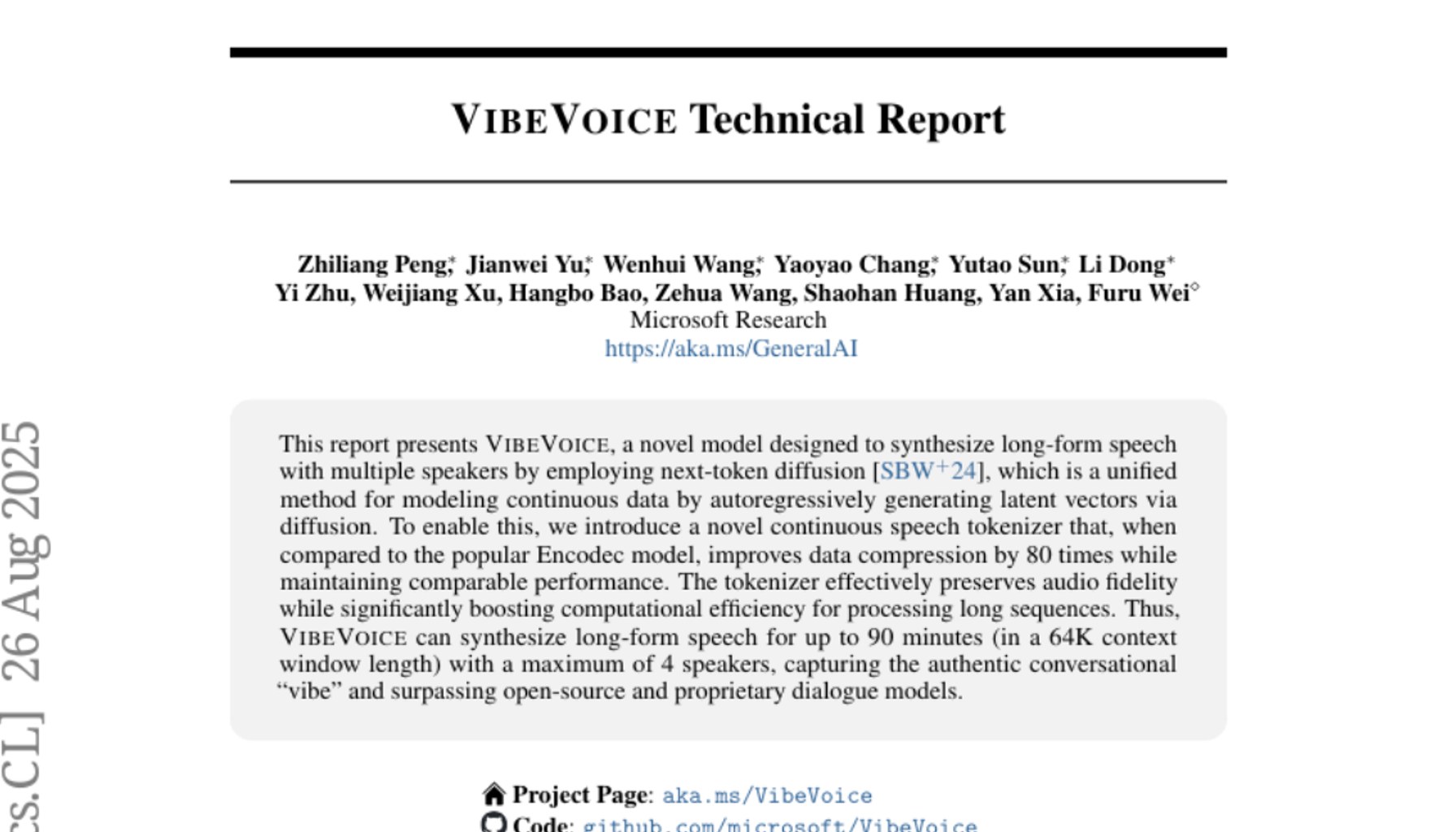
Image / paperswithcode.com
Better tests, not bigger GPUs, are stealing the AI spotlight.
A review of recent signals across arXiv’s AI papers, Papers with Code dashboards, and OpenAI Research shows a clear shift: researchers are betting on smarter benchmarks, cleaner data, and reliability over brute-force scaling alone. The overarching narrative isn’t about the next monster model; it’s about designing models that behave predictably, safely, and cost-effectively in real-world use.
The OpenAI line of work cited in the research pages continues to emphasize alignment, evaluation rigor, and robust capabilities under realistic constraints. Papers with Code surfaces a steady stream of benchmarking efforts, code releases, and replication-friendly experiments that underscore a growing appetite for credible comparison and reproducibility. Meanwhile, arXiv’s AI listings reveal condensed methods—improved prompting strategies, retrieval-augmented approaches, and efficiency-first innovations—that promise meaningful gains with less compute. Taken together, the ecosystem is teaching bigger models aren’t the sole path to value; smarter evaluation and smarter architectures are entering the fray.
This is a story of discipline, not hype. Benchmark results—where reported—point to gains on standard task suites and safety or alignment probes, but the numbers are less the headline than the trend: models that perform more reliably under scrutiny, with more transparent reporting and fewer hidden pitfalls. The technical report details and ablations that scholars publish on arXiv and mirror in conference writeups emphasize that performance is increasingly tied to data quality, evaluation design, and cross-domain generalization. In practice, teams are chasing architectures that can scale intelligently, use retrieval or motion-planning-like prompts to reduce inference cost, and resist brittle behavior in edge cases.
For product teams shipping this quarter, the takeaway is practical: invest in credible evaluation pipelines and guardrails, favor efficiency-enabled architectures (like retrieval-augmented or smarter prompting) over brute-force scaling, and treat benchmarks as living signals—updated with adversarial tests and real-world data streams. The reality check is sharp: even strong results can hide fragile generalization. The risk of benchmark gaming or overfitting to a narrow test suite remains; independent replication and diverse evaluation are now a must-have, not a nice-to-have.
What this means for practitioners is clear. If you’re racing to ship, prioritize:
Limitations linger. Benchmarks can be gamed, and real-world deployment still hinges on monitoring, drift detection, and fallback strategies. The field is learning to balance ambitious capabilities with pragmatic safety and cost control—a balance that matters for startups racing to market and enterprises weighing RoI.
What we’re watching next in ai-ml
Sources
Newsletter
The Robotics Briefing
Weekly intelligence on automation, regulation, and investment trends - crafted for operators, researchers, and policy leaders.
No spam. Unsubscribe anytime. Read our privacy policy for details.