What we’re watching next in humanoids
By Sophia Chen
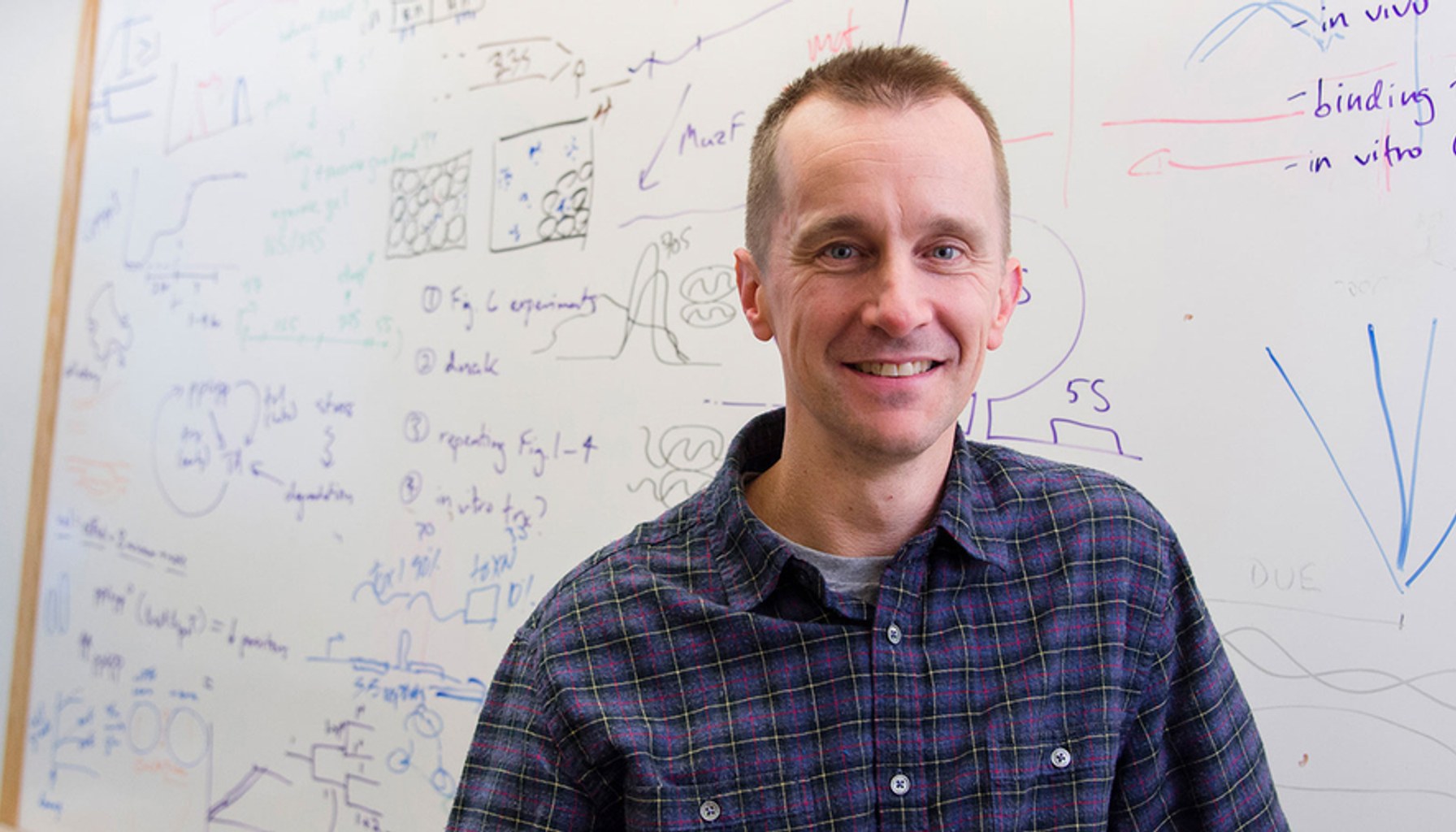
Image / news.mit.edu
MIT’s latest AAAS Fellows list signals biology’s blueprint for smarter humanoid brains.
MIT professor Michael T. Laub, the Salvador E. Luria Professor in the Department of Biology and an HHMI Investigator, and 21 MIT alumni were named fellows of the American Association for the Advancement of Science for the 2025 class. The recognition, announced in a MIT News release, highlights Laub’s work on how cells process information to regulate growth and immune responses, with bacteria as the model system. The AAAS noted the cohort’s sweeping contributions across 24 disciplinary sections, totaling 449 fellows this year. The distinction underscores a growing convergence between fundamental biology and engineering-driven robotics—places where “bio-informed” ideas increasingly seed humanoid control systems and autonomous decision-making.
The technical punchline from MIT’s own statement is straightforward: Laub’s research into cellular information processing and coevolutionary dynamics informs how living systems regulate information flow and adapt to threats. In practice, that translates to concepts engineers can borrow when designing humanoid controllers that must balance energy efficiency, robustness, and real-time adaptability. While the field remains far from translating cell-scale logic to a robot’s onboard brain, engineers are watching closely how biology handles noisy sensing, feedback loops, and rapid adaptation under resource constraints. Lab-level insights about how information routing scales with complexity can inspire new control architectures that are lighter on compute and more resilient in the real world.
From a humanoid perspective, this is more than a prestige match. It signals that the MIT ecosystem—traditionally strong in biology, computer science, and increasingly, robotics—is continuing to thread disciplines together. The practical takeaway for humanoid developers is not a new actuator or a shiny demo reel, but a reminder that strong, scalable information-processing principles—gleaned from microbial systems—can inform decisions about where to allocate compute, how to structure perception-to-action pipelines, and how to harden systems against adversarial or environmental perturbations. The collaboration potential is high: biology departments feeding into robotics labs, shared tools for simulating information flow, and joint grant opportunities that push research from bench to robot in measured steps.
That measured pace matters. The AAAS fellowship confirms a trend toward deeper interdisciplinary validation rather than splashy, one-off demos. For humanoid programs, the key limitations are still the usual suspects: translatability of cellular or molecular principles to silicon and actuators, ensuring real-time performance, and maintaining reliability in dynamic environments. Translation work—bridging the gap between bench-scale biological insights and field-ready robotics—will require careful framing of what “bio-inspired” actually buys in a humanoid context: meaningful energy savings, smarter perception fusion, or more stable adaptive control under uncertainty.
In sum, the MIT recognition is a quiet but meaningful signal: biology’s information-processing toolkit is increasingly part of the toolkit for building smarter humanoids. The next wave will test how far that toolkit can travel from concept to dependable, real-world robot behavior.
What we’re watching next in humanoids
Sources
Newsletter
The Robotics Briefing
A daily front-page digest delivered around noon Central Time, with the strongest headlines linked straight into the full stories.
No spam. Unsubscribe anytime. Read our privacy policy for details.