π0.7 Bot Brain Learns Unseen Tasks
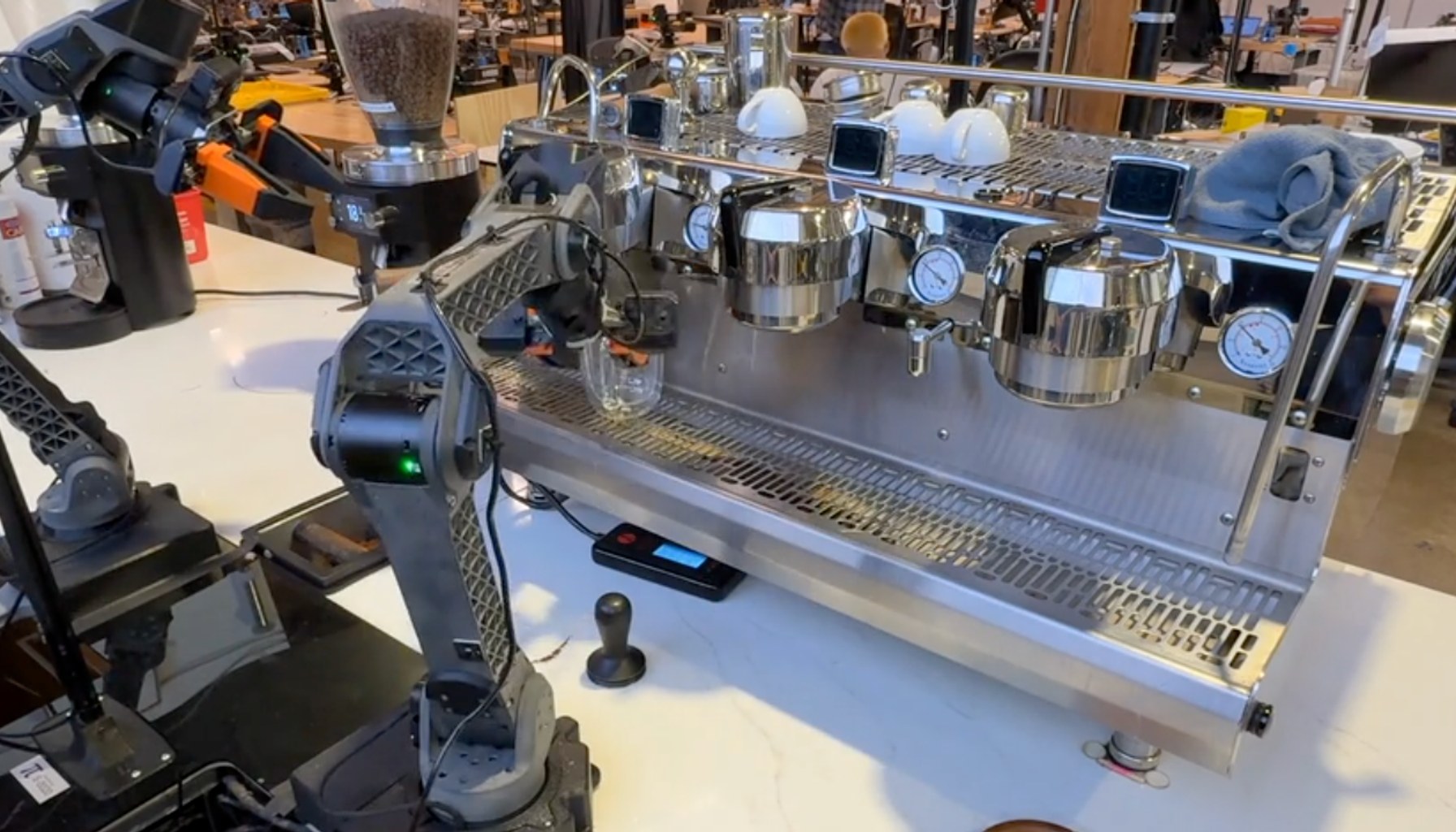
π0.7 learns tasks it wasn't taught.
The robot brain from Physical Intelligence is being pitched as a meaningful stride toward a general-purpose robot brain, able to infer and execute tasks it has not explicitly seen before. In a field crowded with flashy demos that rarely translate, the company says their new model moves beyond one-off programming toward flexible problem-solving for robots operating in unstructured environments. The tech press coverage sketches π0.7 as an early, promising milestone rather than a finished product, insisting the implications could cross from industrial automation to everyday humanoid platforms.
From a practitioner’s standpoint, the core claim is about generalization: a learning system that can take a new task—perhaps a common-sense manipulation or a new navigation cue—and figure out a workable plan without hand-tuning for that exact circumstance. The demonstration footage referenced by Engineering documentation suggests the model can re-task itself on the fly, a capability many teams dream of but few achieve at scale. The practical upshot, if the claim holds, is a reduction in the cycle time between a new use case and a working robot behavior. For R&D teams, that is a meaningful delta in a field where weeks-long reprogramming saps productivity.
Yet the piece leaves several critical specifics in the shade. The article does not disclose any DOF (degrees of freedom) counts or payload capacities for a humanoid platform tied to π0.7, nor does it spell out hardware constraints, power budgets, or runtime. In other words, the emphasis is on the cognitive layer—the brain—rather than a listed, plug-and-play humanoid chassis. That means the reader must separate the promise of a “general-purpose brain” from the readiness of a full humanoid system. The demonstration appears to be in a controlled environment with the brain orchestrating perceptual cues and motor commands, but whether that scales to unstructured lab or real-world environments remains unclear.
The story fits a broader arc in robotics: from choreographed, task-specific programming to adaptable, data-driven control. If π0.7 succeeds, it would offer a template for reducing the amount of task-specific demonstrations engineers must curate for each new operation. The tech’s promise hinges on a combination of self-supervised learning, multimodal perception, and robust planning—areas where the industry has been inching forward for several years. In practice, such a system will still wrestle with distribution shifts—the classic problem where a model trained in a lab struggles in the real world—and with safety gating: the moment a planner misreads a scene, the consequences can escalate quickly on a humanoid platform.
Two to four practitioner-level insights loom large. First, data governance matters. Generalization depends on the diversity of training and self-supervised signals. Without high-quality, representative data, a “learned-new-task” claim can evaporate the moment a robot encounters a room layout it didn’t see in training. Second, compute locality vs. cloud: a brain that can operate on-device reduces latency and avoids exposing sensitive sensory streams, but it demands careful power budgeting and thermal design. If π0.7 leans on remote inference, latency and reliability become critical constraints for real-time manipulation. Third, safety and verification become a core product feature, not a marketing add-on. A system that autonomously discovers tasks must be held to strict fail-safes, with clear boundaries on permissible actions in human-centric environments. Fourth, field-readiness is the true test. The article positions π0.7 as an early, meaningful step; expect further disclosures about tests in real workplaces or with humanoid prototypes to validate generalization under fatigue, lighting, or noise.
In comparison to prior efforts to build a “robot brain,” the narrative here centers on learning-driven flexibility rather than explicit programming of every scenario. If π0.7 delivers, it would reflect a shift from “teach-a-task” to “learn-a-task-family,” a subtle but meaningful leap for humanoid robotics. Until hardware specs, power, and field validation are disclosed, the industry should treat this as a promising but unproven direction—one that may reaccelerate investments if subsequent demonstrations show that the generalization holds up outside the lab.
- Physical Intelligence, a hot robotics startup, says its new robot brain can figure out tasks it was never taughttechcrunch.com / Source role not classified / Published APR 16, 2026 / Accessed APR 19, 2026