What we’re watching next in humanoids
By Sophia Chen
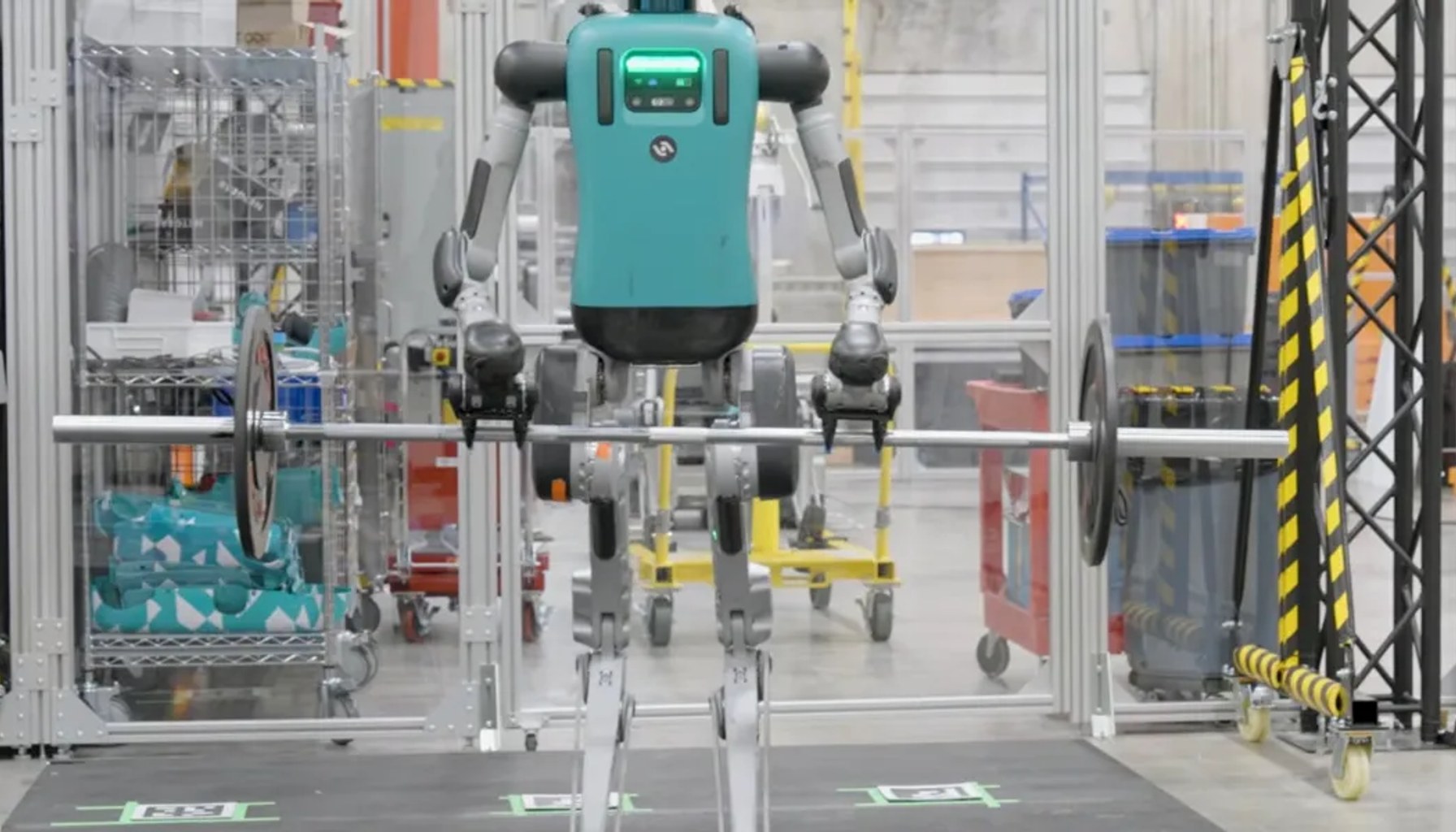
Image / spectrum.ieee.org
Humanoids just tipped from demo reels toward field reality.
Three respected outlets—IEEE Spectrum Robotics, The Robot Report, and Boston Dynamics—are coalescing around a clear signal: the latest wave of humanoid platforms is moving from controlled tests toward more demanding, real-world tasks. Across lab demos and campus-style trials, the narrative is less about a single breakthrough and more about a disciplined stack of incremental gains: more stable gait, better load handling, and smarter autonomy, without the fanfare that usually accompanies vaporware.
Engineering documentation shows a renewed emphasis on balance control, impedance-aware actuation, and robust gait cycles. The technical specifications reveal that vendors are prioritizing predictable, repeatable motion over flashy tricks. Demonstration footage shows humanoids performing in cluttered environments with tighter path planning and object handling that previously required manual intervention. Yet the conversations in IEEE Spectrum and The Robot Report make it clear: these are still lab and controlled-environment successes, not yet field-ready deployments in dynamic workplaces or outdoor settings.
One consistent takeaway across the coverage is structure over spectacle. The current generation appears to be targeting higher payload tolerance and more versatile manipulation, while maintaining safety and reliability under human-robot interaction. That means more capable hands and arms, better-footed stances, and smarter decision-making under uncertainty. But the specifics—like exact joint counts (degrees of freedom) or payload ratings for each platform—remain under wraps. In practical terms, DOF counts and payload capacity are not disclosed in the available material, which makes direct apples-to-apples comparisons difficult. The same goes for power sources, runtimes, and charging schemes; those critical practicalities aren’t published in the cited materials. What is visible is a trajectory: improved joint coordination, cleaner recovery from perturbations, and a more deliberate, less “demo-y” sense of movement.
From a readiness perspective, the consensus places these efforts in lab-demo or controlled-environment phases. That aligns with a broader industry reality: as soon as you push a humanoid to operate around people, you encounter a cascade of safety, reliability, and regulatory considerations that slow conversion from prototype to product. The sources emphasize a careful, methodical progression rather than a single, spectacular leap. In other words, the progress is real, but the path to workplace deployment remains studded with the usual engineering hazards: balance loss, actuator fatigue, sensor drift, and the ever-present challenge of energy efficiency at human-scale loads.
Compared with previous generations, observers note a shift toward more deliberate motion and more dependable handling of objects. The improvements are not necessarily dramatic on a frame-by-frame basis, but the accumulation—tighter gait cycles, more controllable torque, and better tool grasping—adds up to a more credible narrative about practical use cases. The takeaway is not “robot replaces human lab tech tomorrow,” but “the gap to usable humanoids is closing in a disciplined, test-driven manner.”
What this means for developers and investors is concrete: expect more transparent demonstrations, but remain wary of missing technical specs that truly indict readiness. The industry is clearly prioritizing reliability and safety alongside capability, which is exactly the right calculus for durable, deployable humanoid systems.
What we’re watching next in humanoids
Sources
Newsletter
The Robotics Briefing
A daily front-page digest delivered around noon Central Time, with the strongest headlines linked straight into the full stories.
No spam. Unsubscribe anytime. Read our privacy policy for details.