π0.7 Brain Promises Unlearned Task Mastery
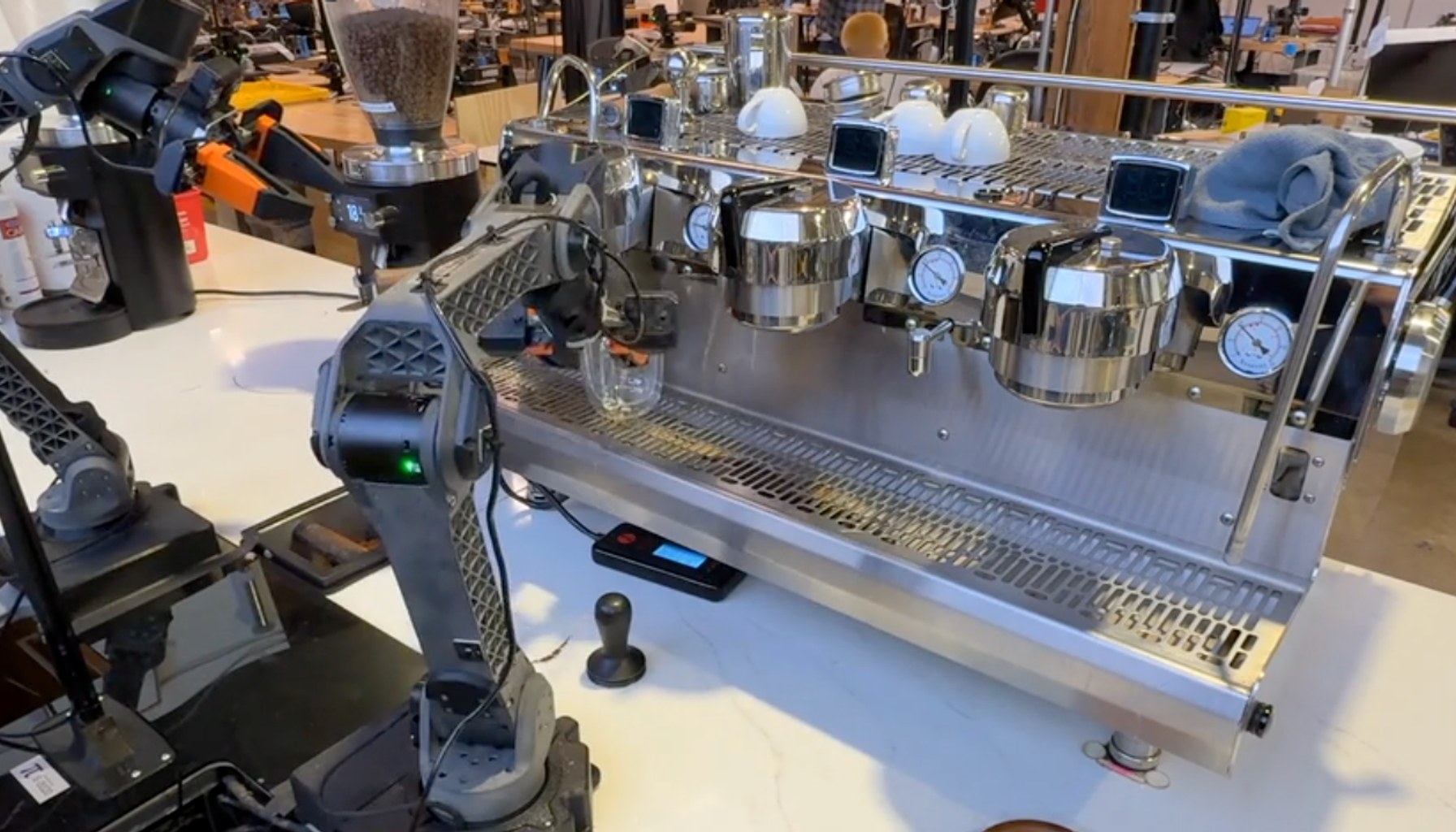
Physical Intelligence’s new robot brain, π0.7, claims it can solve tasks it was never taught. It’s a bold elevator pitch in a field tired of grand promises and short on proven, real-world capabilities.
The TechCrunch report frames π0.7 as an early but meaningful step toward a general-purpose robot brain—the long-sought goal of non-programmed adaptability in manipulators. In practical terms, that means the company is pitching a software stack that can interpret perception, plan actions, and execute manipulation without task-specific reprogramming. It’s the kind of claim that makes readers lean-in: if you can generalize to unfamiliar tasks directly from input data and a few demonstrations or even raw sensor streams, you’re crossing the long-standing line between “trained skills” and “flexible intelligence.” The article’s tone mirrors the industry’s cautiously optimistic skepticism: the milestone is real, but still foundational rather than field-ready.
The absence of concrete hardware figures is telling. The piece does not publish degrees of freedom counts, payload capacities, or exact specs for any humanoid platform using π0.7. That omission matters because a “robot brain” is only as useful as the body it’s wired into. A software stack that can conceptualize a task is impressive; a hardware-robust, energy-efficient, safe embodiment that can physically manipulate diverse objects—grasping cups, tool handoffs, multi-step assembly—remains the hard constraint. In other words, the π0.7 story is a software promise more than a hardware package, and the article leaves readers with scant detail on power draw, runtimes, or charging regimes. For engineers assessing ROI, that gap is a red flag until demonstration footage or benchmarks show sustained performance outside tightly controlled demos.
From a practitioner’s standpoint, two to four concrete insights stand out. First, true zero-shot or few-shot generalization in robotics almost always buckles under real-world variability: lighting, cluttered scenes, tool-use quirks, and the subtle physics of grasping. If π0.7 is to succeed beyond laboratory tasks, it must prove reliability across messy environments and with a broad object set—something the article implies but doesn’t demonstrate. Second, the line between a “brain” and a “robot” remains thin: the brain can infer and plan, but safe, repeatable actuation requires robust hardware interfaces, sensory fusion, and robust fail-safes. Until we see real-world trials with diverse hardware, the risk of brittle performance is nontrivial. Third, the market’s appetite for “general-purpose” platforms hinges on benchmarks—clear, repeatable metrics that show improvement over time. The industry needs published benchmarks that track task diversity, success rates, and recovery from failure across incremental versions. Fourth, the investment question isn’t just “does it work?” but “how fast can it scale?” π0.7’s value proposition rests on quick iteration across tasks, but scaling means governing data pipelines, safety, and reliability at enterprise velocity.
Compared with prior “robot brain” efforts, π0.7 climbs in ambition by focusing on unscripted task inference rather than siloed skill transfer. In the past, many teams showed impressive isolated competencies—grasping a single object, stacking blocks, or following a narrow set of rules. π0.7’s rhetoric suggests an integrated capability that leans on learning to fill gaps across perception, planning, and manipulation, rather than re-training a model for each new task. If the claim holds under broader testing, it could represent a meaningful shift in how robotics teams approach onboarding new capabilities.
As for readiness, the article characterizes π0.7 as early-stage—more a lab demonstration than a field-ready solution. The real test will come when Physical Intelligence reveals tangible, repeatable performance on a diverse set of tasks with multiple hardware embodiments and in imperfect environments. Until then, the most honest takeaway is guarded optimism: the idea is compelling, the stakes are high, and the demo reel, as always, will outpace reality—until it doesn’t.
- Physical Intelligence, a hot robotics startup, says its new robot brain can figure out tasks it was never taughttechcrunch.com / Source role not classified / Published APR 16, 2026 / Accessed APR 17, 2026