A Million Data Centers in Space
By Alexander Cole
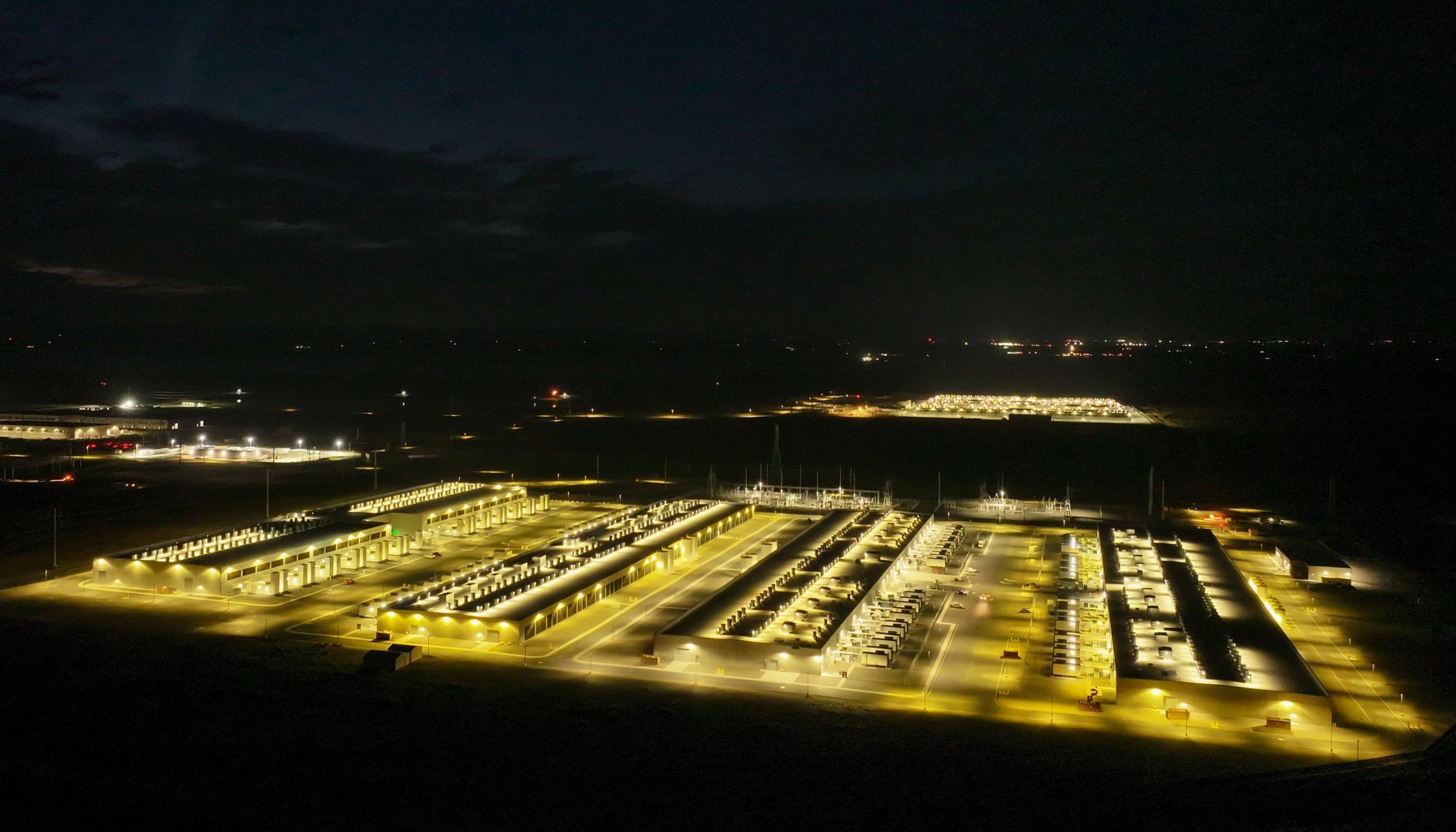
Image / technologyreview.com
A million data centers in space could solve AI’s energy squeeze.
MIT Technology Review’s explainer frames a bold, perhaps absurdly ambitious vision: SpaceX has filed with the FCC to launch up to one million orbiting data centers, a move pitched as a way to unlock AI compute without worsening Earth’s energy and water crunch. The idea isn’t alone on the whiteboard—Amazon’s founder has talked about large-scale orbiting computing, Google reportedly plans a test constellation of 80 satellites as soon as next year, and a Washington startup named Starcloud already tested an Nvidia H100-equipped satellite. The targets are audacious: orbiting data centers that could scale to a fleet by 2030, delivering raw power in space and moving the cooling and energy burdens off terrestrial grids. The pitch is simple in rationale, if hair-raising in logistics: in space, the old problems of water use and heat rejection on Earth would disappear, freeing data giants to run ever-larger AI models without straining local infrastructure.
But the vision comes with four hard constraints, the article notes, and turning orbit into a new data-center layer is anything but trivial. The four hurdles act like a reality check for backers and customers alike: power, thermal design, radiation-hardened hardware, and orbital logistics (including debris management and continuous maintenance). Each of these needs careful, expensive engineering, not just clever software. And while the math looks compelling—solar power in space is abundant, heat can be dumped into the vacuum—operating fleets of AI accelerators hundreds or thousands of kilometers from Earth raises questions about latency, reliability, and the economics of launching, upgrading, and repairing gear that operates in a harsh, remote environment.
In practice, this is a story of forward-looking bets meeting real-world frictions. The SpaceX FCC filing isn’t a product roadmap; it’s a regulatory license to explore feasibility at a scale that sounds more like a sci‑fi premise than a plan. The Starcloud test flight demonstrates at least one crucial proof of concept: an orbital GPU-equipped platform exists long enough to be evaluated for performance and resilience. Google’s cited ambitions and Bezos’s public optimism signal how mainstream cloud and AI players are moving beyond the Earth’s surface, but the cost curves, insurance, and safety regimes for orbital infrastructure remain unproven at scale.
From a practitioner’s lens, several practical implications emerge. First, the cost model would hinge on dramatic reductions in per-unit power and maintenance overhead; otherwise, the price of constant launches, upgrades, and ground-to-space data transfer would overwhelm any compute gains. Second, latency and backhaul assumptions matter: even if compute is in orbit, it still needs to feed insights down to end users—potentially limiting real-time applications to edge runs or specialized use cases rather than universal inference. Third, resilience becomes a product feature, not a luxury: radiation, orbital debris, and intermittent communication links demand fault-tolerant hardware and software that can self-heal or swap components without human intervention. Fourth, regulation and safety will shape who can participate and how: spectrum use, collision avoidance, and long-term orbital sustainability will drive governance as much as hardware design.
Analysts and engineers will watch pilots like Starcloud’s in-space GPU tests and Google’s satellite ambitions for signals about feasibility, costs, and timelines. If orbiting data centers move from proof-of-concept to a repeatable, scalable model, the industry could see a frontier shift in AI compute. Until then, the quarter’s near-term action is to monitor regulatory developments, the results of early orbital hardware experiments, and the emergent economics of space-based cooling and power.
In short, it’s a bold bet with potential to redefine how we run AI—but it comes with gravitationally heavy caveats that will determine whether it ever ships at scale.
Sources
Newsletter
The Robotics Briefing
Weekly intelligence on automation, regulation, and investment trends - crafted for operators, researchers, and policy leaders.
No spam. Unsubscribe anytime. Read our privacy policy for details.