IDTechEx reports that industrial targets dominate humanoid development, forcing choices among strength, weight, batteries, and balance.
The development stage is still early: IDTechEx, as reported by ASSEMBLY Magazine, describes humanoids moving from prototypes toward pilot deployments and early commercial adoption. This is not a finished product announcement or a robot consumers can buy.
According to ASSEMBLY, IDTechEx estimates that about 80% of humanoid robots and prototypes developed so far target industrial settings. The report does not provide the estimate’s method, sample definition, or list of robots counted, so the figure is best read as an industry estimate.
Industrial tasks shape the design problem. Robots expected to handle loads need enough strength without becoming too heavy, while batteries must power movement and work. IDTechEx says industrial humanoids weigh 78 kilograms on average, with some wheeled models exceeding 100 kilograms.
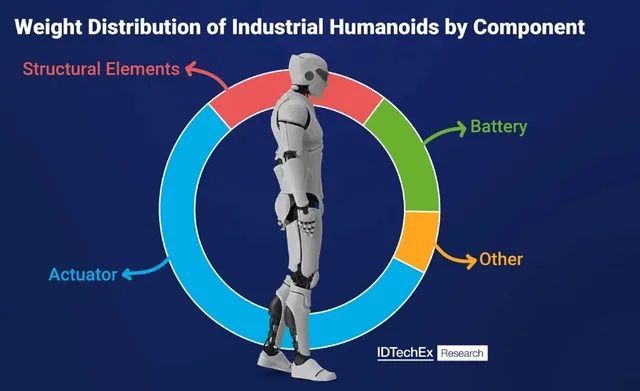
Actuators—the parts that create movement—make up more than half the weight of a typical humanoid robot, IDTechEx says. Their gears and screws must withstand repeated loads, and producing planetary roller screws and gears with consistent precision remains difficult.
Some developers are using wheels to make room for larger batteries and reduce the balancing demands faced by bipedal robots when carrying loads. That makes wheeled designs a possible response to industrial requirements, not proof that they perform better than two-legged robots in factory pilots.
Safety, certification, training, and finding tasks with clear value remain hurdles. IDTechEx forecasts the overall humanoid market could approach 1 million units around 2030, while noting that actual deployments have fallen below some manufacturers’ targets.
For plant managers, the practical test is whether a design’s useful load, mobility, runtime, and safety case justify its mass and integration work.