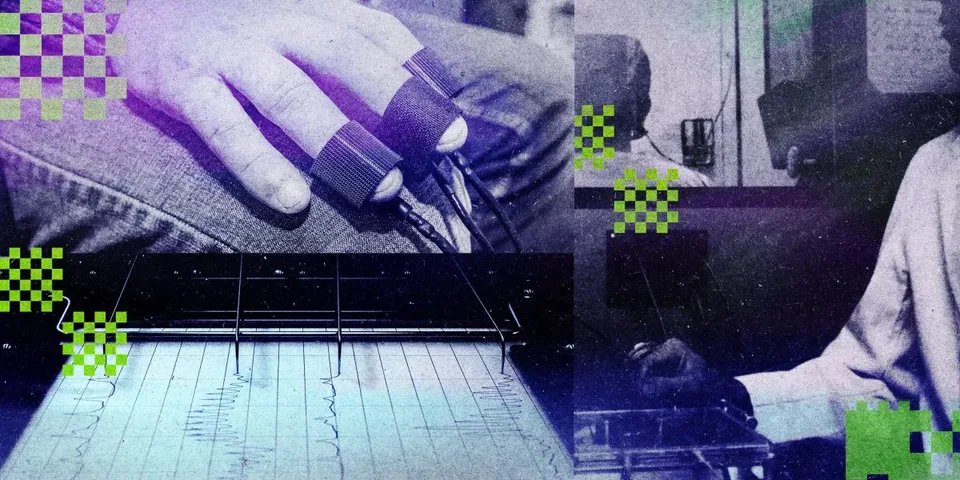
The five-year plan would combine machine-learning scores with contact-free readings, but no system has been chosen or approved.
The Pentagon is seeking $30.3 million over five years for “Polygraph+,” also called “Polygraph Next,” according to MIT Technology Review. The proposed program would modernize federal polygraph assessments for employee vetting and insider-threat detection.
The Defense Counterintelligence and Security Agency would run the effort. Congress has not approved the budget request, and the agency has not identified the specific sensors or software it would use.
The plan has two main parts. Machine-learning software would look for patterns across physiological data and produce a deception score. “Standoff sensing” would collect some of those signals without attaching equipment to a person.
That could mean combining measurements such as heart rate, breathing, movement, skin temperature, or sweat response. MIT Technology Review reported earlier Pentagon prototypes that used cameras and other non-contact sensors, but those prototypes do not establish what Polygraph+ will use.
The engineering challenge is larger than spotting unusual body signals. Stress, fear, confusion, and deliberate countermeasures can also change those signals. A model needs reliable examples of truth and deception to learn the difference, yet experts cited by MIT Technology Review say researchers lack a dependable ground truth for lying.
Earlier systems that combined video, eye tracking, voice, or body movement have not produced reliable results outside laboratories, the publication reported. Kyri Kotsoglou of Northumbria Law School called combining artificial intelligence with polygraphs “the worst of both worlds,” adding uncertainty to an already disputed method.
For now, this is a funding proposal—not a product people can buy or an operational federal system. The consequential next step is whether Congress funds it and what validation standard the agency sets before using its scores in investigations or hiring.