Google Home Adds Tap On Automations
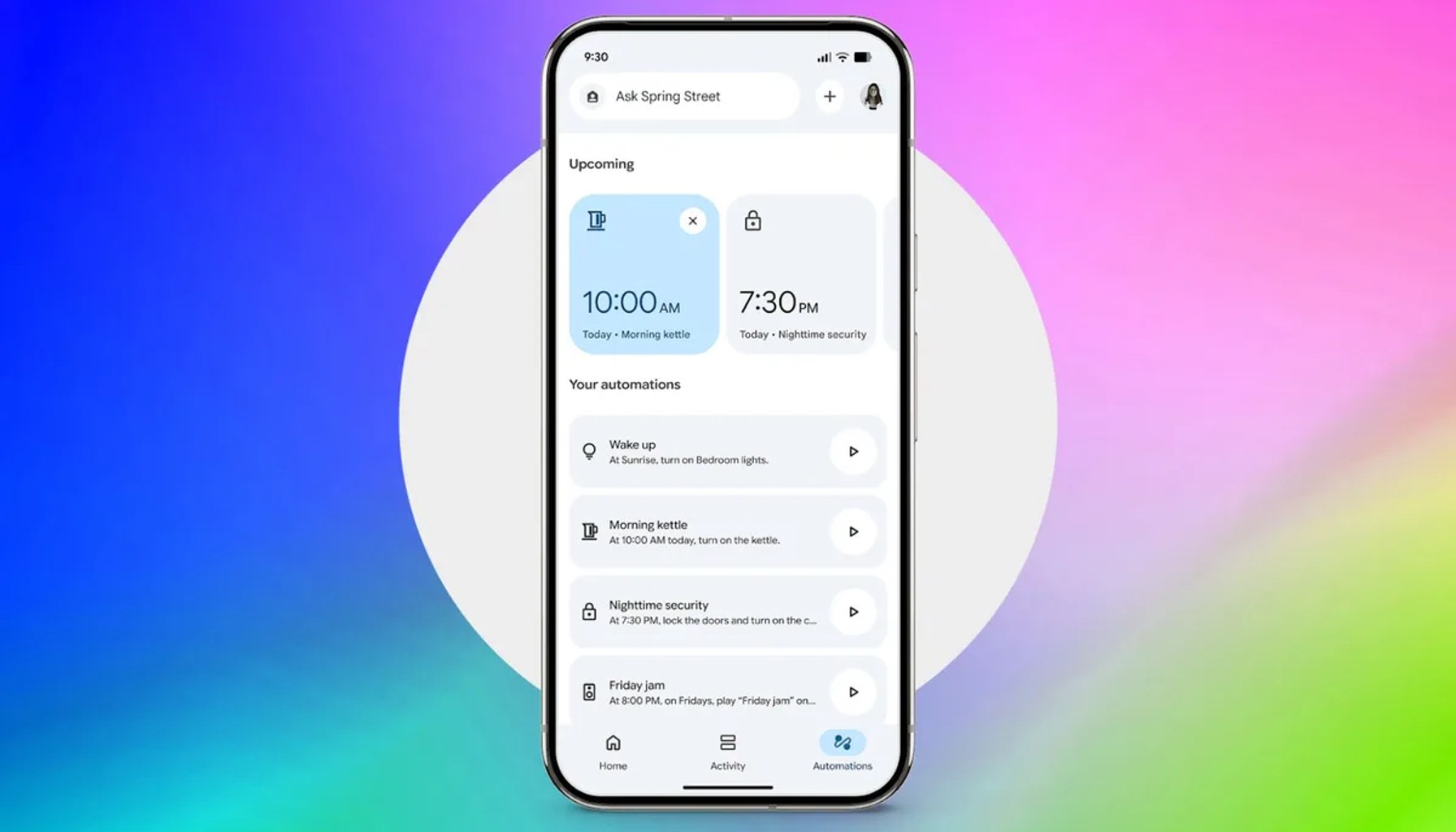
Image / Digital Trends Home
One tap unlocks ready-to-use automations in Google Home.
Google’s Home app just got a little easier to program. In version 4.20, the company rolled out pre-built automations you can switch on with a tap, a change the Digital Trends piece frames as a breakthrough for automation newbies who felt stuck before. The idea is simple: instead of learning a DIY sequence of triggers and actions, you pick a ready-made automation and enable it. If you want to automate bedtime lighting, morning routines, or device states with minimal setup, this update makes that a one-tap decision rather than a page of settings.
The practical impact, according to reviews, is speed and accessibility. New users or those who rarely tidget with routines can get a useful set of automations up and running without wrestling with the often tangled logic of custom routines. By packaging common patterns into a library, Google is lowering the barrier to a more responsive smart home. It also nudges people toward keeping more controls within the Google ecosystem, since these automations are designed to work across Home devices and connected services tied to your Google account.
From a cost perspective, the reporting on the update does not indicate any new price tag or required subscription. The feature appears as part of the existing Google Home app experience, with no mention of incremental fees in the coverage. That said, there is an implicit financial decision baked into any such move: if you rely heavily on cloud-managed automations, you should be mindful of how much data Google processes to run them and how that reliance shapes your overall smart-home bill in the long run. The absence of a new line item in pricing does not erase the privacy calculus that comes with deeper automation in a connected home.
The refresh also raises the usual catches that come with cloud-connected automation. As automations proliferate, you’re increasing the volume of data flowing to Google’s servers to recognize triggers, coordinate devices, and maintain your scenes. If the cloud edge cases matter to you, outages or latency can interrupt even simple routines. And because these are built to live inside a single platform, you trade some flexibility for convenience: automations that work perfectly in Google Home may need extra fiddling to port to other ecosystems or cross-platform hubs.
Industry observers will tell you this is part of a broader shift toward friction-free automation across ecosystems. The push toward “tap-to-activate” patterns mirrors a market trend where ease of use compounds user engagement, even if it means accepting tighter platform lock-in and more centralized data flows. For practitioners, that creates a few concrete lenses to watch. First, reliability becomes a critical constraint: a single cloud hiccup can derail multiple automations at once. Second, there’s a tradeoff between speed of onboarding and depth of customization: the library helps newcomers, but power users may still crave fine-grained control. Third, the incentive structure leans toward deeper ecosystem integration, which can deter experimentation with third-party services or cross-brand setups. Finally, privacy and consent controls become more important as automation footprints expand; users should recheck what data is being used to trigger routines and how to limit it if desired.
If you’re already in the Google orbit, the update is likely to feel like a win, especially for households that wanted automation but found it intimidating. For new adopters, it lowers the barrier to action and demonstrates a clear path from curiosity to routine. The real test will be how robust these tap-on automations prove under real-world conditions, and whether Google keeps expanding the library in a way that balances convenience with transparent privacy controls.
- Google Home’s latest update makes it easier for you to start using automationsDigital Trends Home / Mainstream / Published JUL 09, 2026 / Accessed JUL 09, 2026