Poetry Camera Delivers Charm, Not Clarity
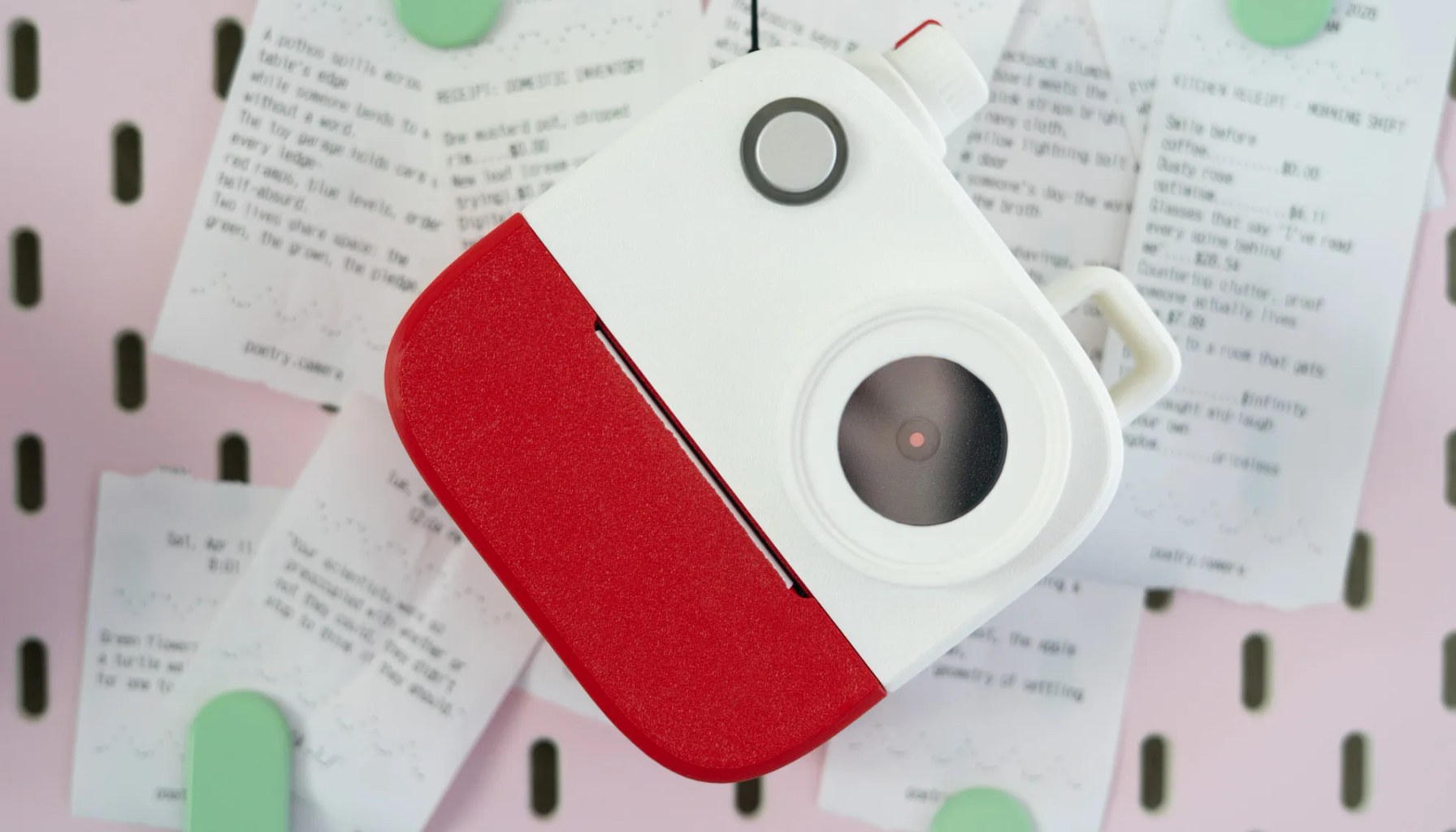
A camera that prints AI poems on receipt paper instead of photos is charmingly odd.
A tiny device wearing white and cherry red doesn’t just snap scenes; it turns them into verse and prints the results on thermal receipt paper. The Verge’s hands-on review calls the Poetry Camera a “delightful object” with real design flair, a gadget that invites you to show off a scene and be handed a poem in return. But as testing unfolds, the romance cools fast. The reviewer admits, “I kind of wish it just took pictures,” a blunt confession that sums up the device’s core tension: delightful to hold, but oddly unsatisfying to use in practice.
What you get is a small, small-format novelty with a big prompt: a moment captured on camera becomes a prompt for AI-generated poetry. The device’s aesthetic is a deliberate nod to lo-fi charm—cream-white body, crisp cherry accents, and a strap that feels more art gallery accessory than everyday tech. It’s the kind of gadget you’d set on a coffee table to invite questions from guests, not something you’d rely on for a reliable memory.
In hands-on reviews, testers found that the poetry engine can be punishingly uneven. Sometimes the AI stumbles into lines that feel forced or off-target, and other times a poem lands with surprising resonance. The friction isn’t just about quality; it’s about utility. The Poetry Camera asks you to trust a creative output as a stand-in for the visuals before your eyes. In practice, that tension leads to a mixed verdict: it’s a beguiling toy that doesn’t consistently fulfill its most ambitious promise.
From a consumer psychology angle, the device hits a sweet spot for novelty seekers—design-forward, tactile, and shareable. The printed poems are immediate, tactile artifacts that you can hand to a friend or pin to a corkboard. But the moment you shift from “look what it did” to “what does this poem actually mean,” the experience fragments. The poetry echoes the scene only loosely, and the medium—short, burned-on receipt paper—feels more ephemeral than the moment of framing the shot. The result is a gadget that delivers a display of whimsy and a pile of pages with varying worth, rather than a coherent new way to capture memories.
From an industry perspective, the Poetry Camera sits at the intersection of AI-assisted creativity and physical-output novelty. It’s a reminder that AI can generate content, but human patience and taste still govern whether the end product lands as meaningful. The device’s strongest asset is its design aura and the conversation starter it creates; its weakness is, largely, the payoff. If you’re the kind of buyer who chases “this is the thing” moments, it’s easy to be won over by the polish and the concept. If you want a dependable tool for literary memory or consistent poetic quality, the paths ahead look much rockier.
Two concrete practitioner insights stand out. First, the output medium matters. Printing poems on thermal receipt paper is cheap and immediate, but it makes the result feel disposable. For a device built around memory, the format undermines longevity and legibility over time. Second, the novelty decays quickly if the AI’s poetry isn’t reliably sharp or emotionally aligned with the captured scene. That gap between scene and verse is the device’s choke point and what drags the experience from “wow” to “meh” in real-world homes. A third useful takeaway, if the concept advances, is the potential value of streaming or syncing outputs to a more durable medium—think a small book or a digital gallery—without losing the tactile charm.
The Verge’s testing suggests the Poetry Camera is more artful gadget than practical photographer’s tool. In user reports, patterns suggest that it excels as a display piece or conversation starter, not as a substitute for mindful photography or meaningful journaling. Until the poetry engine matures and the output becomes consistently engaging, this device remains a charming footnote in the AI gadget curve—worth a look for those who crave the whimsy, not a reliable companion for daily memory.
Verdict: buy for design lovers and novelty seekers who relish a quirky conversation piece; skip if you want dependable poetry that truly complements the moment. If the team behind it can tighten alignment between image and verse and offer a more durable, meaningful output format, this concept could evolve into a more durable craft object rather than a collectible oddity.
- This charming gadget writes bad AI poetrytheverge.com / Source role not classified / Published APR 17, 2026 / Accessed APR 17, 2026