Siemens Tests Autonomous Humanoid Logistics in Plant
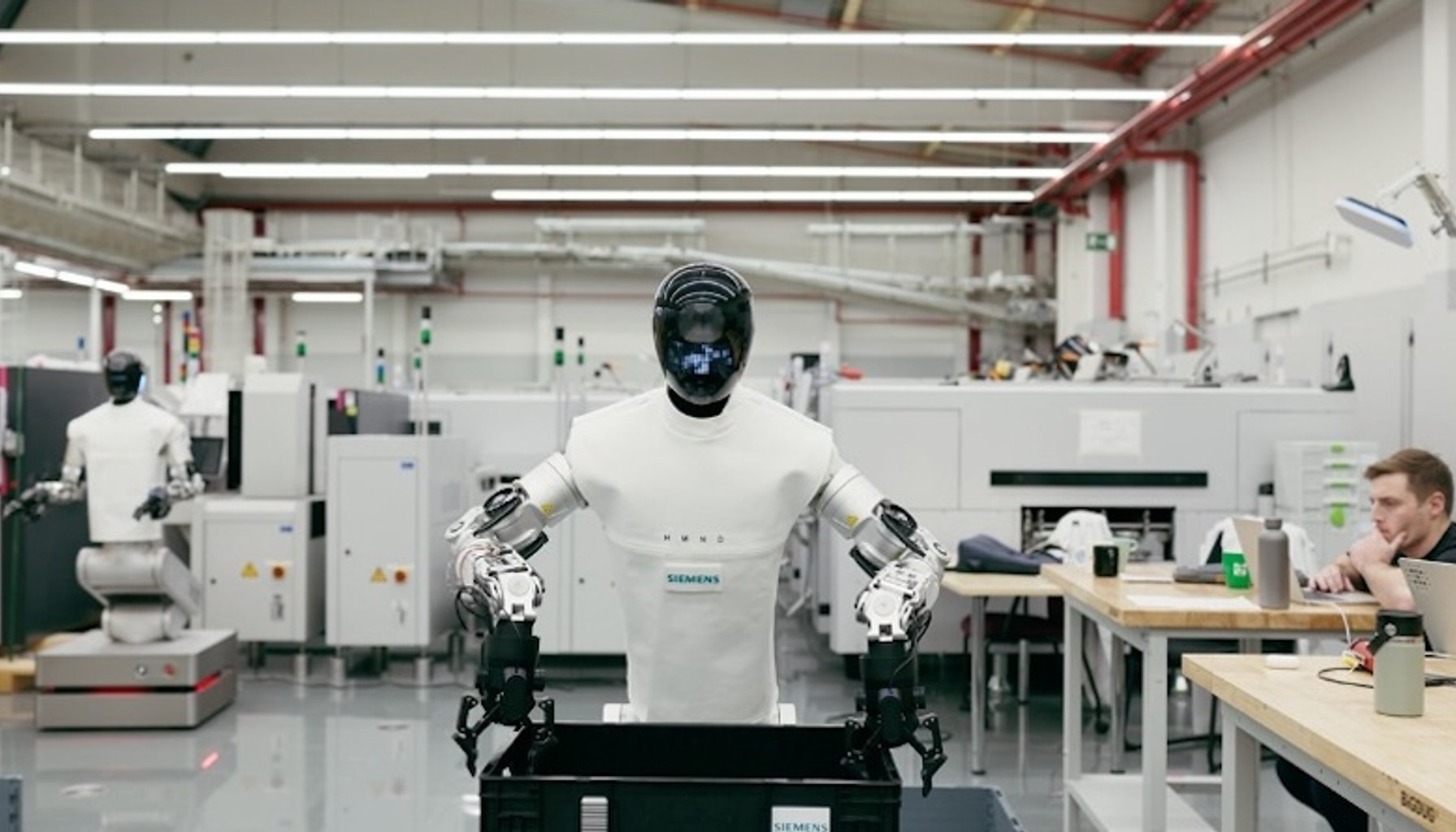
A humanoid robot just runs autonomous logistics inside a Siemens plant.
Siemens, Nvidia and Humanoid are dialing up the industrial “physical AI” narrative with a real-world test that moves beyond slides and demos. The HMND 01 wheeled Alpha humanoid, built using Nvidia’s physical AI stack, has been put to work at Siemens’ electronics factory in Erlangen, Germany, performing autonomous logistics tasks. Production data shows the robot navigating the shop floor, selecting parts, and coordinating with conveyors without human intervention during the test phase. The joint effort is pitched as a landmark toward moving physical AI from vision labs to factory operations, where the robot can handle dynamic material flow in a real plant.
What makes this noteworthy is the shift from imaging and recognition to physical, in-body decision making. Nvidia’s AI stack provides the computation backbone for perception, planning, and control, while Humanoid supplies a mobility platform designed for indoor industrial work. In Erlangen, the collaboration is not a one-off tech demo but a controlled deployment intended to validate how a humanoid agent can coexist with existing automation assets, workers, and safety protocols. The fact that Siemens is hosting the test—an electronics manufacturing environment with stringent quality and traceability requirements—adds heft to the claim that “physical AI” can operate in spaces where equipment, pallets, and human traffic intersect.
From a practitioner’s perspective, several takeaways matter even in this early stage. Integration teams report that the HMND 01 is being treated as more than a novelty; it’s a logistics worker with a defined set of tasks, rules, and paths. Floor supervisors confirm that the robot’s autonomy hinges on reliable sensing in cluttered environments and on robust communication with the plant’s existing material handling systems. The lesson so far is that, beyond the shiny chassis, the real work lies in aligning the robot’s perception, motion planning, and task assignment with Siemens’ production cadence and safety requirements. In other words, the value proposition rests as much on how well the automations play with current lines, not just on what the robot can do in isolation.
Two practitioner insights stand out. First, integration is as much about infrastructure as about the robot. The Erlangen test underscores the need for dependable edge compute, stable networking, and careful power budgeting so the robot can operate continuously without disrupting other equipment. Second, human labor remains part of the equation for now. While autonomous tasks may handle repetitive routing and picking, humans still manage exception handling, quality checks, and maintenance—areas where context, judgment, and dexterity matter most. The guidance from integration teams is to frame humanoid autonomy as a force multiplier for specific, repeatable flows rather than a wholesale replacement of skilled trades.
Hidden costs are never far behind promised gains. Vendors frequently omit the ongoing costs of software updates, model retraining, cybersecurity hardening, and the calibration of safety cases as the plant’s layout evolves. Siemens’ Erlangen test also highlights a practical constraint: the time and risk associated with integrating a mobile humanoid into a live line—how long before the robot proves its reliability across shift changes or plant disturbances? Those are the numbers operators will want to see before a full-scale roll-out.
If the pilot scales, the payoff story will hinge on measurable throughput gains, tight integration with conveyors and wcs, and a clear plan for training and maintenance. In the real world, this is where the rubber meets the robot’s wheels: credible productivity figures, not hype, will determine whether a humanoid returns a sound ROI across multiple plants.
- Siemens, Nvidia and Humanoid partner to bring physical AI into factory operationsroboticsandautomationnews.com / Source role not classified / Published APR 16, 2026 / Accessed APR 16, 2026