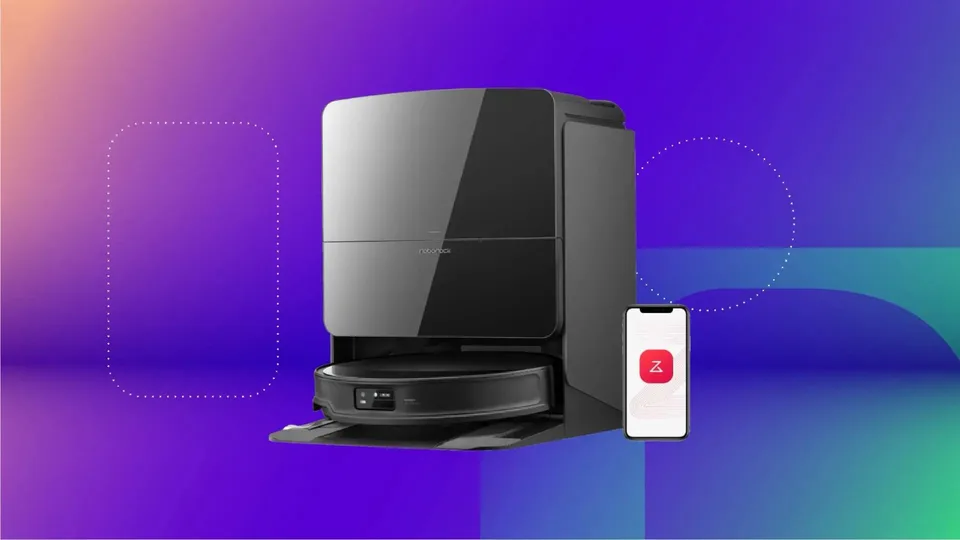
CNET’s tested picks range from $635 to $1,180, while cheaper models offer more features with less direct testing behind them.
Prime Day robot-vacuum deals look tempting, but the largest percentage discount is not always the best value. The better question is whether a vacuum cleans reliably, avoids household clutter and reduces daily chores enough to justify its price.
CNET says its three main recommendations were tested at its Louisville lab. Each scored highly enough for CNET’s top 10 list or an honorable mention. The two models under $300 have a different level of support: CNET says it did not necessarily test those exact models and partly relied on similar products and brand reputation.
Here is how the deals compare.
Best balance: Roborock Qrevo Curv 2 Flow — $635
The Qrevo Curv 2 Flow offers the clearest middle ground for shoppers who want advanced automation without paying flagship prices. CNET lists it at $635.
In CNET’s testing, the robot covered 83.05% of the room and picked up 70.8% of sand from hardwood floors. Those are useful results, though the robot did not make CNET’s top 10. Its carpet performance and obstacle avoidance were also weaker than the more expensive Dreame X60 Max Ultra.
The Qrevo Curv 2 Flow still offers a long list of chores handled by the machine. Its dock can empty the dust, refill water and clean the mop. The robot also has anti-tangling rollers, automatic liquid-spill handling and an app CNET considers easier to manage than many competitors.
At $635, this is not a low-cost appliance. But it combines tested cleaning results with the kind of dock automation that can reduce routine maintenance. It is the strongest value here for most shoppers who want vacuuming and mopping in one device.
The catch is that its feature list does not make it a top performer in every test. If your home has lots of carpet, clutter or difficult obstacles, the more expensive options may handle those problems better.
Best tested cleaning and navigation: Dreame X60 Max Ultra — $1,180
The Dreame X60 Max Ultra is the choice for shoppers willing to spend more for stronger results in several areas. CNET lists it at $1,180, down from $1,700.
CNET’s testing gave it an overall cleaning average of 59.22% across floor types. It removed 97.08% of dust from hardwood and handled low-pile carpet at 55.94%. It also avoided four of six test objects and covered nearly 80% of the room.
The robot has a retractable pressure plate that creates a tighter seal against carpet. It can climb double-layer thresholds up to 3.46 inches, fit under furniture with its 3.13-inch body and use a dock that empties dust and cleans itself.
Those features could matter in a home with mixed flooring, tall transitions or pet hair. The catch is sound: CNET calls the X60 the loudest robot vacuum it has tested, measuring 65.18 LAeq. That may matter if it runs near a bedroom or home office.
The discount saves $520 from the usual price, but the total purchase remains $545 more than the Qrevo Curv 2 Flow. Buy it for its cleaning, navigation and threshold advantages—not merely because its dollar discount is large.
Best older flagship deal: Roborock Saros 10R — $885
The Saros 10R costs $885, down from its usual $1,600 price. CNET describes it as Roborock’s flagship model from the previous year.
Its results were uneven. It covered 76.81% of the room, avoided four of six objects in several runs and scored 50.14% on low-pile carpet. Hardwood pickup was around 60% under the newer test procedure, though an earlier run reached 89% before CNET changed that procedure.
The Saros 10R’s strongest advantage is its slim design. It stands 3.14 inches tall, has no top turret and includes threshold assistance, dual spinning mop pads and an arm for cleaning along edges. Its dock can self-clean, empty dust and dry the mop pads.
At $885, it costs $250 more than the Qrevo Curv 2 Flow. That extra money buys a slimmer body and upscale automation, but the cited tests do not show a clear cleaning advantage. Consider it when furniture clearance or edge cleaning solves a specific problem. Otherwise, the Qrevo is the more convincing value.
Under $300: cheaper, but less certain
The Roborock Q10 S5 Plus is listed at $250, down from $550. It includes lidar navigation, which maps rooms using light, along with a self-emptying dock, a 2.7-liter dust bag, 10,000-pascal suction and a vibrating mop pad.
The iRobot Roomba 105X Combo is listed at $200, down from $470. It has lidar mapping, automatic rug detection while mopping, strong suction and an auto-emptying dock with a dust bag expected to last up to 75 days.
These prices make both models appealing for smaller budgets. However, CNET explicitly says the cheaper models were not necessarily tested. Its recommendations partly draw on similar units and brand reputation, so these are budget candidates rather than direct substitutes for the lab-tested picks.
Which deal should you buy?
Choose the Roborock Qrevo Curv 2 Flow for the clearest balance of automation, tested performance and price. Choose the Dreame X60 Max Ultra if stronger hardwood cleaning, obstacle handling and threshold climbing justify spending more than $1,000.
The Saros 10R is worth considering when a slim body or edge-cleaning hardware matters. The Q10 S5 Plus and Roomba 105X Combo make sense when keeping the listed price below $300 is the priority, but their exact performance is less directly verified.
CNET’s prices may change, and the available information does not establish shipping charges, warranty terms, inventory or final checkout totals. Check those details before paying. The real deal is the robot that fits your floors and home, not the one with the biggest percentage discount.