AI2 Robotics raises 735M for wheeled humanoids
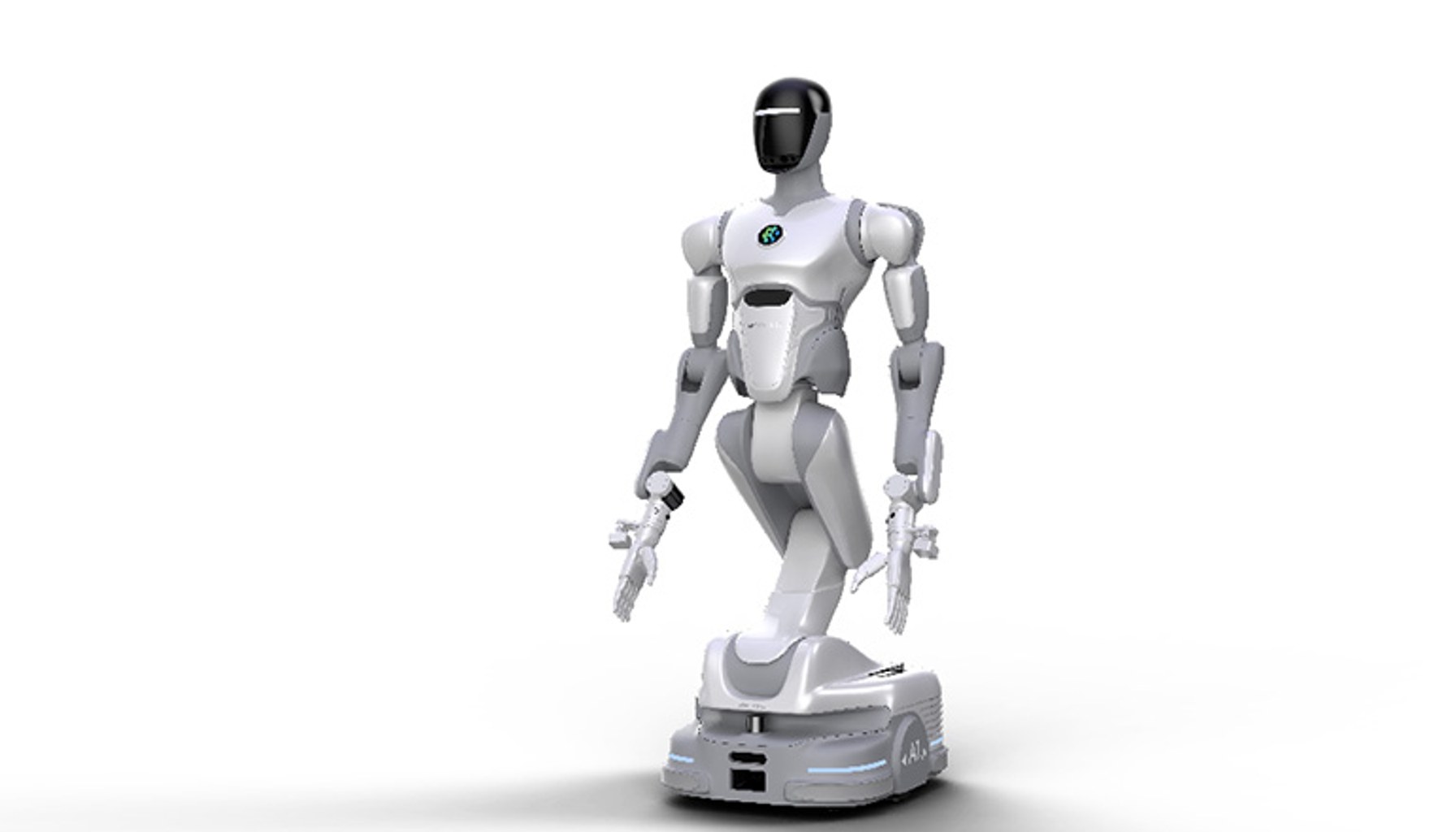
Image / The Robot Report
AI2 Robotics just closed a $735 million round that values its wheeled humanoids at about $3 billion, a stage-setting move for China’s fast-moving physical AI push.
The company reports commitments from a mix of government finance and corporate investors, including the National Small and Medium Enterprises Development Fund, Sino Biopharmaceutical, the Moutai Group, and financial players like CICC Capital and GSR Ventures. That funding signals not just money, but a strategic bet on hardware-first AI systems that can be deployed in public or semi-public spaces without the regulatory friction that often slows legged robots. The investment comes as AI2 doubles down on a design philosophy that eschews full bipedal locomotion in favor of mechanical simplicity, durability, and predictable service in real-world environments.
AI2’s AlphaBot is a wheeled mobile manipulator with a humanoid torso and five-fingered hands. Documentation indicates the system packs more than 34 degrees of freedom and includes a custom waist-leg lifting mechanism that elevates the upper torso across a range of positions. By choosing wheels over legs, AI2 aims to reduce production costs and maintenance needs, a move the company frames as making humanoid form practical for widespread use. The design choice also translates to faster deployment potential in controlled spaces such as factories, warehouses, or storefronts, where tight ramps and stairs pose fewer barriers than rugged outdoor terrain.
On the software side, AI2 anchors its hardware to what it calls Alpha Brain, a proprietary vision-language-action foundation. The company reports Alpha Brain powers real-time spatial reasoning and environmental understanding, enabling the AlphaBot to interpret scenes, reason about its surroundings, and act in a coordinated robotic workflow. The approach centers on a single, unified software stack rather than stitching together disparate perception and control modules. In practice, that can shorten integration cycles and improve predictability in variable environments, a meaningful advantage for operators weighing cost per task against reliability.
Industry observers see the round as a bellwether for how China intends to scale physical AI beyond lab demonstrations. The combination of state-backed capital and corporate strategic bets suggests a coordinated push to bring humanoid-appearing automation into service roles that leverage human-robot collaboration without requiring the fragility and maintenance typical of legged platforms. Still, the wheel-based path has clear tradeoffs: it limits the machine’s ability to traverse stairs or rough terrain, and it anchors the robot to environments that are relatively prepared for automation rather than the open, unconstrained world.
From a practitioner perspective, several constraints and incentives jump out. First, the wheel-first platform prioritizes mass production and uptime over absolute mobility, meaning service and industrial deployments will likely target indoor or semi-controlled spaces where safety, flooring, and foot traffic are predictable. Second, the 34-DOF torso and hands promise sophisticated manipulation, but payload capacity and power budgets remain unspecified, leaving operators to ask how much force the arms can exert or how long a typical shift can run between charges. Third, the blend of government and corporate funding indicates both public policy support and end-market appetite, but it also raises expectations for efficient scale, robust reliability data, and clear ROI signals as production ramps. Finally, the reliance on a proprietary Alpha Brain VLA stack means future performance hinges on ongoing software updates, data handling, and resilience to edge cases in complex environments.
In short, AI2 is betting that a durable, wheel-enabled humanoid with a focused software core can deliver practical, deployable automation faster and cheaper than full-scale bipedal rivals. If the company delivers on reliability and integration at scale, this funding round could catalyze broader adoption of physical AI in China and prompt faster moves by competitors to secure deployment-ready humanoid platforms.
- AI² Robotics raises $735M at $3B valuation for wheeled humanoid robotsThe Robot Report / Trade / Published JUL 10, 2026 / Accessed JUL 11, 2026